


Alberta RCMP warn outdoor users to be prepared during Emergency Week
From May 3–9, 2026, during National Emergency Preparedness Week, the Alberta RCMP and Search and Rescue (SAR) Alberta are urging everyone heading into parks, trails, lakes, and backcountry areas to plan thoroughly and understand the risks before leaving home. As spring and summer activity ramps up across Alberta, officials are emphasizing that a well-planned trip can prevent emergencies and speed up rescue efforts if something does go wrong.
The safety message applies across the province — whether you’re hiking in popular areas, exploring remote regions like those around Beaver County’s outdoor spaces, or paddling on inland waters. Authorities highlight that limited cell coverage, sudden weather changes, and challenging terrain mean outdoor users must be ready to manage an unexpected night outside and support search and rescue teams with clear information and proper gear.
Official Outdoor Safety Guidance
The Alberta RCMP and SAR Alberta have outlined key steps for safer trips into parks and backcountry areas:
- Plan your route in detail: Study your hiking or travel route before you leave. Use up-to-date sources such as guidebooks, satellite imagery, topographic maps, and official trail information from Alberta Parks to understand distance, elevation, difficulty, and current conditions.
- Share a written trip plan: Leave a clear itinerary with a trusted person. Include where you are going, the exact route, who is with you, when you plan to return, emergency contacts, and your vehicle description and licence plate number.
- Prepare for limited connectivity: Many Alberta parks and backcountry areas have no cell service. Carry a satellite communication device when travelling beyond coverage so you can call for help if needed. Once you return to an area with service, emergencies should be reported by calling 911.
- Make yourself visible: Wear bright or reflective clothing so you can be more easily seen by other users and, if required, by search and rescue teams. This is especially important if you are travelling at dawn, dusk, or at night.
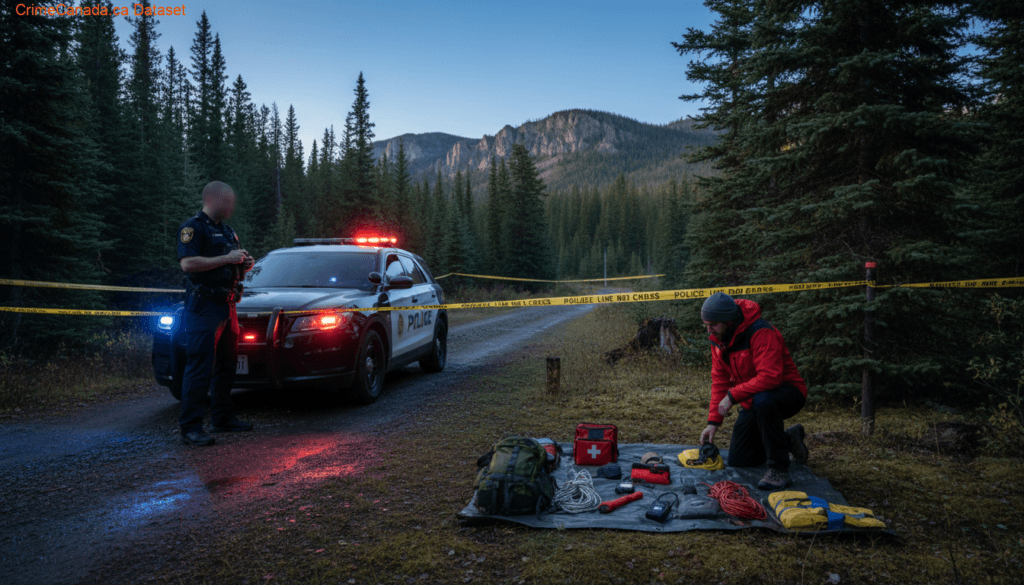
- Pack activity-appropriate gear: Bring equipment suited to your plans, which may include sturdy footwear, extra warm layers, a hat or toque, sun and wind protection, insect protection, an approved life jacket for water activities, a flashlight, adequate food and water, and materials such as a tarp and rope to create an emergency shelter.
- Monitor and respect the weather: Before you go, check local forecasts for your destination and be ready for rapid weather changes. Whether you are in dense forest, on open trails, or out on lakes and rivers, deteriorating weather can quickly turn a routine outing into an emergency.
- Expect possible delays in rescue: Always be ready to spend an unplanned night outdoors. Travel distance, rugged terrain, and severe weather can delay how quickly search and rescue crews can safely reach you.
According to the RCMP, thoughtful planning and full preparedness are the strongest defences against outdoor emergencies. Having the right equipment and a solid plan reduces risk to you and also makes the job of first responders and volunteer search and rescue teams more efficient when time is critical.
SAR Alberta represents 33 volunteer search and rescue teams operating across the province. These highly trained ground and inland water teams are coordinated under the Ministry of Public Safety and Emergency Services and respond when people go missing or get into trouble in Alberta’s varied terrain. A detailed trip plan left with someone at home can greatly reduce the time needed to locate and assist you.
For ongoing updates on outdoor safety messages and other policing information in Alberta, residents are encouraged to follow @RCMPinAlberta on Facebook and @RCMPAlberta on X, and to monitor broader provincial Community Safety Alerts and emergency updates on CrimeCanada.ca.
CrimeCanada.ca Safety Perspective
At CrimeCanada.ca, we view backcountry and outdoor preparedness as a core part of community safety across Alberta. Every year, preventable incidents in parks, lakes, and rural areas draw on search and rescue resources and put both the public and volunteers at risk. Simple habits—such as leaving a trip plan, carrying a satellite communicator, packing for an unexpected night out, and checking weather and terrain conditions—can drastically reduce the likelihood of serious outcomes. By combining personal preparedness with awareness of local safety trends, whether you recreate near cities or in quieter regions like Alberta Beach and its surrounding recreation areas, we can help ensure that more outdoor adventures end safely and that emergency responders can focus on the most critical calls.
Official Source & Community Safety
This safety alert is based on an official release from the Royal Canadian Mounted Police (RCMP). CrimeCanada.ca aggregates and analyzes this data to keep the alberta community informed, aware, and safe. We are an independent safety data aggregator and not the original creators of the underlying incident report.
Read the full official release here: RCMP Official Statement.