


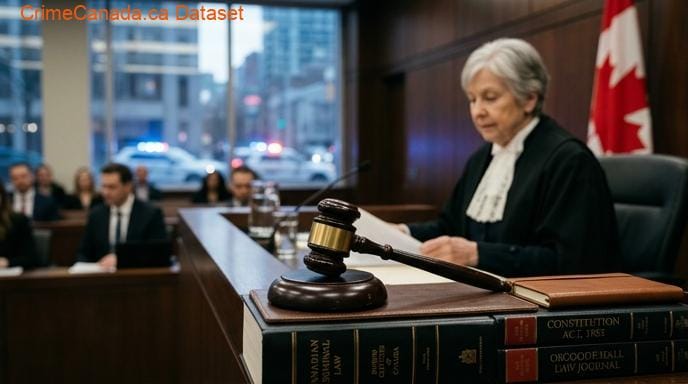
In Canada, assault level 2 involving a weapon or bodily harmhybrid offence under the Criminal Code, meaning the Crown can choose to prosecute it either summarily or by indictment depending on the circumstances. The Violation code used by police and statisticians is UCR Code 1420. This offence covers situations where, during an assault, a person carries, uses, or threatens to use a weapon (or imitation weapon), causes bodily harm, or chokes, suffocates or strangles the complainant. Because it combines violence with either a weapon or demonstrable injury, assault weapon bodily harm Canada cases are treated particularly seriously by police, Crown prosecutors, and courts.
The Legal Definition
Every person is guilty of an offence who, in committing an assault,
(a) carries, uses or threatens to use a weapon or an imitation thereof;
(b) causes bodily harm to the complainant; or
(c) chokes, suffocates or strangles the complainant.
This definition comes from section 267 of the Criminal Code of Canada. In plain English, a person commits this level 2 assault when they first meet the basic definition of assault (the intentional application of force without consent, or an attempt or threat with present ability), and then one of three aggravating factors is present: a weapon is involved, bodily harm is caused, or the complainant is choked or strangled. It does not matter whether the weapon actually strikes the victim; the act of carrying or threatening to use it during the assault is enough.
Importantly, the Code also defines bodily harm as any injury that interferes with the victim’s health or comfort and is more than merely transient or trifling. This can include fractures, significant bruising, cuts requiring medical treatment, or other injuries that last beyond a momentary discomfort. Minor touching or fleeting soreness will usually not meet this threshold. Courts examine medical evidence, photographs, and witness testimony to decide whether the injury goes beyond the “transient or trifling” line. Because of this definition, an assault that might otherwise be considered simple assault can be elevated to this more serious offence once a qualifying injury is proved.
Penalties & Sentencing Framework
- Mandatory minimum penalty: None – sentencing is fully discretionary within the statutory maximums.
- Maximum on summary conviction: Up to 18 months imprisonment, a fine up to $5,000, or both.
- Maximum on indictment: Up to 10 years imprisonment.
- Offence type: Hybrid (Crown may elect summary conviction or indictment).
Because there is no mandatory minimum sentence in section 267, judges have significant flexibility in fashioning a sentence that responds to the specific facts of the case. However, this flexibility is constrained by the high maximums (particularly the 10-year maximum on indictment) and by statutory principles of sentencing, including denunciation, deterrence, rehabilitation, protection of the public, and proportionality. Violent offences, especially those involving weapons or bodily harm, are treated as serious, and jail is a common outcome in more aggravated situations.
As a hybrid offence, the Crown must decide whether to proceed by summary conviction or by indictment. Summary proceedings are generally reserved for less serious cases (e.g., minor injuries, less dangerous weapons, no criminal record, mitigating circumstances) and carry a maximum of 18 months in jail and/or a $5,000 fine. Indictable proceedings are used when the conduct, consequences, or the offender’s record are more serious. On indictment, the court may impose any sentence up to 10 years’ imprisonment. The Crown’s election therefore has major consequences for the accused’s sentencing exposure and for procedural rights such as election of mode of trial.
Within these ranges, sentencing courts look at aggravating factors such as use of a real, dangerous weapon (e.g., knives, bottles, firearms), the degree of injury (e.g., fractures, lasting disability, psychological trauma), attacks on vulnerable victims (children, partners, elderly), and whether the assault occurred in a domestic or public setting. Mitigating factors can include genuine remorse, lack of prior record, provocation (short of a legal defence), and steps taken toward rehabilitation (such as counseling or treatment). Because section 267 specifically concerns violence with elevated risk of serious harm, courts emphasize deterrence and protection of the public when deciding sentence length and whether a custodial sentence is necessary.
Common Defenses
-
Consent (and its limits)
Consent is an element of the underlying assault: the Crown must prove that the complainant did not consent to the application of force. In many everyday contacts (sports, social touching), consent is implied. However, Canadian criminal law draws a clear line for assault with a weapon or causing bodily harm: a person cannot legally consent to the intentional infliction of bodily harm or to being assaulted with a weapon in most contexts. This means that even if a complainant says they “agreed” to be hit with a bottle or cut with a knife, the law may still treat the conduct as criminal. The defence may still raise consent to challenge whether the Crown has proven the absence of consent to the basic touching, or to show that the accused reasonably believed there was consent, but once significant bodily harm or a weapon is involved, the legal room for a full consent defence becomes narrow. Courts examine the nature of the activity, the level of harm, and public policy limits on what kinds of violence society is prepared to tolerate.
-
Self-defence or defence of others
Self-defence is a central possible defence in assault weapon bodily harm Canada cases. Under the Criminal Code’s unified self-defence provisions, an accused may use force – including, in some circumstances, a weapon – if they reasonably believe on reasonable grounds that force is being used against them or another person, that the act is committed for the purpose of defending or protecting, and that the force used is reasonable in the circumstances. In a section 267 prosecution, the court will scrutinize whether grabbing a weapon or causing bodily harm was proportionate to the threat faced. For example, using a bottle or knife against an unarmed person who posed only a minor threat will often be found excessive and therefore not protected by self-defence. The defence may still succeed where the accused was facing serious violence or multiple attackers and reasonably saw no less harmful way to protect themselves or others.
-
Lack of intent / accident
Assault is a crime of intentional application of force. The Crown must prove beyond a reasonable doubt that the accused meant to apply force (or threaten it) without consent and, for section 267, that they intentionally carried, used, or threatened to use a weapon, or caused bodily harm in the course of the assault. If the contact was purely accidental – for example, someone turns suddenly in a crowded bar, unintentionally knocks a bottle from a table, and the accidental break causes a cut – the mental element of assault may not be proved. Similarly, if the accused did not know they were holding an object that could be considered a weapon, or the bodily harm was not a reasonably foreseeable result of their intentional act, the defence can argue that the necessary intention is missing. Courts will examine the whole context: prior words, gestures, level of intoxication (which may affect but not usually excuse intent), and whether the act looks more like an accident or a deliberate strike or threat.
Real-World Example
Imagine a scenario where two individuals are in a heated argument outside a bar. One person grabs a glass bottle, waves it aggressively, and shouts threats. During the confrontation, the bottle is swung and shatters, causing a deep cut on the other person’s arm that requires stitches. In this situation, police would likely view the bottle as a weapon because it was used and threatened as an instrument of force. The cut requiring medical treatment could meet the definition of bodily harm, as it interferes with the victim’s health and comfort and is more than transient or trifling. Prosecutors could therefore charge the aggressor under section 267 as assault with a weapon and/or assault causing bodily harm, rather than simple assault. The court would then assess the accused’s intent, whether there was any lawful self-defence, and whether the resulting injury meets the legal threshold, before determining guilt and an appropriate sentence within the summary or indictable ranges.
Record Suspensions (Pardons)
A conviction for assault level 2 with a weapon or causing bodily harm will create a criminal record, which can seriously affect employment, immigration status, travel, and access to volunteer or professional opportunities. In Canada, a person may apply to the Parole Board of Canada for a record suspension (commonly called a pardon) once they have fully completed their sentence (including jail, probation, and payment of fines) and after a waiting period. For this hybrid offence, the waiting period depends on how the Crown proceeded. If the conviction was by summary conviction, the general waiting period is 5 years after completion of the sentence. If the conviction was by indictment, the waiting period is typically 10 years. Eligibility is not automatic: the applicant must demonstrate good conduct, and certain patterns of repeat serious offending can make a record suspension more difficult or impossible. Because this offence involves violence and potential bodily harm, decision-makers will look closely at the applicant’s behaviour since the offence, evidence of rehabilitation, and any further contact with the justice system.
Related Violations
- Assault (simple assault)
- Assault Causing Bodily Harm
- Aggravated Assault