


Calgary Online Theft Probe Raises Martindale Safety Concerns
Overview: Stolen-Goods Case Expands into Drugs and Weapons
A months-long investigation into suspicious online sales has led the Calgary Police Service to recover stolen property, seize drugs and a firearm, and arrest four adults connected to a home in the northeast community of Martindale. The probe began in early April 2026 after officers flagged items listed on Facebook Marketplace that appeared to match property taken in a recent break-and-enter.
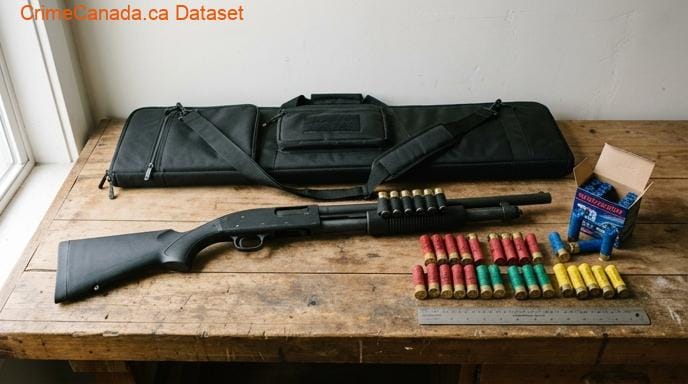
According to information released on April 28, 2026, officers executed a search warrant at a residence in Martindale on April 15. Inside, police report finding a pistol‑grip shotgun, about 143 grams of suspected fentanyl, smaller amounts of methamphetamine and psilocybin, and equipment consistent with drug trafficking. Four people—two women aged 40 and 28, and two men aged 39—are now facing a combination of property, drug, and court‑related charges. As of May 3, 2026, open‑source checks show no further public updates on additional arrests or expanded charges beyond what police initially announced.
Real-Time Status of the Investigation
Police say the investigation into the suspected fencing of stolen goods through online platforms is still active. Two more individuals are believed to be linked to the case, and officers have indicated that more charges are expected as the file progresses. One of the 39‑year‑old men was arrested on 11 outstanding warrants and additionally charged with breaching release conditions; another individual was taken into custody on 12 outstanding warrants.
Searches of official Calgary Police communications, local media, and public social media discussions up to May 3, 2026, did not reveal any later press releases, court outcomes, or identification of the accused. At this stage, available information comes from the initial news coverage and a brief statement shared by the police on X (formerly Twitter).
Community Context: Martindale’s Safety Profile
Martindale is a residential neighbourhood in northeast Calgary with a mix of single-family homes and multi‑unit dwellings. While detailed, up‑to‑the‑month crime statistics for the community are not publicly available in this case, broader trends in northeast Calgary suggest ongoing concerns around property crime—particularly break‑and‑enters, vehicle‑related theft, and small‑scale trafficking activity. Nothing in open sources indicates that this specific residence was a previously documented hotspot, but the combination of suspected stolen goods, drugs and a firearm aligns with patterns seen in other urban property‑crime investigations.
Across Canada, smaller municipalities such as Stoney 142, 143, 144 in Alberta and rural communities like Tweed, Ontario crime statistics show how property offences can intersect with substance‑related crime even outside large cities. While each community has its own profile, the Martindale case reflects a broader national pattern where break‑and‑enter files can uncover drugs, weapons, and individuals with significant outstanding warrants.
Social Media Sentiment and Local Reaction
Public commentary about this case has been relatively limited but pointed. Under the Calgary Police post about the investigation, some X users framed the incident as part of an ongoing pattern in the northeast, rather than an isolated surprise. One respondent described stolen items appearing on Facebook Marketplace as an “endless” issue, questioning when enforcement against online fencing operations would intensify. Another user, posting on a local r/Calgary thread, expressed concern that fentanyl and firearms are repeatedly surfacing in the area and called for more visible patrols in neighbourhoods like Martindale, not just investigative action after a crime is detected.
The overall tone of these reactions suggests a sense of resignation more than shock. Community members appear aware that online marketplaces are being used to move stolen property, and some residents are worried about the mix of fentanyl and weapons appearing near family homes. At the same time, there was no clear sign of organized community mobilization specifically tied to this case—no widely shared petitions, meetings, or neighbourhood‑wide initiatives directly referenced in available open sources.
How This Case Fits Broader Crime Trends
The Martindale investigation sits at the intersection of three major public‑safety issues in Canadian cities: property crime, online resale of stolen goods, and the ongoing opioid crisis. Nationally, reported break‑and‑enter incidents have generally been trending downward in recent years, but property crime remains a persistent concern in many urban centres. For example, while not directly comparable to Calgary, Toronto recorded a 13.6% decline in reported break‑and‑enters in 2025, with 5,927 incidents, illustrating that even amid declines, the raw number of property crimes can still be high.
Drug seizures in this case—particularly fentanyl—mirror Alberta’s broader struggles with opioid‑related harms. Law enforcement agencies across the province have regularly reported fentanyl trafficking as a driver of overdose risk and associated violence. The recovery of a shotgun in a stolen‑goods investigation is also consistent with a pattern seen in other cities, where officers searching for property or fraud evidence uncover firearms and drugs in the same locations.
Canada’s national Crime Severity Index (CSI) remains elevated for property and drug‑related offences, and significant differences exist between communities. Monitoring localized safety data, including in smaller jurisdictions like Tobacco Plains 2, British Columbia, helps contextualize how property and drug offences surface across very different settings—from rural reserves to dense urban neighbourhoods like Martindale. While specific 2025–2026 figures for Martindale are not publicly consolidated in this report, the circumstances of this case are consistent with the mix of property crime, outstanding warrants, and illegal substances often observed in higher‑pressure urban contexts.
For residents, practical safety takeaways include carefully documenting valuables, being cautious when purchasing items through online marketplaces, and reporting suspicious listings that seem linked to recent thefts or break‑ins. Police in major centres continue to use online‑stolen‑property teams to track these patterns, and community reporting is often a key input into those investigations.
About This Report
This safety alert was generated by aggregating data from local authorities, community reports, and open-source intelligence. Our mission at Crime Canada is to provide citizens with localized safety data and context. We are not the original creators of the underlying news reports.
Primary Source: Information in this report was initially covered by News Staff for CityNews.
Additional Research & Context
- Calgary Police highlighted the investigation and resulting charges in a post on X, offering a brief overview of the stolen-goods probe and subsequent seizures: Calgary Police Service official tweet.
- Further procedural and charge details are outlined in a related police newsroom item referenced by local media: Calgary Police newsroom release on charges laid in an online stolen-property investigation.
- Comparative crime trend information, including break-and-enter statistics from another major Canadian city, can be found in a 2025 analysis of Toronto crime data: Toronto 2025 crime rate statistics overview.