


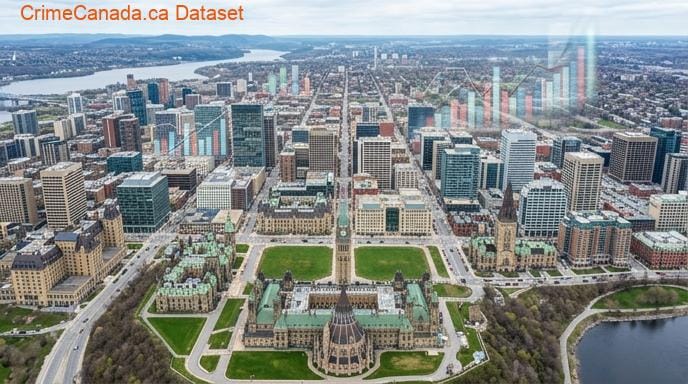
Ottawa pulls in hundreds of thousands of government workers, students, and newcomers every year. But beyond the postcard views of Parliament Hill and the Rideau Canal, there’s a more complicated safety story that anyone living here—or planning to—should know about. The city’s crime landscape has shifted in some meaningful ways over the past year.
Ottawa still holds its reputation as one of Canada’s safer major cities, but recent statistics show trends worth examining—from downtown property crime increases to violent incidents in certain neighbourhoods.
Ottawa’s 2024 Crime Statistics Overview
Ottawa Police Service data through October 2024 shows the city recorded roughly 52,000 Criminal Code incidents—a 3.2% jump from 2023. This increase ends a three-year decline, though Ottawa’s crime rate stays below the national average for cities over 500,000 residents.
Key 2024 Crime Figures:
- Total Criminal Code offences: 52,087 (projected year-end)
- Violent crime rate: 847 per 100,000 residents
- Property crime rate: 2,341 per 100,000 residents
- Crime Severity Index: 67.4 (national average: 75.8)
It’s a mixed picture overall. Violent crime actually fell 1.8% from 2023—but property crimes went the other way, jumping 7.3%, with theft under $5,000 and motor vehicle theft doing most of the damage.
Violent Crime Trends in Ottawa
Ottawa’s violent crime rate sits well below Toronto (952 per 100,000) and Montreal (891 per 100,000). Still, some categories showed troubling increases in 2024.
Homicides and Serious Violence
Ottawa recorded 14 homicides through November 2024, matching 2023’s total. The numbers stayed steady, but locations and circumstances changed significantly. Six incidents happened downtown—double last year’s concentration in that area.
Aggravated assault cases rose 12% to 287 incidents, with nearly half involving weapons. The bulk of these happened in entertainment districts on weekends—alcohol-fueled confrontations rather than anything premeditated or targeted.
Sexual Offences and Domestic Violence
Sexual assault reports climbed 8.4% to 412 cases. Police attribute much of that rise to improved reporting systems and greater victim confidence, not necessarily more incidents occurring. Specialized response teams appear to be making it easier for survivors to come forward.
Domestic violence calls held steady at around 8,200 incidents—about 16% of all police calls. Those numbers haven’t moved much in either direction, which suggests intervention programs are doing something right in what was once Ottawa’s most persistent crime category.
Property Crime Challenges
Property crime is what’s pushing Ottawa’s overall numbers up this year, with a few categories seeing sharp enough jumps to affect how residents feel about day-to-day security.
Theft and Break-ins
Theft under $5,000 jumped 15% to over 11,000 reported incidents. Retail theft accounts for roughly 40% of those cases, with the heaviest concentration in downtown shopping areas and major malls like Rideau Centre and Bayshore Shopping Centre.
Residential break-ins increased modestly (4.2%) to 1,847 cases, but the pattern shifted toward targeted daytime entries in suburban areas. Thieves now focus on electronics, jewelry, and small valuables rather than larger items.
Motor Vehicle Crime
Car theft has exploded in Ottawa this year—up 34% to 1,923 incidents. The surge follows a familiar pattern seen across Canada, where organized crime groups target popular models for quick resale or parts stripping.
Most Targeted Vehicles in Ottawa 2024:
- Honda CR-V (2017-2022 models)
- Toyota Highlander (2020-2023)
- Lexus RX series
- Dodge Ram pickups
- Honda Civic (2016-2021)
Most thefts happen in residential driveways and parking lots, with thieves using sophisticated electronic tools to bypass modern security systems.
Neighbourhood Safety Analysis
Crime distribution varies dramatically across Ottawa, creating distinct safety profiles throughout the city’s diverse neighbourhoods.
Safest Areas
Kanata and Stittsville consistently post Ottawa’s lowest crime numbers—total incidents run about 60% below the city average. Newer infrastructure, active community associations, and relatively high household incomes all play a role in keeping those figures down.
Barrhaven and Orleans aren’t far behind. Property crime stays particularly low here, thanks partly to newer housing and fewer commercial targets that attract opportunistic thieves.
The Glebe and Westboro balance walkability with safety better than most urban neighbourhoods. Active residents and organized business groups keep these areas well-watched without feeling overly monitored.
Areas Requiring Caution
Downtown Core (Centretown) carries Ottawa’s highest crime density, though context matters here—most of that reflects the concentration of commercial activity and nightlife rather than danger for people who live in the area. Theft, public intoxication, and minor assaults during evening hours make up the bulk of incidents.
Vanier has struggled with property crime and drug-related offences for years. Revitalization efforts are underway, but the neighbourhood’s crime rate still runs about 40% above the city average—a gap that’s been slow to budge despite ongoing investment.
Parts of Overbrook and Carson Grove see higher-than-average break-in rates. The older housing stock here tends to have fewer modern security features, which makes these homes more appealing to thieves looking for the path of least resistance.
How Ottawa Compares to Other Major Cities
Ottawa’s safety record looks pretty solid when you line it up against other big Canadian cities.
Crime Rate Comparisons (per 100,000 residents)
| City | Overall Crime Rate | Violent Crime | Property Crime |
|---|---|---|---|
| Ottawa | 3,188 | 847 | 2,341 |
| Toronto | 3,542 | 952 | 2,590 |
| Montreal | 3,721 | 891 | 2,830 |
| Vancouver | 4,205 | 1,023 | 3,182 |
| Calgary | 4,891 | 1,156 | 3,735 |
Ottawa consistently ranks among the top three safest major Canadian cities, typically trailing only Quebec City and some smaller urban centers. The capital’s lower crime rates stem from stable government employment, higher education levels, and significant investment in community policing programs.
Quality of Life Indicators
Beyond raw crime statistics, Ottawa excels in safety-related quality of life measures. Emergency response times average 7.2 minutes for priority calls—among Canada’s fastest. Street lighting covers 94% of residential areas, and the city maintains 847 security cameras in public spaces.
Emerging Crime Trends and Concerns
Several developing patterns in Ottawa’s crime landscape deserve attention from residents and policymakers.
Cybercrime and Fraud
Digital crimes affecting Ottawa residents surged 28% in 2024, though many incidents go unreported to local police. Romance scams, cryptocurrency fraud, and identity theft particularly target the city’s large senior population and international student community.
The Ottawa Police Service’s cybercrime unit handled over 2,100 cases, recovering roughly $3.2 million in fraudulent transactions. That sounds good until you realize experts peg total losses citywide at over $15 million annually—most victims never recover their money.
Drug-Related Offences
Drug possession charges dropped after policy changes, but trafficking and production cases jumped 11% in the other direction. Police took down 23 major operations this year, seizing record amounts of fentanyl and cocaine flowing through the region.
Downtown bears the brunt of the opioid crisis. Ottawa lost 47 people to overdoses through October 2024—a slight drop from 52 the previous year, but hardly enough to signal any real progress in this ongoing emergency.
Youth Crime Patterns
Youth crime statistics paint a complicated picture this year. Total charges against minors fell 8%—good news on the surface. But violent offences among young people spiked 15%, driven mostly by weapons charges and group altercations.
The flip side shows real improvement in schools, where incidents dropped 22% from 2023. Better security and early intervention programs seem to be paying off where kids spend most of their time.
Safety Tips for Ottawa Residents and Visitors
Knowing where and how crime tends to happen in Ottawa makes it easier to stay safe without treating every outing like a risk assessment.
Downtown and Entertainment Areas
ByWard Market and Elgin Street can get loud and messy on weekend nights, but most of what happens there involves intoxicated people making bad decisions—not anyone looking to target strangers. Sticking with a group and staying on well-lit main streets rather than cutting through alleys or empty parking lots makes a real difference.
Watch your belongings when you’re out eating or shopping downtown. Thieves grab phones and purses from restaurant tables more than you’d think, but staying alert usually prevents problems.
Residential Security
Install a doorbell camera and motion-activated lights—two simple upgrades that deter most break-in attempts. Burglars want easy targets, so anything that suggests they might get caught or identified sends them looking elsewhere.
Don’t leave your car running unattended, even for a few minutes. It’s a habit that feels harmless until it isn’t—and with auto theft climbing the way it has, an idling car in a driveway is an easy score.
Public Transportation Safety
OC Transpo’s safety record is solid overall, and serious incidents on buses and trains are genuinely rare. That said, it’s worth staying aware of your surroundings at major transit stations after dark, when foot traffic thins out and supervision drops off.
If something seems off, use the transit safety app to flag it rather than stepping in yourself. Security teams respond quickly to reported concerns.
Looking Ahead: Ottawa’s Safety Trajectory
Several factors suggest Ottawa’s crime trends may stabilize or improve in 2025, though challenges remain.
The city put $12.3 million toward community policing programs, including more foot patrols downtown and expanded youth services. These investments usually take 18-24 months to show measurable results.
Economic conditions remain stable—unemployment sits below national averages and federal hiring continues. Strong job markets typically correlate with lower property crime in cities.
But some regional trends could work against Ottawa. Drug trafficking between Ottawa and Montreal keeps growing, potentially driving local crime rates up. Rising housing costs might also fuel property crime in some neighbourhoods.
The Bottom Line on Ottawa Safety
Ottawa remains one of Canada’s safest major cities, with crime rates below national averages and strong community safety programs. This year’s crime increase reflects specific problems—mostly property crime and car theft—rather than any widespread breakdown in public safety.
Residents and visitors can feel confident in Ottawa’s safety while taking reasonable precautions appropriate for any major urban center. The city’s stable institutions, effective policing, and engaged communities create a foundation for continued safety improvements.
Most importantly, Ottawa’s crime statistics reflect patterns common to growing cities rather than unique local problems. Understanding these trends enables informed decisions about where to live, work, and visit while maintaining perspective on the capital’s overall safety profile.
For the most current crime statistics, safety alerts, and community updates, learn more at crimecanada.ca.