


gang-activity-canada-cities-biggest-problems
Gang-related crime affects communities across Canada, but the scale and nature of gang activity varies dramatically between cities. While police forces and government agencies often downplay specific details, publicly available data reveals clear patterns about where organized criminal groups operate most actively.
This analysis examines gang activity across major Canadian cities using verified statistics from Statistics Canada, RCMP reports, and municipal police data. The findings show concentrated gang presence in specific urban centers, with distinct regional differences in gang structure, criminal activities, and law enforcement responses.
Understanding Gang Activity in Canada
Gang activity in Canada differs from the street gang model common in American cities. Canadian organized crime groups often operate more like business networks, focusing on drug trafficking, money laundering, and cross-border smuggling rather than territorial street violence.
The RCMP defines a criminal organization as three or more people working together to commit serious crimes for profit. This definition captures everything from traditional motorcycle clubs to ethnic-based crime groups to loose networks of drug dealers.
Statistics Canada tracks gang-related incidents through police-reported crime data, but this captures only detected and reported activity. The actual scope of gang involvement in Canadian crime remains partially hidden due to the sophisticated nature of many operations.
Vancouver: Canada’s Gang Capital
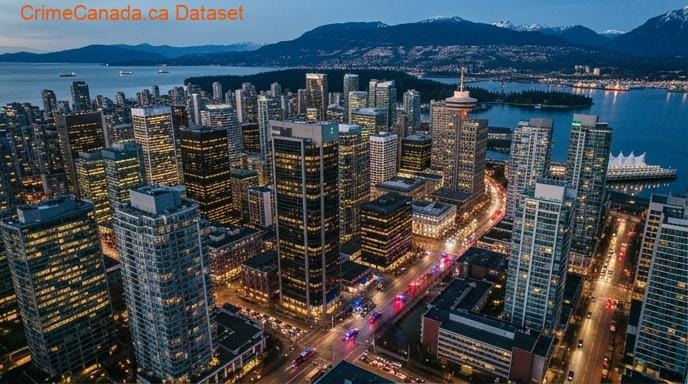
Metro Vancouver consistently reports the highest levels of gang-related violence in Canada. The region’s strategic location as a Pacific gateway makes it a natural hub for international drug trafficking, particularly fentanyl and cocaine imports.
The Lower Mainland gang conflict has produced over 400 shootings since 2020, according to RCMP data. These incidents cluster in Surrey, Burnaby, Richmond, and Vancouver proper, often involving disputes between rival drug trafficking networks.
Key factors driving Vancouver’s gang activity:
- Port access: Vancouver’s container terminals facilitate large-scale drug imports
- Real estate: High property values attract money laundering operations
- Demographics: Diverse population provides cover for various ethnic crime groups
- Geography: Proximity to US border enables cross-border smuggling
The Integrated Homicide Investigation Team reports that approximately 70% of Metro Vancouver homicides in 2026 showed gang connections, either through victim associations or suspect backgrounds.
Toronto: Complex Urban Gang Networks
Toronto’s gang landscape differs significantly from Vancouver’s import-focused model. The city’s gangs operate more like neighborhood-based crews involved in drug retail, robbery, and firearms trafficking.
Toronto Police Service data shows gang-related shootings concentrated in specific postal codes: M1B (Scarborough), M3N (North York), and M9A (Etobicoke). These areas report 3-4 times the city average for firearms incidents.
The city’s gang structure includes:
- Neighborhood crews: Small groups controlling specific housing complexes or street corners
- Prison networks: Connections formed in federal institutions that continue after release
- Family groups: Multi-generational crime families involved in various illegal activities
- Hybrid gangs: Loose associations that form and dissolve based on specific criminal opportunities
Toronto’s 2026 gang-related homicide rate reached 2.1 per 100,000 residents, double the national average but still below Vancouver’s rate of 3.4 per 100,000.
Montreal: Traditional Organized Crime Hub
Montreal maintains Canada’s most established organized crime presence, with roots dating back decades. The city’s criminal landscape includes traditional Italian-Canadian crime families, motorcycle clubs, and street gangs.
The Sûreté du Québec reports that Montreal-area organized crime groups generate an estimated $2-3 billion annually through drug trafficking, illegal gambling, construction fraud, and loan sharking.
Montreal’s organized crime operates differently than gang activity in other Canadian cities:
- Hierarchical structure: More formal organization with clear leadership chains
- Political corruption: Historical connections to municipal and construction industry corruption
- International ties: Strong connections to European and South American crime groups
- Sophisticated operations: Advanced money laundering and white-collar crime capabilities
Gang-related violence in Montreal tends to be more targeted and less random than in Vancouver or Toronto, reflecting the more business-oriented approach of established crime families.
Calgary: Emerging Gang Problems
Calgary has experienced rapid growth in gang activity over the past five years. The city’s economic boom attracted both legitimate workers and criminal networks looking to exploit new opportunities.
Calgary Police Service identifies approximately 1,200 individuals with confirmed gang associations in the city. These groups focus primarily on:
- Drug trafficking: Fentanyl and methamphetamine distribution networks
- Human trafficking: Exploitation of vulnerable individuals, particularly Indigenous women
- Fraud: Identity theft, credit card fraud, and cryptocurrency scams
- Firearms smuggling: Illegal weapons trafficking from the United States
The city recorded 47 gang-related shootings in 2026, a 35% increase from 2025. Most incidents occurred in the northeast communities of Forest Lawn, Dover, and Marlborough.
Winnipeg: Gang Violence and Social Issues
Winnipeg faces unique gang challenges tied to systemic social problems affecting Indigenous communities. The city’s gang activity intertwines with poverty, addiction, and historical trauma in ways not seen in other major Canadian cities.
Winnipeg Police Service data shows that approximately 60% of gang members in the city are Indigenous, despite Indigenous people representing only 12% of Winnipeg’s population. This disproportion reflects broader social inequalities rather than inherent criminality.
The city’s main gang-related issues include:
- Street-level drug dealing: Open-air drug markets in the North End and downtown core
- Recruitment of youth: Gangs targeting children as young as 10-12 years old
- Interpersonal violence: High rates of gang-on-gang violence and domestic disputes
- Property crime: Break-ins, auto theft, and robbery to fund drug purchases
Winnipeg recorded 42 homicides in 2026, with police attributing 28 to gang connections or drug trade disputes.
Edmonton: Oil Boom Crime Networks
Edmonton’s gang activity reflects the boom-and-bust cycles of Alberta’s energy economy. During oil price peaks, the city attracts criminal networks seeking to exploit high wages and transient populations.
The Edmonton Police Service tracks several distinct criminal groups:
- Motorcycle clubs: Traditional biker gangs involved in drug trafficking and intimidation
- Ethnic crime groups: Networks based on shared cultural backgrounds and international connections
- Prison gangs: Groups formed in federal penitentiaries that maintain operations on the street
- Hybrid networks: Loose associations that adapt quickly to law enforcement pressure
Edmonton’s gang-related crime peaked during the 2021-2022 oil boom, with 67 confirmed gang-related shootings. The 2026 total dropped to 31 incidents as economic conditions cooled.
Regional Patterns and Trends
Gang activity across Canada shows clear regional patterns based on geography, economics, and demographics:
Western Canada (Vancouver, Calgary, Edmonton):
- Import-focused drug trafficking
- International connections to Asia and Mexico
- Higher rates of firearms violence
- Resource economy influences
Central Canada (Toronto, Ottawa):
- Retail drug distribution networks
- Neighborhood-based territorial disputes
- Youth recruitment and street-level violence
- Urban poverty connections
Eastern Canada (Montreal, Halifax):
- Established organized crime families
- Maritime smuggling operations
- Political and construction industry corruption
- International European connections
Law Enforcement Response
Canadian law enforcement agencies use various strategies to combat gang activity, with mixed results across different cities.
The RCMP’s Integrated National Security Enforcement Teams focus on major organized crime groups with national or international reach. These units achieved 847 arrests related to organized crime in 2026, with 312 convictions.
Municipal police forces handle street-level gang activity through specialized gang units, community policing, and intervention programs. Success rates vary significantly:
- Vancouver: Project Rebellion resulted in 94 arrests and seizure of 47 firearms in 2026
- Toronto: Anti-Violence Intervention Strategy reported 23% reduction in gang-related shootings
- Montreal: Joint SPVM-SQ operations led to 156 organized crime arrests
- Calgary: Gang Reduction Strategy achieved 31% decrease in gang recruitment among youth
Data Limitations and Challenges
Measuring gang activity presents significant challenges for researchers and law enforcement. Official statistics likely undercount the true scope of gang involvement in Canadian crime.
Key data limitations include:
- Definition inconsistencies: Different agencies use different criteria to identify gang-related crimes
- Detection bias: Sophisticated criminal organizations avoid police attention more effectively
- Reporting gaps: Victims of gang violence often refuse to cooperate with police
- Jurisdictional issues: Multi-city operations create coordination problems between agencies
Statistics Canada acknowledges that gang-related crime statistics represent “the tip of the iceberg” rather than comprehensive measures of organized criminal activity.
Community Impact and Prevention
Gang activity affects Canadian communities far beyond direct participants. The presence of organized crime groups influences neighborhood safety, property values, and social cohesion.
Community-based prevention programs show promise in reducing gang recruitment:
- Winnipeg’s Bear Clan Patrol: Indigenous-led community safety initiative
- Toronto’s Violence Intervention Program: Hospital-based intervention for shooting victims
- Vancouver’s Integrated Gang Task Force: Multi-agency approach combining enforcement and prevention
- Calgary’s Gang Prevention Program: School-based education and mentorship
These programs require sustained funding and community support to achieve measurable results.
Conclusion
Gang activity in Canada concentrates heavily in Vancouver, Toronto, and Montreal, with emerging problems in Calgary and Winnipeg. Each city faces distinct challenges based on local geography, economics, and social conditions.
Vancouver’s position as an international gateway drives import-focused trafficking networks. Toronto’s dense urban environment creates neighborhood-based territorial disputes. Montreal’s established organized crime families operate sophisticated business-oriented operations.
Understanding these regional differences helps communities and law enforcement develop targeted responses. Effective gang reduction requires combining enforcement, prevention, and social programs tailored to local conditions.
The data shows gang activity remains a serious public safety concern across Canada, but the specific nature and scale varies dramatically between cities. Residents seeking current information about gang activity in their communities can access verified crime data and safety alerts through independent monitoring platforms.
Learn more about crime patterns and safety data in your community at crimecanada.ca.