


Myles Gray Case Renews Questions About Police Force and Mental Health Response in Metro Vancouver
Public Hearing Revives a 2015 Death That Still Shapes Safety Perceptions
The ongoing public hearing into the death of Myles Gray continues to draw attention to how police in Metro Vancouver respond to people in mental health crisis. On August 13, 2015, Gray, a 33-year-old man from the Sunshine Coast with a documented history of bipolar disorder, died after a prolonged and violent struggle with seven Vancouver Police Department (VPD) officers near Joffre Avenue on the Burnaby–Vancouver border.
More than a decade later, an inquiry led by the Office of the Police Complaint Commissioner (OPCC) is reviewing the officers’ conduct. A previous internal disciplinary process found no misconduct, and no criminal charges have been laid. A 2023 B.C. Coroners Service inquest, however, classified Gray’s death as a homicide and heard evidence of extensive injuries, including a fractured eye socket and crushed voice box. As of early 2026, the OPCC hearing has featured expert testimony, disturbing photographic evidence, and exhibits such as 911 call transcripts and officer interviews, but none of the seven involved officers has yet testified in person.
What the Exhibits Reveal About the Incident
Exhibits released by the OPCC provide a structured timeline of events rather than a single, unified narrative. The record begins with multiple 911 calls: Gray’s mother reporting him missing after he left his vehicle and belongings behind; an employer noting that he had walked away mid-delivery; and a nearby resident describing a shirtless man acting erratically, using a garden hose on a woman without provocation, yelling, and appearing disoriented.
Police radio recordings then capture officers converging on the area. Dispatch audio documents comments about Gray appearing intoxicated or high, officers requesting less-lethal options (including a beanbag shotgun), and escalating urgency as officers report that Gray is not yet in custody, followed by an audible roar in the background. Within minutes, officers are requesting multiple ambulances, first noting that Gray is still resisting, then reporting that he is unconscious and unresponsive. The same recordings also reference injuries to at least two officers.
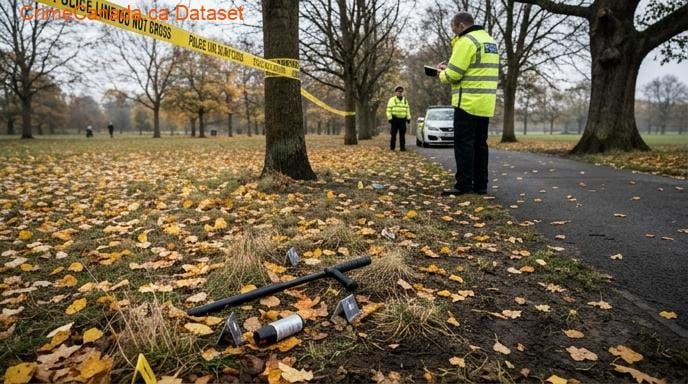
Interviews conducted with the seven officers between 2016 and 2021 describe a prolonged struggle involving baton strikes, pepper spray, knee and hand strikes, hobble restraints, and multiple attempts to handcuff Gray. Several officers independently emphasize what they perceived as exceptional strength and erratic shifts in Gray’s demeanour, including brief moments of apparent calm followed by sudden agitation. Photographs entered into evidence show a heavily disturbed scene, scattered police and medical gear, and relatively minor visible injuries to officers compared with the significant injuries documented on Gray’s body post-mortem.
Community Reaction and Local Safety Perception
Public discussion around Gray’s death has increasingly focused on two intersecting concerns: police use of force and the adequacy of mental health crisis response in British Columbia. On platforms such as Reddit and X, a substantial portion of commentary characterizes the case as an example of systemic failure, noting that more than ten years have passed without criminal charges despite a homicide ruling by the coroner. Some posts call for structural changes to VPD funding and oversight, while others emphasize the need for specialized crisis teams that prioritize de-escalation when dealing with people in psychological distress.
The neighbourhood where the incident occurred, near Joffre Avenue on the Burnaby side of the municipal border, is primarily residential and not typically flagged as a high-crime hotspot in regional data. Available information suggests that the area does not experience unusual levels of violent crime compared with similar suburban zones across Canada. For residents trying to contextualize risk, it may be more informative to look at broader patterns in mental-health-related calls and police interactions rather than hyper-local crime rates, much as one might examine municipal-level data for places like Grey, Manitoba crime and safety trends or West Grey, Ontario crime statistics when assessing local policing outcomes.
Online sentiment is notably polarized. Some community members empathize with the physical risk described by officers in their interviews, arguing that split-second decisions in unpredictable encounters are inherently dangerous. Others emphasize Gray’s documented mental illness, his lack of intoxicants according to toxicology evidence, and the extent of his injuries as reasons to question whether force was proportionate or whether alternative approaches could have prevented a fatal outcome.
How This Case Fits into Wider Police and Mental Health Trends
From a statistical standpoint, the Gray case is part of a larger provincial pattern involving police responses to mental health calls. Across B.C., police-involved deaths averaged about eight per year between 2015 and 2024, with approximately 40 per cent linked to situations where the person was believed to be in mental crisis. During the same period, mental health–related 911 calls in the Vancouver–Burnaby region have risen significantly—roughly 15 per cent between 2020 and 2025—while use-of-force incidents are estimated to occur in about 5–7 per cent of those calls.
Overall violent crime in major B.C. urban centres has remained relatively stable in recent years, with assault rates in large cities such as Vancouver tracking around 1,200 incidents per 100,000 residents according to national datasets. Similar patterns can be observed when comparing other Canadian jurisdictions via municipal crime dashboards, such as Grayson, Saskatchewan crime statistics, where year-over-year variation in violence does not always correspond to major shifts in policing policy. However, incidents that end in serious injury or death—especially involving individuals with known mental health conditions—have an outsized impact on public trust and perceptions of safety.
The Gray hearing has also highlighted questions about training and oversight. Expert witnesses have pointed to the need for more consistent regional standards on use of force, scenario-based training for encounters involving psychosis or extreme agitation, and clearer protocols for transitioning from physical control to medical care. The pauses and delays in the OPCC hearing, including a four-week halt in early 2026 due to procedural disputes, have further fueled frustration among those who see the process as slow and opaque, while others argue that thorough review is necessary to ensure due process for the officers involved.
For residents of Metro Vancouver, the immediate personal risk from an incident like this remains low, but the case underlines a broader safety issue: how the system responds when a neighbour, family member, or stranger is in psychological crisis in a public space. The balance between officer safety, public safety, and the health needs of the person in crisis continues to be at the centre of local debate and policy discussion.
About This Report
This safety alert was generated by aggregating data from local authorities, community reports, and open-source intelligence. Our mission at Crime Canada is to provide citizens with localized safety data and context. We are not the original creators of the underlying news reports.
Primary Source: Information in this report was initially covered by News Staff for CityNews.
Additional Research & Context
- Background on expert testimony about use-of-force standards in the Gray hearing is summarized in a CityNews report on regional training recommendations: police need regional training centres on use of force.
- A separate CityNews article details forensic findings that no alcohol or psychedelics were detected in Gray’s system, shaping the discussion about his behaviour and mental state: toxicologist’s evidence in the Myles Gray hearing.
- Procedural developments, including the temporary halt and later resumption of the public hearing, are outlined in CityNews coverage of the OPCC process: public hearing for police-involved death of Myles Gray resumes.