


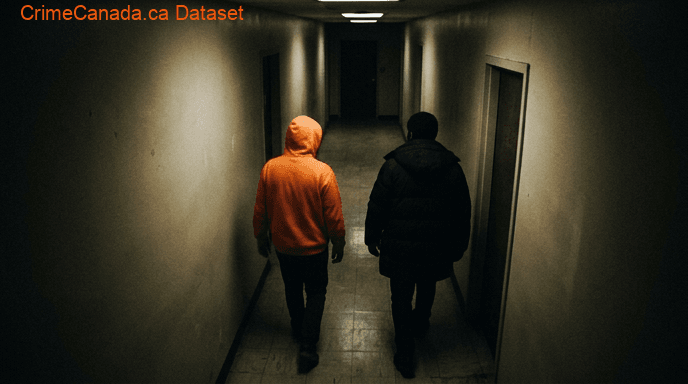
Ottawa Police Seek Public Help After Stairwell Assault on Dynes Road
Section 1: What Happened & Why It Matters
Authorities are appealing to the public for assistance after a reported assault inside a residential building near Dynes Road and Hog’s Back Falls in Ottawa. On the evening of December 20, officers from the Ottawa Police Service responded to calls about a violent incident in a stairwell at a property in the 900 block of Dynes Road.
Police say they arrived at approximately 7:06 p.m. and located a victim in the building. Investigators are now working to identify two men believed to be involved in the assault. To advance the investigation, officers have released clothing descriptions and key details and are asking anyone with information to contact the West Criminal Investigations Section at 613-236-1222, extension 2666 or to reach out anonymously through recognized crime-stopper channels.
Section 2: Community Context & Perceived Safety
The Dynes Road corridor, close to Hog’s Back Falls and several higher-density residential buildings, is a mixed community area with students, families, and long-term tenants. Stairwells and enclosed common areas in multi-unit buildings are a recurring focus for safety planning because they are semi-private spaces where there is less natural surveillance and fewer passersby than on open streets.
While the specific online comments and social media reactions to this case are not available in the provided material, incidents of stairwell assaults in apartment complexes typically generate concern about building access controls, lighting, and security cameras. Residents in similar situations often raise questions such as whether entry doors are consistently secured, whether visitor access is being monitored, and whether existing CCTV systems are functioning and positioned to capture key areas like stairwells and lobby entrances.
For people living or working in the Dynes Road area, a stairwell assault can feel particularly unsettling because it happens inside what many consider a semi-protected environment. Even with limited public details about the motive or any links between the parties, the fact that the incident occurred within a residential building may prompt tenants to reassess their personal routines—such as avoiding isolated stairwells at off-peak hours, walking with others when possible, and promptly reporting suspicious behaviour to building management or police.
In many Canadian cities, including Ottawa, community responses to such incidents typically involve a mix of concern for the victim, calls for better security from landlords or property managers, and support for police efforts to identify the suspects using surveillance footage, witness statements, and public tips. This appeal for help from the West Criminal Investigations Section follows that common pattern: investigators are relying on anyone who recognizes the described clothing or has knowledge of the individuals involved to come forward.
Section 3: How This Fits Into Broader Crime Patterns
Although detailed, up-to-date crime statistics for this specific address were not included in the source material, the nature of this incident aligns with patterns seen in many urban centres across Canada. Assaults in multi-residential buildings tend to fall into a few broad categories: disputes between acquaintances or neighbours, targeted conflicts moving from another setting into a building, or opportunistic violence in poorly monitored common spaces.
Within Ottawa, police and community safety partners routinely emphasize the importance of controlled access and environmental design in reducing the risk of crime in high-rise and mid-rise housing. Measures such as secure entry doors, adequate interior and exterior lighting, clear sightlines in stairwells, and visible cameras can deter potential offenders and improve the chances of identifying suspects when incidents do occur. The fact that investigators are now seeking the public’s help suggests that either surveillance images, witness descriptions, or both are being used to piece together who may have been in the stairwell at the time of the assault.
This case also highlights a broader reality: many personal-violence events do not happen in public parks or along major streets but in liminal spaces—hallways, elevators, parking garages, and stairwells—where offenders may feel less exposed. These environments can create a false sense of security for residents, who may assume that being “inside the building” automatically means being safe.
From a community safety perspective, residents and property owners in the Dynes Road area can consider practical, non-alarmist steps that align with national best practices:
- Reporting any malfunctioning doors, locks, intercoms, or lighting to building management promptly.
- Using well-lit routes and avoiding isolated stairwells when possible, especially during quieter evening hours.
- Being cautious about holding doors open for unknown individuals and directing visitors to use proper buzzer or access procedures.
- Contacting police when they witness or experience threats, harassment, or violence, so patterns can be documented and addressed.
Ultimately, this incident appears to be one of many localized assaults that, while not necessarily indicative of a crime “wave” on their own, matter greatly to those who live nearby. Each reported and investigated case contributes to a more accurate picture of community safety and can inform how resources are deployed in neighbourhoods like Dynes Road.
Section 4: Required Disclaimer & Sources
About This Report
This safety alert was generated by aggregating data from local authorities, community reports, and open-source intelligence. Our mission at Crime Canada is to provide citizens with localized safety data and context. We are not the original creators of the underlying news reports.
Primary Source: Information in this report was initially covered by Natasha O’Neill for CityNews Ottawa.
Additional Research & Context
- Incident details and suspect descriptions are based on information released in the CityNews Ottawa report on the Dynes Road stairwell assault and the linked Ottawa Police Service bulletin seeking public assistance.
- General best practices for multi-residential safety and stairwell security draw on typical recommendations from Canadian police services and crime prevention through environmental design (CPTED) principles.
- Context on urban assault patterns in residential buildings reflects common trends reported by law enforcement and municipal safety partners in large Canadian cities.