


Toronto ‘Ghost Gun’ Investigation Raises New Questions About 3D‑Printed Firearms and Community Safety
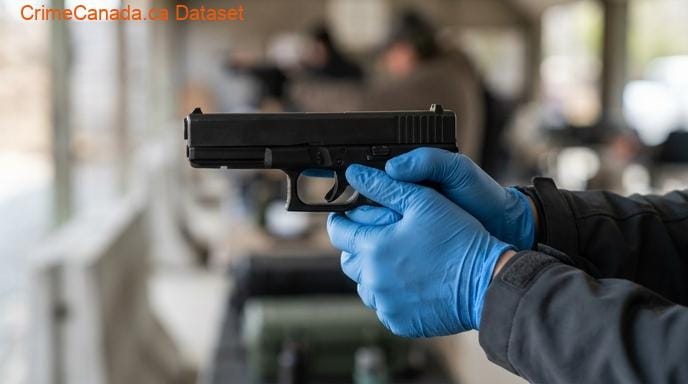
Police in Toronto, Ontario have announced the results of a months‑long investigation into privately manufactured firearms, often called “ghost guns.” The probe, known as Project Cluster, led to the arrest of a 28‑year‑old Toronto man and the seizure of completed 3D‑printed handguns, parts for dozens of prohibited firearms, and digital files allegedly capable of producing untraceable weapons.
According to information released by the Toronto Police Service (TPS) and federal partners, the case began in November 2025 after the RCMP flagged suspicious online advertisements for firearm components. Investigators later executed search warrants on December 9, 2025 at a residence and vehicles linked to the suspect, identified as Brian Narciso, 28, of Toronto. The case is notable for including charges under a new Criminal Code offence (s.102.1) that targets the possession of computer data intended for illegal firearm manufacturing. Narciso appeared in court on February 26, 2026, and the investigation into any broader connections remains ongoing.
Community Context & Social Sentiment
The areas most directly affected by related firearm activity are in North York, particularly around Lawrence Avenue West and Caledonia Road. Between late June and late October 2025, police documented multiple firearm discharge incidents in this corridor. Officers allege the suspect repeatedly travelled to a secluded location to fire weapons, leaving behind more than 100 cartridge casings and unspent rounds. In one instance, a projectile reportedly entered a nearby home, underscoring the potential risk to residents even when shootings are not targeted at specific people.
Broader public discussion about gun violence in Toronto reflects a complex mix of relief and apprehension. On social platforms and in community forums, residents have acknowledged data showing that homicides and shootings have recently fallen from earlier peaks, yet many still say the city does not feel significantly safer. Commenters frequently point to high‑profile incidents and the growing technical sophistication of criminal activity—such as 3D‑printed firearms—as reasons for persistent unease. Concerns about youth involvement in gun crime, including serious charges laid against teenagers and even pre‑teens in recent years, contribute to a perception that risks are evolving rather than disappearing.
For readers seeking a data‑driven overview of local conditions, the Toronto Crime Statistics & Safety Report provides regularly updated figures on homicides, shootings, and other offences, allowing residents to compare neighbourhood‑level experiences with citywide trends.
What Investigators Reported Finding
During the December 9, 2025 search warrants linked to Project Cluster, TPS says officers seized:
- Completed firearms, including 3D‑printed handguns
- Components investigators believe could be used to assemble approximately 24 prohibited firearms
- A 3D printer and related equipment
- Digital storage devices and computer systems containing firearm‑related data
- Mobile devices and alleged proceeds of crime
Police further allege that Narciso sold a key component of a 3D‑printed handgun (the receiver, which legally defines the firearm) along with other parts required to make the weapon operational. Forensic analysis linked several shooting incidents to a single firearm, and two seized 9mm 3D‑printed handguns were reportedly tied to three separate shootings in October 2025. While investigators currently believe the accused was operating alone, they have emphasized that evidence continues to be reviewed for any indications of a wider network or customer base.
The set of charges includes firearm trafficking and the new offence of possessing data for the purpose of manufacturing a firearm. That latter charge reflects an effort to address not only physical gun parts but also the digital files and technical instructions that enable do‑it‑yourself weapon production using consumer‑grade equipment.
How This Case Fits Into Toronto’s Wider Crime Picture
From a citywide perspective, the Project Cluster case emerges during a period when Toronto’s overall homicide and shooting numbers have been trending downward from earlier highs. In recent years, the city saw a surge in firearm incidents—peaking in 2019 with close to 500 recorded shootings—but more recent data from 2024 and 2025 shows a decline, with “almost 200 fewer shooting occurrences” in 2025 compared with the previous year, according to police summaries.
Homicides have also fallen. By 2025, the number of killings in Toronto was significantly lower than in earlier years, and fatal shootings and stabbings both decreased by more than 40 percent year‑over‑year in some reporting periods. These reductions are often attributed to targeted enforcement work by the Integrated Gun and Gang Task Force, inter‑agency cooperation with the Ontario Provincial Police and federal partners, and focused efforts to remove smuggled firearms from circulation. Readers can explore how these trends compare with surrounding communities via the broader Canadian Crime Statistics dataset.
At the same time, authorities and community advocates caution against assuming that lower totals mean the underlying risks have been fully resolved. The emergence of privately manufactured firearms—often lacking serial numbers and built from kits or 3D‑printed parts—poses specific investigative challenges. Unlike traditional smuggling routes, ghost‑gun production depends on access to equipment, know‑how, and online distribution channels for designs and parts. This is why Project Cluster’s use of the new Criminal Code provision targeting digital data is seen as an important legal test.
Another tension in the statistics is the rising share of youth implicated in serious violence. Reports from 2024–2025 note that the number of teenagers arrested for shootings in Toronto roughly doubled over a one‑year span, with more than a dozen young people facing homicide charges, including a child as young as 12. These developments contribute to a sense that while overall violence may be decreasing, certain high‑risk patterns—such as youth access to weapons or the spread of 3D‑printed guns—require sustained attention.
For residents trying to understand how cases like Project Cluster relate to day‑to‑day safety, city‑level dashboards such as Toronto, Ontario — Crime Statistics & Safety Data offer a way to track longer‑term trends rather than relying solely on individual headlines. In combination with official police updates and court proceedings, these tools can help communities gauge whether new enforcement strategies are having measurable impact.
About This Report
This safety alert was generated by aggregating data from local authorities, community reports, and open-source intelligence. Our mission at Crime Canada is to provide citizens with localized safety data and context. We are not the original creators of the underlying news reports.
Primary Source: Information in this report was initially covered by Lucas Casaletto for CityNews.
Additional Research & Context
- For a deeper look at how shootings and homicides in Toronto have changed over time, see citywide figures summarized in recent homicide and gun violence reports cited in the investigative research.
- Background on Project Cluster and related inter‑agency firearms enforcement initiatives can be found in public statements and statistical briefings issued by the Toronto Police Service and partner agencies.
- Context on youth involvement in serious violent crime is drawn from 2024–2025 analyses highlighting increases in teen arrests for shootings and homicide across Toronto.