


Toronto & York Region Residents Warned After $1M Condo Break‑In Ring Allegedly Used Construction Disguises
Three men are facing extensive charges after a six‑month investigation into a series of daytime break‑and‑enters targeting high‑end apartment and condo units across Toronto and York Region. Investigators allege the group dressed as construction workers to move through residential buildings without attracting attention, then forced entry into individual units and removed high‑value items.
The probe, referred to by police as Project Compass, reportedly began in September 2025, after officers in Toronto noticed a pattern of daytime thefts involving jewellery, precious metals, cash, family heirlooms and other easily transportable valuables. Authorities estimate more than 30 homes were affected, with combined losses surpassing $1 million. According to open‑source research, the three accused appeared in court on Monday, March 30, 2026, and no subsequent court outcomes or additional arrests have been publicly reported at the time of this brief.
How the Alleged Break‑In Scheme Worked
Based on police statements summarized in local reporting, the suspects allegedly adopted a simple but effective tactic: wearing construction clothing and gear that made them look like legitimate tradespeople working in the buildings. This appearance, paired with daytime activity, likely reduced suspicion from security staff and residents who are accustomed to seeing contractors and maintenance teams on site.
Once inside, investigators say the men targeted units within higher‑end buildings, forcing doors and focusing on small items with significant resale value. Stolen property reportedly included luxury jewellery, gold and other precious metals, cash, electronics and personal heirlooms. Police also linked the incidents to a newer silver Jeep Compass, which was allegedly used as a common vehicle across multiple crime scenes and helped detectives tie the series of break‑ins together.
The accused have been identified in media reports as Mindia Jintcharashvli, 41, of Vaughan; Valeri Mandaria, 35, of Vaughan; and Imeda Khabuliani, 49, of Toronto. Collectively, they face hundreds of charges, including break and enter, conspiracy to commit an indictable offence, and possession of proceeds of crime. All three remain before the courts, and the allegations have not been proven.
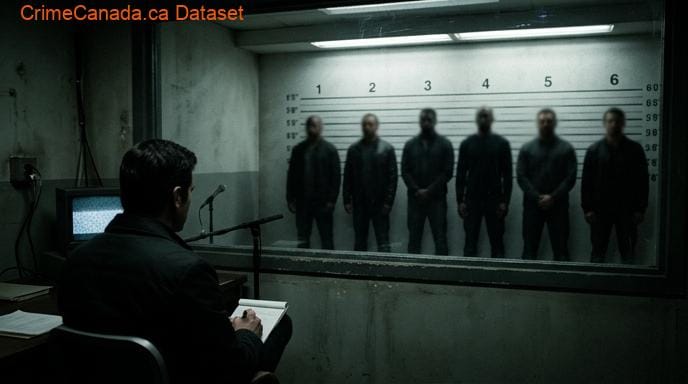
Investigators have reportedly released images of the accused and are appealing for additional victims who may not yet have realized items are missing, or who noticed suspicious construction‑clothed individuals in their buildings, to contact police. This request suggests the known 30+ incidents may not fully capture the scope of the alleged activity.
Community Reaction & Local Safety Context
Online discussion in affected areas of Toronto and York Region reflects a mix of concern and fatigue about organized residential property crime. Social media posts highlight a perception that professional break‑in crews are increasingly targeting condo and townhouse communities, particularly in suburbs and growth areas such as Vaughan and Richmond Hill.
Residents commenting on related York Region cases have described the situation as “getting out of hand,” particularly in pockets of Richmond Hill that have experienced repeated high‑end residential thefts. In one widely circulated clip from a police helicopter involved in a separate York Regional Police operation, air support officers can be heard tracking suspects fleeing a break‑in; some community members have drawn comparisons between that incident and the construction‑disguise pattern described in this case.
These reactions align with broader worries about crime in major urban centres. While official statistics vary by municipality, large metropolitan areas such as Toronto’s crime and safety data consistently show that property offences, including break‑and‑enter, remain a significant portion of reported crime. Residents in multi‑unit buildings often rely on controlled access, concierge staff and cameras, and cases like Project Compass can erode confidence in these measures when offenders find ways to blend in as workers or visitors.
Concerns are not limited to Toronto alone. Smaller and mid‑sized Ontario communities, such as those covered in broader datasets like Thames Centre crime statistics and safety data, also track fluctuations in property crime and organized theft groups. Comparing urban and semi‑rural areas shows that while the absolute number of incidents is higher in big cities, targeted residential thefts can significantly impact community perceptions of safety wherever they occur.
How This Case Fits Wider Crime Trends
Available open‑source information suggests that the Project Compass arrests form part of a wider pattern of organized residential break‑ins across the Greater Toronto Area. In late 2025 and early 2026, York Regional Police (YRP) publicly detailed several unrelated investigations involving multiple suspects, stolen property valued in the six‑figure range and a focus on higher‑value homes.
In one such YRP operation from October 2025 to January 2026, authorities linked a group of suspects to roughly 20 break‑and‑enters in Markham, Vaughan and Richmond Hill, with losses exceeding $150,000. Another February 2026 case in Richmond Hill involved at least 14 break‑and‑enters and required police air support to track suspects fleeing from a residence. In that series, officers noted the use of a white Toyota RAV4 as a common vehicle, similar to how the silver Jeep Compass appears to have been a key thread in the Toronto investigation.
While each case is distinct and involves different accused individuals, the common elements are notable from a community safety perspective:
- Daytime targeting of residential properties, when many occupants are at work or school.
- Use of disguises or props (such as construction clothing) to avoid drawing attention.
- Reliance on vehicles to move quickly between neighbourhoods and across municipal boundaries.
- Focus on compact, high‑value items that can be stored, transported, and resold with minimal traceability.
This pattern reinforces the importance of coordinated responses between police services, property managers and residents. For multi‑unit buildings in Toronto and beyond, security experts often recommend:
- Verifying that any construction or maintenance workers seen in corridors or amenity spaces are scheduled and authorized.
- Ensuring building access points (including side and service doors) are not propped open.
- Reporting unfamiliar individuals who appear to be canvassing doors or lingering on residential floors without clear purpose.
- Keeping updated inventories and photos of valuables to assist in potential recovery efforts.
Although reported break‑and‑enter rates can fluctuate year to year, the Project Compass file underscores how a relatively small group of offenders can cause disproportionate financial loss and anxiety across dozens of households. Reviewing local data, such as regional crime statistics and safety trends in Ontario communities, can help residents understand whether they are seeing isolated incidents or part of a sustained pattern of property crime.
About This Report
This safety alert was generated by aggregating data from local authorities, community reports, and open-source intelligence. Our mission at Crime Canada is to provide citizens with localized safety data and context. We are not the original creators of the underlying news reports.
Primary Source: Information in this report was initially covered by Lucas Casaletto for CityNews.
Additional Research & Context
- CTV News Toronto video coverage from February 27, 2026, details a separate York Regional Police operation in Richmond Hill involving air support and multiple suspects linked to over a dozen break-and-enters, illustrating similar organized crime patterns: watch the CTV segment.
- A January 28, 2026 article on York Region break-and-enters provides background on another investigation tying suspects to roughly 20 incidents and over $150,000 in stolen property across Markham, Vaughan and Richmond Hill: read the York Region case report.
- Additional video from an unrelated Mississauga break-in in October 2025 shows how suspects move through residential properties and evade detection, offering insight into common tactics used by property crime groups: view the Mississauga incident footage.