


York Region Multi-City Drug and Gun Seizure Raises Questions About Ongoing Cocaine Trade
Overview: What Authorities Reported
York Regional Police say six adults are facing charges after a multi-jurisdiction drug and firearm investigation that stretched across several Ontario communities. According to the initial news report, officers were probing suspected cocaine trafficking beginning around October 2025, focusing on activity linked to York Region but extending well beyond its borders.
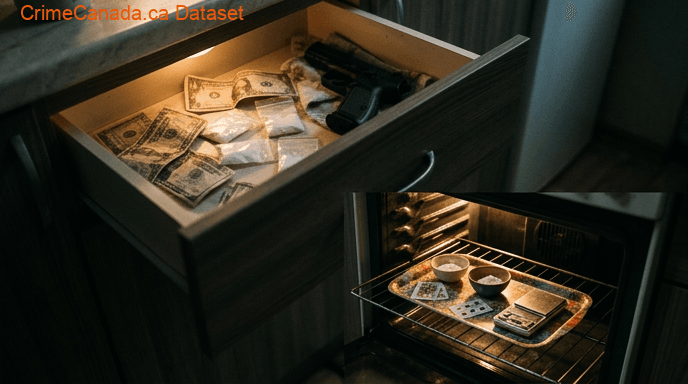
Over roughly three months, police executed nine search warrants at four homes and five storage units in Toronto, Vaughan, Barrie, Espanola and Innisfil. Investigators also obtained a separate warrant for a federal correctional facility in Gravenhurst. The operation resulted in the seizure of approximately 102 kilograms of cocaine, a loaded firearm, prohibited firearm devices, and more than $135,000 in Canadian currency. No injuries or identified victims were reported, and the case is being treated as a proactive enforcement effort targeting drug trafficking and illegal weapons.
Who Has Been Charged
Based on publicly available information from the initial coverage, the following individuals have been charged in connection with this investigation:
- Sherrie Donovan, 40, of Espanola – charged with possession of cocaine for the purpose of trafficking and conspiracy to traffic cocaine.
- William Donovan, 29, of Toronto – charged with possession of cocaine for the purpose of trafficking and conspiracy to traffic cocaine.
- Kevin Forde, 36, of Barrie – charged with possession of cocaine for the purpose of trafficking, possession of a prohibited firearm, possession of prohibited devices, possession of a prohibited firearm with ammunition, careless storage of a firearm, and possession of proceeds of crime over $5,000.
- Solange Khan, 35, of Barrie – facing the same firearm, trafficking, and proceeds-of-crime charges as Forde, along with a separate count of conspiracy to traffic cocaine.
- Doniele Elie, 33, of no fixed address – charged with conspiracy to traffic cocaine.
- John Novak, 67, of Espanola – charged with possession of cocaine for the purpose of trafficking.
Searches of open court and news sources did not reveal confirmed prior criminal histories for these individuals. All charges listed are allegations that have not been proven in court. As of the latest OSINT review, there were no publicly reported updates on court outcomes, additional arrests, or changes to the charges beyond what was contained in the initial December 2025 coverage.
Community Context and Social Sentiment
This case does not centre on a single neighbourhood but rather on a suspected distribution network spanning urban and smaller communities, from Toronto and Vaughan in the GTA to Barrie, Innisfil, and northern town Espanola, as well as a federal prison in Gravenhurst. Collectively, these areas have seen repeated enforcement actions by York Regional Police and partner agencies targeting the movement of cocaine, other illicit drugs, and illegal firearms along major transportation corridors.
Online reactions captured in OSINT scans show a mix of concern and resignation rather than shock. Some local observers on social platforms described the seizure as part of a familiar pattern of mid-level trafficking cases in the region, with comments questioning whether such operations disrupt higher-level suppliers. One X user summarized the mood by calling it “another day, another kilo bust in York,” while a Reddit user speculated about a “cocaine pipeline” running between communities like Espanola and Barrie, emphasizing that removing firearms from circulation is seen as a key benefit of these operations.
Importantly, there are no verified reports of direct threats to specific residents or targeted violence linked to this particular case. Instead, the safety risk identified here is indirect but significant: large volumes of cocaine and at least one loaded, prohibited firearm allegedly operating within reach of multiple Ontario communities. Enforcement actions of this scale are generally intended to reduce the likelihood of associated violence, overdoses, and property crime that can arise around drug markets.
How This Fits Local Crime and Enforcement Trends
While 102 kilograms of cocaine is a substantial seizure on its own, public data and prior press releases suggest it is part of a broader pattern of drug and gun enforcement in the York Region and GTA area. Over 2025 and early 2026, York Regional Police publicized several major projects run through specialized units such as the Guns, Gangs and Drug Enforcement Unit.
Examples include:
- Project Chatter (mid-2025), which reportedly resulted in the seizure of dozens of illegal firearms and a large quantity of fentanyl with an estimated multi-million-dollar street value, along with charges against more than 20 suspects.
- Multiple targeted busts in late 2025 that led to arrests of several men on a combined set of over 20 offenses, involving firearms, stun guns, and various drugs.
- Project 8 Mile (February 2026), focused on Georgina, Toronto, and Vaughan, in which officers reportedly recovered one firearm, a crossbow, tens of thousands of dollars in cash, and narcotics including cocaine, methamphetamine, and MDMA.
Against that backdrop, the 102-kilogram cocaine seizure in this case appears consistent with an ongoing law-enforcement focus on interlinked drug distribution networks rather than isolated street-level dealing. While many of these operations differ in scale and drug type, they share two dominant themes: the recurring presence of illegal firearms and the movement of high-value narcotics through York Region and surrounding municipalities.
From a community safety standpoint, this suggests that residents are not dealing with a one-off incident but with an entrenched trafficking ecosystem that law enforcement is attempting to disrupt piece by piece. Each case removes some quantity of drugs and weapons, but OSINT sentiment indicates public skepticism about how far up the supply chain these investigations reach. At the same time, the absence of reported injuries in this particular investigation reflects that proactive enforcement can occur without immediate confrontations in residential areas.
For residents, practical takeaways include staying informed about major enforcement actions, recognizing that drug and gun investigations may involve storage lockers and residences in otherwise quiet neighbourhoods, and using local crime-mapping or police reporting tools to flag suspicious activity early. Community cooperation—through tips and timely reporting—remains a key input to these larger projects, even when investigations are highly specialized and intelligence-driven.
About This Report
This safety alert was generated by aggregating data from local authorities, community reports, and open-source intelligence. Our mission at Crime Canada is to provide citizens with localized safety data and context. We are not the original creators of the underlying news reports.
Primary Source: Information in this report was initially covered by Denio Lourenco for CityNews.
Additional Research & Context
- Background on York Region drug and gun enforcement trends and related charges was drawn from a summary analysis by UL Law’s overview of York Region drug bust cases.
- Context on large-scale firearms and fentanyl seizures, including Project Chatter and subsequent major YRP operations, was obtained from York Regional Police news releases.
- Additional detail on comparable multi-suspect drug and gun investigations in 2025, and their connection to wider GTA trafficking patterns, was reviewed using coverage such as CityNews reporting on earlier York Region busts.