NewsYarmouth, NS
Yarmouth Woman, 29, Arrested After Traffic Stop Leads to Cocaine Seizure
A 29-year-old Yarmouth woman was arrested early Oct. 27 after a traffic stop on Pleasant St. led to a cocaine seizure, according to the RCMP.
 Crime Canada
Police appeals
Explore the data
Rankings and reports
Charged with extortion in Nova Scotia? A plain-language guide to s. 346 of the Criminal Code, the court process, possible penalties, defences and help for victims.
Crime Canada newsroomPublished
Being charged with extortion is frightening. The charge sounds serious because it is serious. It is also only an accusation. You are presumed innocent, and the Crown must prove the case beyond a reasonable doubt. This guide explains what an extortion charge in Nova Scotia means, what usually happens next, and where you and your family can get help.
Extortion is set out in section 346 of the Criminal Code. In plain terms, a person commits extortion if, without reasonable justification or excuse and intending to obtain something, they use threats, accusations, menaces or violence to make someone do something, or try to.
The Crown is the prosecutor who brings the case on behalf of the public. In Nova Scotia, that is a Crown attorney with the Nova Scotia Public Prosecution Service. To get a conviction, the Crown must prove each of these elements beyond a reasonable doubt:
Charged or under investigation? Get a free consultation →
Courts read "anything" broadly. It is not limited to money. It can include sexual images, sexual acts, property, a job, or getting someone to drop a complaint. Common situations include online "sextortion", collecting a debt through threats, threatening to reveal embarrassing information, and demands for "protection" payments from businesses.
An attempt is enough. The offence can be complete even if the other person never paid or did what was demanded. The Code also says that a threat to start civil proceedings (for example, to sue someone) is not a threat for the purposes of this section.
Extortion is a straight indictable offence. It is not a hybrid offence, so the Crown cannot proceed by summary conviction. Bill C-75 made many offences hybrid in 2019, but extortion was not one of them. The maximum penalty is life imprisonment. For a national overview, see our guide to extortion under the Criminal Code.
After an arrest, police may release you on an undertaking, which is a written promise to attend court and follow certain conditions. If police do not release you, you must be brought before a justice, usually within 24 hours, for a bail hearing. If you are released, it will be on a release order with conditions.
Common conditions in extortion cases include:
Breaking a condition is a separate criminal offence, so follow every condition exactly. In some situations, such as allegations involving a firearm or a criminal organization, or if you were already on release for another indictable offence, you may have to show why you should be released (called a reverse onus). Bail laws have been amended several times in recent years and further changes have been proposed, so a lawyer will check the rules that apply to you.
In Nova Scotia, police generally lay the charge. Crown attorneys with the Nova Scotia Public Prosecution Service then review the file and decide whether there is enough evidence and whether it is in the public interest to continue. The Crown can proceed, withdraw the charge, or stay it.
Your first appearance will be in the Provincial Court of Nova Scotia, whether the charge was laid in Halifax or elsewhere in the province. It is not a trial. It is usually about getting the evidence and setting the next date. You do not have to enter a plea at the first appearance. Do not miss it, because failing to attend can lead to a warrant and another charge.
Disclosure is the Crown's evidence, which you have a right to see. In extortion cases it often includes police reports, witness statements, screenshots, social media records, phone extractions, bank or e-transfer records and video. Digital evidence can be large and can take time to arrive.
In hybrid offences, the Crown elects (chooses) summary or indictable. Because extortion is indictable only, there is no Crown election. Instead, you choose how to be tried:
Because the maximum penalty is life, you can ask for a preliminary inquiry (a hearing to test whether there is enough evidence for trial) if you choose the Supreme Court. This choice has real strategic effects, so get legal advice before making it.
Many cases end without a trial. Depending on the facts, the Crown may withdraw or stay the charge, the case may resolve with a peace bond (a court order under s. 810 to keep the peace and follow conditions, usually for up to 12 months, without a conviction), or there may be a plea to a different charge. Otherwise, the case goes to trial. Whether any option is available depends on the evidence and the Crown's position.
Under the Supreme Court of Canada's Jordan framework, a case should generally be finished within 18 months in provincial court and 30 months in superior court (or in provincial court after a preliminary inquiry). Delay caused by the defence does not count. Many extortion cases take several months to over a year.
| Situation | Summary conviction | Indictable (only option) |
|---|---|---|
| Restricted or prohibited firearm used, or any firearm used for a criminal organization | Not available | Maximum life; minimum 5 years (first offence) or 7 years (second or later) |
| Any other firearm used | Not available | Maximum life; the 4-year minimum was repealed by Bill C-5 (2022) |
| All other cases | Not available | Maximum life; no minimum |
The federal government has introduced legislation aimed at extortion, including proposals to bring back a minimum sentence where a firearm is used. Ask a lawyer whether any change is in force. A harsher penalty generally cannot apply to an offence committed before it took effect.
The maximum is for the worst cases. Actual sentences vary widely.
A court may also order a DNA sample, restitution, and a weapons prohibition, which can be mandatory where violence was used, threatened or attempted.
Criminal record: A conviction creates a criminal record. Because extortion is indictable, you can apply to the Parole Board of Canada for a record suspension only 10 years after completing your whole sentence, including any fine or probation. (The 5-year period for summary offences does not apply.) These rules have changed before and may change again.
Travel to the US: A conviction for an offence like extortion may make you inadmissible to the United States. Border officers can ask about charges as well as convictions. A US waiver may be needed.
Immigration: Because the maximum is life, a conviction counts as "serious criminality" under Canadian immigration law. Permanent residents and other non-citizens may face loss of status and removal. Get immigration advice before any plea or resolution.
Employment: Criminal record and vulnerable sector checks, professional licensing and security clearances can all be affected. Bail conditions, such as device limits, may also affect your work. The complainant may also sue to recover money.
Every case turns on its facts. A lawyer will usually look at:
If a Charter right was breached, evidence may be excluded. That can change the outcome, but it depends on the facts.
Statistics Canada police-reported data (table 35-10-0177) show the following for Nova Scotia:
| Year | NS rate per 100,000 | NS incidents | NS persons charged | Canada rate per 100,000 |
|---|---|---|---|---|
| 2025 | 20.49 | 224 | 32 | 29.13 |
| 2024 | 23.83 | 258 | 24 | 32.22 |
| 2023 | 37.86 | 400 | 15 | 35.2 |
| 2022 | 27.02 | 277 | 16 | 25.81 |
| 2021 | 14.2 | 142 | 11 | 17.9 |
| 2016 | 6.68 | 63 | 17 | 8.52 |
In 2025, police in Nova Scotia reported 224 extortion incidents, a rate of 20.49 per 100,000 people, below the Canada rate of 29.13. Thirty-two people were charged, the highest number in the decade.
The trend shows a sharp rise: from 6.68 per 100,000 in 2016 to a peak of 37.86 in 2023, when Nova Scotia was above the national rate. It then fell in 2024 and 2025. Nova Scotia was below the Canada rate in most other years.
Only a small share of incidents lead to charges. This may reflect online cases where suspects are unknown or outside Canada. See more on our Nova Scotia crime statistics page and recent cases on our Nova Scotia crime news page.
You can also get your own legal advice about your rights and options.
Speak with a criminal lawyer as early as possible, ideally before you talk to police. You have the right to remain silent. You can politely decline an interview and ask to speak with a lawyer.
Get advice before your first appearance and before any bail hearing. Do not contact the complainant, and do not delete messages or accounts, which can cause further problems.
If you cannot afford a lawyer, apply to Nova Scotia Legal Aid as soon as possible. Eligibility depends on your finances and the charge. Whether your case is in Halifax or elsewhere in Nova Scotia, the earlier you get advice, the more options you may have.
If you have been charged, you can request a free, confidential first consultation through an independent criminal defence lawyer here, and victims can request one here.
This guide is general information, not legal advice. Laws and procedures change, and every case depends on its facts. Speak with a lawyer about your situation.
Yes. Extortion under s. 346 of the Criminal Code is an indictable-only offence with a maximum of life imprisonment. Minimum sentences of 5 or 7 years apply when a restricted or prohibited firearm is used, or any firearm is used for a criminal organization. Many cases involve no weapon and can lead to far lower sentences, but outcomes depend on the facts. You are presumed innocent unless proven guilty.
No. An absolute or conditional discharge is not available by law for offences with a maximum penalty of life, which includes extortion. A conviction would therefore create a criminal record. Other outcomes, such as a withdrawal, stay, peace bond, or plea to a different charge, may be possible in some cases, depending on the evidence and the Crown's position.
Not necessarily. Where no mandatory minimum applies, a court can consider a suspended sentence with probation, a fine, or a conditional sentence served in the community, as well as jail. Jail is more likely where there was violence, a firearm, organized activity, a vulnerable victim or large sums. Your record, remorse and personal circumstances also matter.
It can be. Threatening to share sexual images unless someone pays or sends more images may be charged as extortion under s. 346, because courts read "anything" broadly. Police may also lay other charges, such as offences involving intimate images or, where a young person is involved, child-related offences. The exact charges depend on the facts.
Given the maximum of life imprisonment, the immigration and travel consequences, and the choice you must make about how to be tried, getting a criminal lawyer early is strongly recommended. A lawyer can advise you before police questioning and bail, review disclosure and Charter issues, and negotiate with the Crown. If cost is a concern, apply to Nova Scotia Legal Aid.
It varies. Many extortion cases take several months to over a year, especially when there is a lot of digital evidence. Under the Jordan framework, cases should generally finish within 18 months in the Provincial Court of Nova Scotia and 30 months in the Supreme Court of Nova Scotia, not counting delay caused by the defence.
No. Once a charge is laid, the decision to continue belongs to the Nova Scotia Public Prosecution Service, not the complainant. The Crown will consider the complainant's views, but it can proceed even if the complainant wants the case dropped. Contacting the complainant to ask them to withdraw may breach your release conditions and could lead to new charges.
NewsYarmouth, NS
A 29-year-old Yarmouth woman was arrested early Oct. 27 after a traffic stop on Pleasant St. led to a cocaine seizure, according to the RCMP.
Alerts
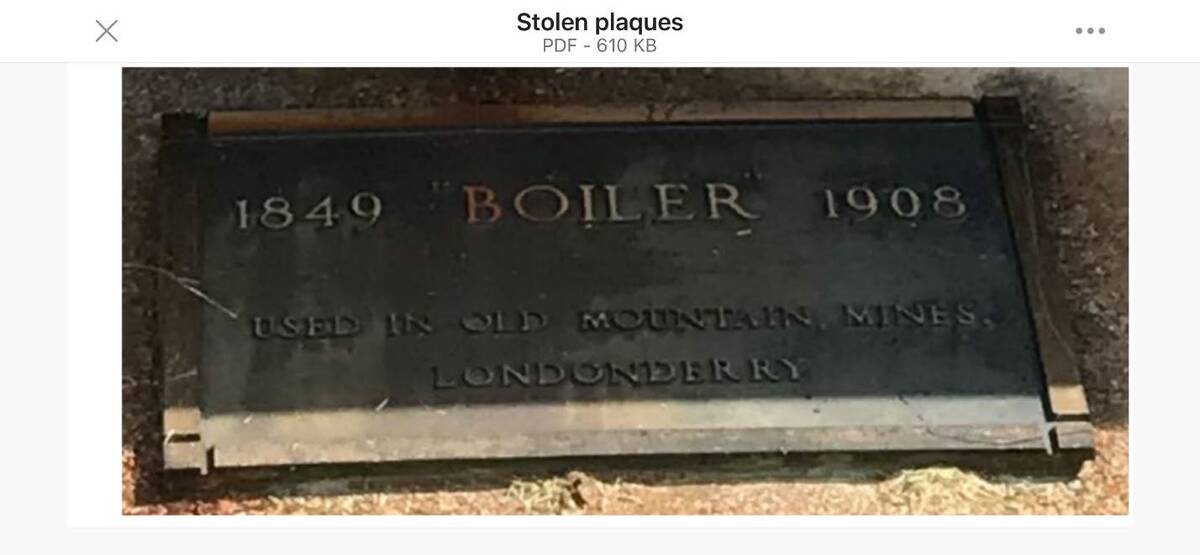
Colchester County District RCMP are investigating the theft of three historical plaques from monuments at provincial parks in Londonderry and Lower Onslow.
NewsWilmot, NS
Lawrence Richard Toole, 54, of Wilmot faces firearms charges after RCMP seized three guns, prohibited magazines and 10,000 rounds of ammunition.
NewsEskasoni, NS
Eskasoni RCMP have charged a 25-year-old Eskasoni man with attempted murder after a 21-year-old man was stabbed on Noel R St. on October 23.
A short digest every Monday and, if you want, an email as soon as someone is reported missing or wanted near you. Free, unsubscribe in one click.