
© 2026 Crime Canada. All rights reserved.
Crime Map: Understanding Crime Patterns Across Canada
Welcome to the Crime Canada’s Crime Map resource. Our mapping tool provides a visual representation of reported crime incidents across Canadian communities, helping you better understand local crime trends. We believe that access to clear, factual crime data empowers citizens to make informed decisions about their safety while avoiding unnecessary alarm or misinformation.
What Is a Crime Map and Why It Matters
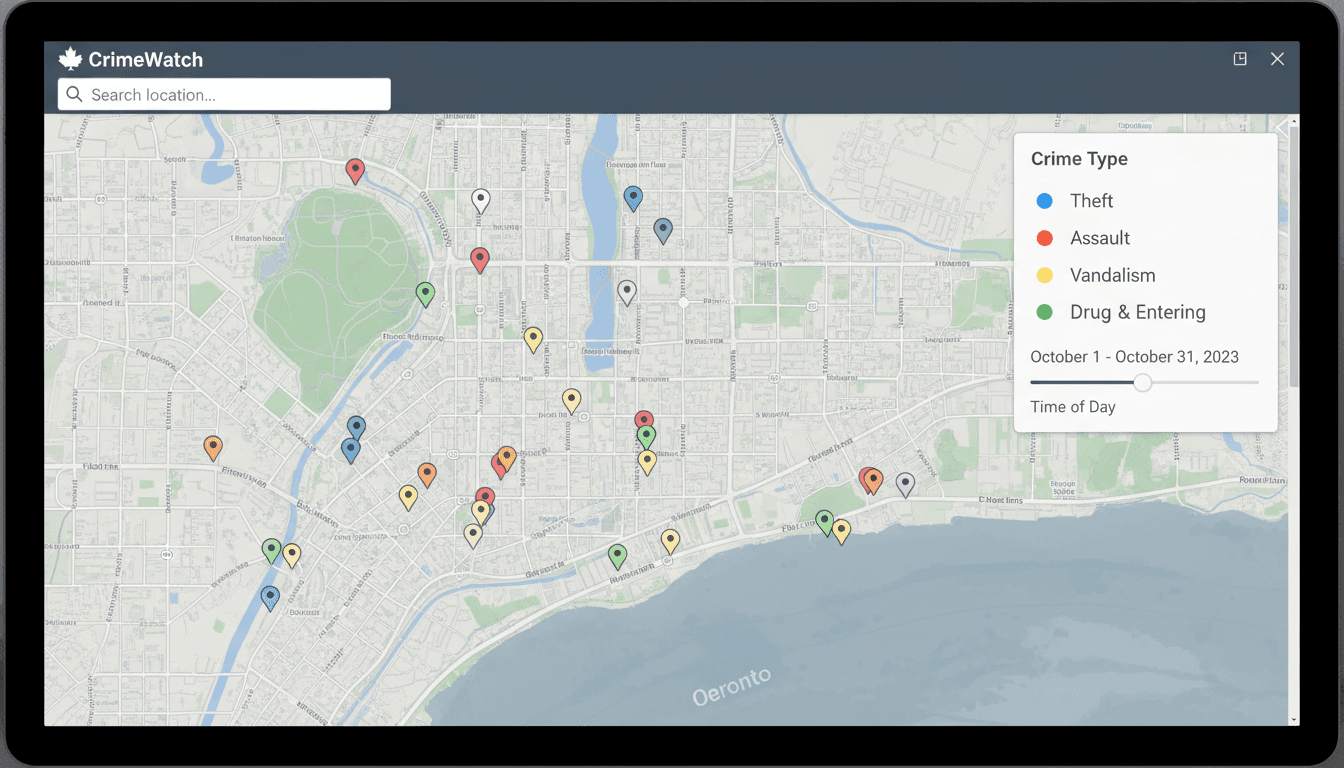
Our interactive Crime Map provides visual representation of reported incidents
A crime map is a visual tool that displays reported criminal incidents across geographical areas. Where incident-level geographic reporting is available, the Crime Map can visualize patterns by area and time—often making trends easier to interpret than tables alone.
Understanding crime distribution helps communities, researchers, and individuals gain perspective on safety concerns. Rather than relying on anecdotal information or media reports that may highlight unusual cases, crime maps offer a data-driven view of what's actually happening in your area.
Ready to Explore Crime Patterns?
Our interactive mapping tool allows you to visualize reported incidents across Canadian communities.
Explore the Crime MapData Sources and Limitations
Crime Map coverage depends on what is publicly available by jurisdiction. Sources may include:
- Public reporting and dashboards from municipal police services (where available)
- Public reporting from the RCMP and other policing bodies (where available)
- Public reporting from provincial policing agencies (where applicable)
- National statistical reporting and open datasets (where applicable)
Understanding Data Limitations
While we strive for accuracy, it's important to understand certain limitations of crime mapping data:
- Incidents reflect reported crimes, not all crimes that occur
- Some datasets can be delayed due to reporting and verification cycles
- Locations are approximate to protect privacy and ongoing investigations
- Classification of incidents may change as investigations progress
Crime statistics and mapping data should be viewed as one tool among many for understanding community safety. The data represents reported incidents and may not capture the full context of crime in a given area.
How to Use Our Crime Map Effectively
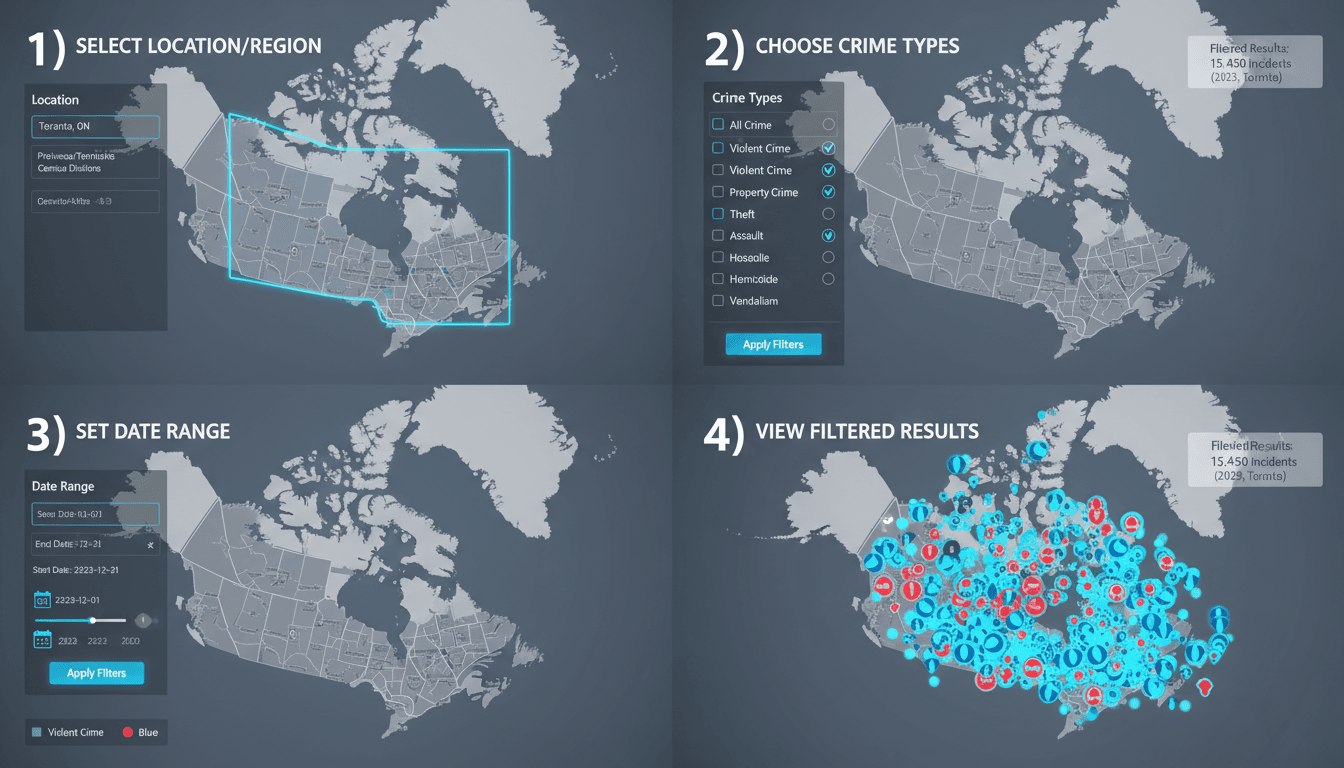
Our Crime Map interface allows for customized filtering and analysis
Select Your Area
Begin by choosing your province, city, or neighborhood of interest. You can zoom in or out to adjust the geographical scope of your view.
Filter by Crime Type
Narrow your view by selecting specific categories of crime such as property offences, violent incidents, or vehicle-related crimes.
Analyze Trends
Use the timeline feature to observe how crime patterns change over days, weeks, months, or years in your selected area.
Important: Crime mapping data should be interpreted carefully. A high concentration of incidents in one area may reflect factors such as population density, reporting rates, or policing priorities rather than inherent safety issues.
Ready to Explore Your Neighborhood?
Access detailed crime data for your community with our interactive tool.
Access Crime MapInterpreting Crime Map Data Responsibly

Crime mapping provides valuable insights, but responsible interpretation requires understanding several key factors:
- Population density affects incident concentration
- Reporting rates vary by community and crime type
- Seasonal variations influence certain crime categories
- Recent policy changes may impact enforcement patterns
Context Matters
When reviewing crime map data, consider these contextual elements:
- Socioeconomic factors in the mapped area
- Proximity to commercial or entertainment districts
- Transit hubs and population movement patterns
- Recent community developments or changes
Does a high number of incidents mean an area is dangerous?
Not necessarily. Areas with higher population density, commercial activity, or better reporting systems may show more incidents without being inherently less safe. Compare rates rather than raw numbers when possible, and consider multiple data points before drawing conclusions.
How often is the Crime Map updated?
Update frequency varies by jurisdiction and by source. We aim to refresh datasets on a regular schedule, and where available we show a “last updated” date so you can see the currency of the information.
Practical Applications of Crime Map Data
For Individuals
- Make informed decisions about home security measures
- Understand neighborhood patterns when choosing housing
- Identify times when extra awareness may be beneficial
- Participate in community safety discussions with accurate information
For Communities
- Develop targeted neighborhood watch programs
- Allocate community resources effectively
- Engage with local law enforcement based on data
- Track the effectiveness of safety initiatives over time
Crime mapping data can be particularly valuable when combined with other information sources such as community surveys, socioeconomic data, and qualitative research. This multi-faceted approach provides a more complete understanding of community safety.
Explore Our Interactive Crime Map

Preview image — the live interactive map opens on the Crime Map page.
Use the Crime Map to explore patterns by location and time where data is available. To open the live map, use the button below.
Crime Type
Filter by specific offences such as property crime, assault, vehicle theft, and more.
Time Period
View incidents from specific time frames, from the past week to historical data spanning years.
Location
Focus on specific provinces, cities, or neighborhoods to understand local patterns.
Start Exploring Crime Data
Our interactive tool provides valuable insights into reported incidents across Canadian communities.
Launch Interactive Crime MapGuidelines for Responsible Use
Recommended Practices
- Compare data across similar time periods
- Consider multiple data points before drawing conclusions
- Recognize the limitations of reported crime data
- Use information to support constructive community dialogue
- Combine with other information sources for context
Practices to Avoid
- Making decisions based solely on raw incident numbers
- Stigmatizing neighborhoods based on incomplete data
- Ignoring socioeconomic and historical context
- Using data to promote fear or anxiety
- Drawing conclusions from very short time periods
Important Note: The Crime Map tool is provided for informational purposes only. While we strive for accuracy, the data has limitations and should not be the sole basis for safety decisions. For legal advice, consult a qualified lawyer.
Note: This page explains how to interpret crime-map style information. It is not emergency guidance. If you are in immediate danger, call 911.
For details on sources, definitions, and limitations, see our Data Methodology page.
Empowering Communities Through Information

Our Crime Map tool represents our commitment to providing Canadians with transparent, accessible information about crime patterns in their communities. By making this data available, we aim to support informed discussions about community safety, evidence-based policy decisions, and individual awareness.
We believe that understanding crime trends through responsible data presentation helps separate fact from perception, allowing communities to address genuine concerns while avoiding unnecessary fear or misinformation.
For more information about crime trends and safety guidance in Canada, explore our other resources or contact us at [email protected] with your questions.
Explore More Crime Data Resources
Discover additional tools and information to better understand crime trends in your community.
View All Resources