
Table of Contents
#crime-rates-canada-province-2026-safest
Introduction
If you’re considering a move across Canada, researching investment opportunities, or simply want to understand how your province compares nationally, crime statistics provide crucial context for making informed decisions. While government reports often bury key findings in dense technical language, the reality is straightforward: crime rates vary dramatically across Canada’s provinces and territories.
Using the latest Crime Severity Index (CSI) data from Statistics Canada, this analysis breaks down exactly where your province ranks and what those numbers mean for your community’s safety. The CSI measures both the volume and severity of police-reported crime, providing a more accurate picture than simple crime counts alone.
Understanding Canada’s Crime Measurement System
What is the Crime Severity Index?
Statistics Canada developed the Crime Severity Index to address limitations in traditional crime rate calculations. Instead of treating all crimes equally, the CSI weighs each offense based on sentences handed down by Canadian courts. A break-and-enter carries more weight than theft under $5,000, while violent crimes like assault with a weapon score higher than property crimes.

The CSI uses 2006 as its baseline year (index value of 100). Values above 100 indicate higher crime severity than the 2006 national average, while values below 100 show improvement.
Why Provincial Comparisons Matter
Provincial crime data reveals patterns that national averages mask. Rural provinces may show different crime profiles than urban centers. Economic conditions, population density, and regional policing approaches all influence these provincial variations.
For residents, understanding your province’s position helps contextualize local crime reports and safety concerns. For businesses and investors, these statistics inform risk assessments and security planning decisions.
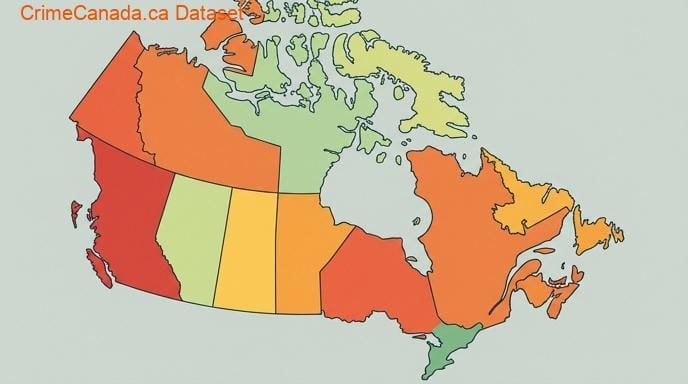
2026 Provincial Crime Rankings: From Safest to Most Dangerous
Canada’s Safest Provinces
1. Prince Edward Island
- 2026 CSI: 31.2
- Population: ~165,000
- Key factors: Small population, strong community ties, limited urban centers
Prince Edward Island consistently ranks as Canada’s safest province. The island’s low population density and tight-knit communities contribute to exceptionally low crime rates across all categories. Violent crime remains rare, with most incidents involving minor property crimes or impaired driving.
2. New Brunswick
- 2026 CSI: 58.4
- Population: ~789,000
- Key factors: Stable economy, older population demographics, rural character
New Brunswick maintains the second-lowest crime severity in Canada. The province’s aging population and stable employment in traditional industries contribute to lower crime rates. Saint John and Moncton see higher incidents than rural areas, but remain well below national averages.
3. Quebec
- 2026 CSI: 61.7
- Population: ~8.6 million
- Key factors: Strong social programs, distinct legal system, urban-rural balance
Quebec’s crime severity remains significantly below the national average despite containing major urban centers like Montreal and Quebec City. The province’s civil law system and comprehensive social programs appear to correlate with lower crime rates, particularly for violent offenses.
4. Ontario
- 2026 CSI: 65.9
- Population: ~15.2 million
- Key factors: Economic diversity, large urban centers, significant rural areas
Ontario’s crime severity sits below the national average despite housing Canada’s largest city. Toronto’s crime rate remains moderate compared to other major North American cities. However, significant variation exists between urban centers like Toronto and Hamilton versus rural regions in northern Ontario.
Middle-Tier Provinces
5. Nova Scotia
- 2026 CSI: 72.8
- Population: ~992,000
- Key factors: Halifax metropolitan influence, rural-urban divide, economic transitions
Nova Scotia’s crime severity approaches the national average, with Halifax driving most provincial statistics. The capital region accounts for nearly half the province’s population and experiences crime rates typical of mid-sized Canadian cities. Rural areas maintain much lower incident rates.
6. Newfoundland and Labrador
- 2026 CSI: 76.3
- Population: ~521,000
- Key factors: Economic challenges, geographic isolation, resource-dependent communities
Newfoundland and Labrador’s crime severity reflects economic pressures and geographic challenges. St. John’s metropolitan area experiences most criminal activity, while remote communities face different challenges including substance abuse and domestic violence.
Higher Crime Severity Provinces
7. British Columbia
- 2026 CSI: 89.4
- Population: ~5.3 million
- Key factors: Vancouver metropolitan influence, drug trade, property crime
British Columbia’s crime severity remains elevated primarily due to Metro Vancouver’s property crime rates and the province’s position in international drug trafficking routes. While violent crime rates stay moderate, break-and-enters, vehicle theft, and drug-related offenses drive the higher CSI score.
8. Alberta
- 2026 CSI: 94.7
- Population: ~4.6 million
- Key factors: Economic volatility, rapid population growth, resource sector influence
Alberta’s crime severity reflects the province’s boom-and-bust economic cycles. Calgary and Edmonton experience crime rates typical of major Canadian cities, while resource-rich regions see fluctuations tied to employment levels and transient worker populations.
9. Manitoba
- 2026 CSI: 108.2
- Population: ~1.4 million
- Key factors: Winnipeg metropolitan concentration, socioeconomic challenges, geographic factors
Manitoba’s crime severity exceeds the national average, with Winnipeg accounting for most provincial incidents. The city faces challenges common to prairie urban centers, including property crime and gang-related activity. Rural and northern communities experience different crime patterns.
10. Saskatchewan
- 2026 CSI: 119.8
- Population: ~1.2 million
- Key factors: Regina and Saskatoon influence, rural crime patterns, resource economy
Saskatchewan consistently ranks among Canada’s highest crime severity provinces. Both Regina and Saskatoon experience elevated crime rates, while rural areas face unique challenges including property crime targeting agricultural equipment and isolated communities.
Territorial Crime Statistics
Canada’s three territories present unique crime profiles influenced by geographic isolation, small populations, and distinct socioeconomic factors.
Northwest Territories
- 2026 CSI: 156.3
- Population: ~45,000
- Key challenges: Remote communities, limited policing resources, substance abuse
Nunavut
- 2026 CSI: 298.7
- Population: ~40,000
- Key challenges: Extreme isolation, cultural transitions, limited infrastructure
Yukon
- 2026 CSI: 134.2
- Population: ~43,000
- Key challenges: Seasonal population fluctuations, resource economy, geographic barriers
The territories’ high CSI scores reflect unique challenges rather than urban crime patterns. Small populations mean individual incidents significantly impact overall statistics. Limited policing resources and geographic isolation compound these challenges.
Understanding Crime Types by Province
Violent Crime Patterns
Violent crime rates vary significantly across provinces. Atlantic provinces generally report lower violent crime rates, while western provinces and territories show higher incidents. These patterns often correlate with population density, economic conditions, and demographic factors.
Property Crime Distribution
Property crime shows different provincial patterns than violent crime. British Columbia leads in property crime rates, driven primarily by Metro Vancouver’s break-and-enter and vehicle theft statistics. Prairie provinces also experience elevated property crime, particularly targeting rural properties and agricultural equipment.
Drug-Related Offenses
Drug-related crime varies by province based on trafficking routes, local demand, and enforcement priorities. British Columbia’s position as a major drug trafficking hub influences its statistics, while Atlantic provinces generally report lower drug-related crime rates.
Factors Influencing Provincial Crime Rates
Economic Conditions
Provincial economic health correlates strongly with crime rates. Resource-dependent provinces often experience crime fluctuations tied to commodity prices and employment levels. Economic downturns typically correlate with increased property crime rates.
Population Demographics
Age distribution significantly influences crime statistics. Provinces with younger populations often report higher crime rates, while regions with aging demographics typically show lower incidents. Urban-rural population distribution also affects provincial crime profiles.
Geographic Factors
Geography influences both crime patterns and policing effectiveness. Provinces with large rural areas face challenges policing remote regions, while urban-concentrated provinces deal with different crime types and enforcement approaches.
Social Programs and Policies
Provincial social programs, justice system approaches, and crime prevention initiatives influence long-term crime trends. Quebec’s comprehensive social programs correlate with lower crime rates, while provinces with limited social supports often struggle with higher incidents.
What These Statistics Mean for Your Community
For Residents
Understanding your province’s crime statistics helps contextualize local safety concerns. If you live in a higher CSI province, focus on community-specific data rather than provincial averages. Urban centers within low-crime provinces may still experience significant incidents, while rural areas in higher-crime provinces often remain very safe.
For Businesses
Provincial crime statistics inform business security decisions and insurance considerations. Companies operating in multiple provinces can use this data to allocate security resources and assess location-specific risks.
For Policy Makers
Provincial comparisons highlight successful approaches and identify areas needing attention. Provinces with improving crime statistics offer models for others facing similar challenges.
Data Limitations and Considerations
Reporting Variations
Crime statistics depend on police reporting, which varies by jurisdiction and crime type. Some communities may under-report certain crimes, while others maintain more comprehensive reporting systems.
Population Adjustments
The CSI accounts for population differences, but small population provinces show greater statistical volatility. Individual incidents in territories or smaller provinces significantly impact overall scores.
Temporal Factors
Crime statistics fluctuate year-to-year based on various factors. Long-term trends provide better insights than single-year comparisons.
Regional Crime Trends and Predictions
Atlantic Canada
Atlantic provinces continue showing lower crime severity than national averages. Aging populations and stable economies contribute to this trend. However, economic challenges in some regions may pressure these positive statistics.
Central Canada
Ontario and Quebec’s large populations create statistical stability. Both provinces maintain crime rates below national averages, though urban centers face ongoing challenges with property crime and gang activity.
Western Canada
Western provinces show more variation in crime statistics, influenced by economic cycles and population growth. British Columbia’s drug trade connections and Alberta’s resource economy volatility continue influencing crime patterns.
Northern Territories
Territories face unique challenges requiring specialized approaches. Geographic isolation and small populations create distinct crime patterns not comparable to provincial statistics.
Conclusion
Canada’s provincial crime statistics reveal significant variation across the country, with Prince Edward Island maintaining the lowest crime severity and Saskatchewan showing the highest among provinces. These differences reflect complex interactions between economic conditions, demographics, geography, and social policies.
For Canadians making decisions about where to live, work, or invest, these statistics provide important context. However, provincial averages don’t tell the complete story. Urban centers within safe provinces may experience higher crime rates, while rural areas in higher-crime provinces often remain very secure.
Understanding these patterns helps communities, businesses, and policymakers make informed decisions about safety, security, and resource allocation. As crime patterns continue evolving, ongoing monitoring and analysis remain essential for maintaining community safety across Canada.
Explore crime data for your area at statistics.crimecanada.ca