
Table of Contents
High-Speed Stunting Stops in Halifax Region Trigger Safety Concerns and Licence Suspensions
Section 1: What Happened – Rapid-Fire Stunting Cases in HRM
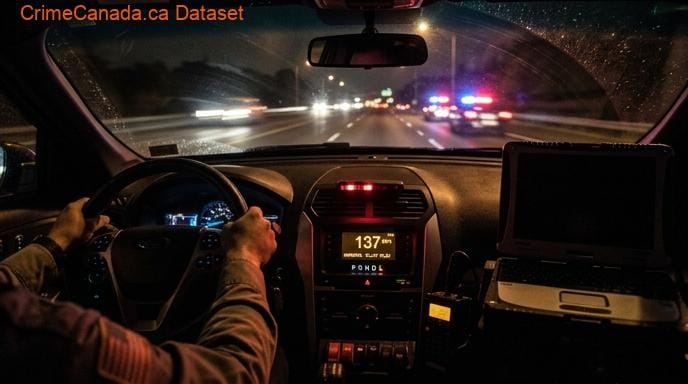
Over the span of one week in April 2026, the RCMP Halifax Regional Detachment reported three separate stunting incidents on roads within the Halifax Regional Municipality (HRM). All three drivers were allegedly travelling at dangerously high speeds, leading to stunting charges, immediate licence suspensions, and vehicle seizures. No injuries or crashes were reported in connection with these traffic stops, and authorities have not released the names of the drivers.
The first incident occurred on the evening of April 18 in Windsor Junction, where officers recorded a Ford Mustang travelling at approximately 113 km/h in a 60 km/h zone. RCMP members reported that the 60‑year‑old driver from Lower Sackville showed signs of impairment, and a roadside breath test reportedly resulted in a warning. The driver was ticketed for stunting, issued a seven‑day driver’s licence suspension, and had the vehicle seized. A separate seven‑day suspension was also imposed in relation to the roadside breath result.
Later that same evening, a second officer patrolling Highway 107 near Lake Echo allegedly clocked a Kia Forte at about 150 km/h in a 100 km/h zone. The 45‑year‑old driver from Dartmouth was similarly found to show signs of impairment, and a roadside test reportedly produced a warning. RCMP state that this driver was charged with stunting, issued a seven‑day licence suspension, and had the vehicle seized, with an additional seven‑day suspension tied to the breath sample warning.
The third incident was reported the following Friday night, again on Highway 107 near Lake Echo. An officer observed a Mazda CX‑30 travelling at roughly 162 km/h in a 100 km/h zone. A 32‑year‑old man from Lake Echo was charged with stunting, given an immediate seven‑day licence suspension, and had his vehicle seized. In all three cases, the stunting offence reportedly carried a fine of $2,422.50, consistent with Nova Scotia’s penalties for this type of high‑risk driving.

According to an RCMP news release and open‑source checks, there have been no publicly reported follow‑up developments since these stops: no updates on court appearances, additional charges, or outcomes were found at the time of this review. The drivers have not been publicly identified, and there were no associated collisions or third‑party victims noted in available information.
Section 2: Community Context & Social Sentiment
Based on open‑source monitoring, these incidents have not generated a large visible reaction on social media or discussion forums. No widely shared posts, quotes, or viral threads linked directly to these specific stunting cases were identified on major platforms like X or Reddit. This relatively low online profile is typical for routine traffic enforcement stories where there are no fatalities, injuries, or dramatic video evidence.
Even without a major social media footprint, the underlying behaviour described—very high speeds on secondary highways and local roads—aligns with broader community concerns about road safety in HRM and across Canada. Stunting and impaired driving are consistently raised in neighbourhood meetings and local safety surveys as issues that make residents feel less secure on the roads, even when they do not result in crashes. In other regions, similar patterns can be observed when reviewing local safety data, such as the rural‑community profiles for Stirling, Alberta crime and safety statistics or the policing indicators for Killaloe, Hagarty and Richards in Ontario, where traffic enforcement often forms a visible part of community safety strategies despite relatively low violent‑crime rates.
Within the Halifax Regional Municipality, the locations referenced—Windsor Junction and the Highway 107 corridor near Lake Echo—are commuter and connector routes where speed can easily creep up, particularly in lower‑traffic evening hours. While current open‑source data does not single out these specific stretches as long‑term “stunting hotspots,” they are representative of roads where sudden speed transitions (for example, from 100 km/h down to 60 km/h near residential or mixed‑use areas) can create enforcement focus and safety concerns.
Community safety advocates generally point to these types of enforcement actions as both a deterrent and a reminder that high‑risk driving can quickly attract substantial penalties. The combination of stunting charges, short‑term suspensions, and vehicle seizures mirrors approaches seen in other Canadian jurisdictions, such as the traffic‑safety initiatives in communities like Harris 3, British Columbia, where proactive traffic enforcement is used to protect smaller populations from disproportionate harm caused by a small number of high‑risk drivers.
Section 3: Statistical Overview & Broader Trends
Publicly accessible, up‑to‑date stunting‑specific statistics for Nova Scotia in 2025–2026 are limited in open sources. However, the provincial penalties applied in these three HRM cases—large fines, roadside suspensions, and vehicle seizures—are consistent with a broader Canadian trend of treating extreme speeding as a serious public‑safety threat rather than a minor traffic infraction.
Nationally, available crime and safety reports suggest a mixed picture for vehicle‑related offences. Some large urban centres have reported declines in particular categories, such as a notable decrease in auto theft incidents in Toronto early in 2025, while other issues—especially impaired driving and high‑risk operation of motor vehicles—remain persistent concerns. The pattern seen here in HRM, where stunting stops are accompanied by roadside breath tests that yield warnings, reflects how law enforcement is increasingly combining speed enforcement with real‑time checks for alcohol or drug involvement.
In the three HRM incidents analyzed, none escalated to collision investigations, serious injuries, or fatalities. From a community‑risk standpoint, this means these events are best understood as preventive interventions. Stunting at the speeds alleged—113 km/h in a 60 km/h zone, and 150–162 km/h in a 100 km/h zone—substantially reduces a driver’s reaction time and greatly increases stopping distance. On undivided highways and mixed‑use routes like those around Windsor Junction and Lake Echo, the margin for error is small. Enforcement that removes vehicles and drivers from the road, even for a week, can meaningfully reduce short‑term collision risk.
Although HRM‑specific quantitative data on stunting frequency is not detailed in open sources, these three cases in a short time window highlight the ongoing need for targeted traffic enforcement campaigns. They also underscore the importance of public education around how quickly speeds in the 150–160 km/h range convert a routine drive into high‑risk conduct with severe financial and legal consequences.
For residents and commuters in HRM and similar communities across Canada, the implication is clear: speed and potential impairment remain key road‑safety threats, even when they do not make headlines or generate viral posts. Understanding local enforcement patterns and penalties can help drivers make safer choices and reduce the likelihood of catastrophic outcomes on regional highways and local roads alike.
About This Report
This safety alert was generated by aggregating data from local authorities, community reports, and open-source intelligence. Our mission at Crime Canada is to provide citizens with localized safety data and context. We are not the original creators of the underlying news reports.
Primary Source: Information in this report was initially covered by Chris Halef for CityNews Halifax.
Additional Research & Context
- Details on the three traffic stops and stunting charges are drawn from the official RCMP Nova Scotia news release referenced in local coverage.
- Broader Canadian urban crime and vehicle-related trends, including auto theft and enforcement patterns, are informed by 2025 data summarized in Toronto crime rate statistics and analysis.
- Community safety comparisons to other Canadian municipalities are supported by localized crime and safety profiles available through Crime Canada’s own statistics platform.