
Table of Contents
Community Safety Brief: Arrest in Fatal Shooting at Abbotsford Whatcom Road Encampment
1. What Happened & Current Safety Outlook
The Integrated Homicide Investigation Team (IHIT) has announced an arrest in connection with a deadly shooting at the Whatcom Road Park & Ride encampment in Abbotsford, British Columbia. According to IHIT, 39-year-old James Jared (Jamie) Yake of Abbotsford has been charged with one count of manslaughter with a firearm in the death of 69-year-old Wayne (Wayne Leonard) Versfelt, also of Abbotsford.
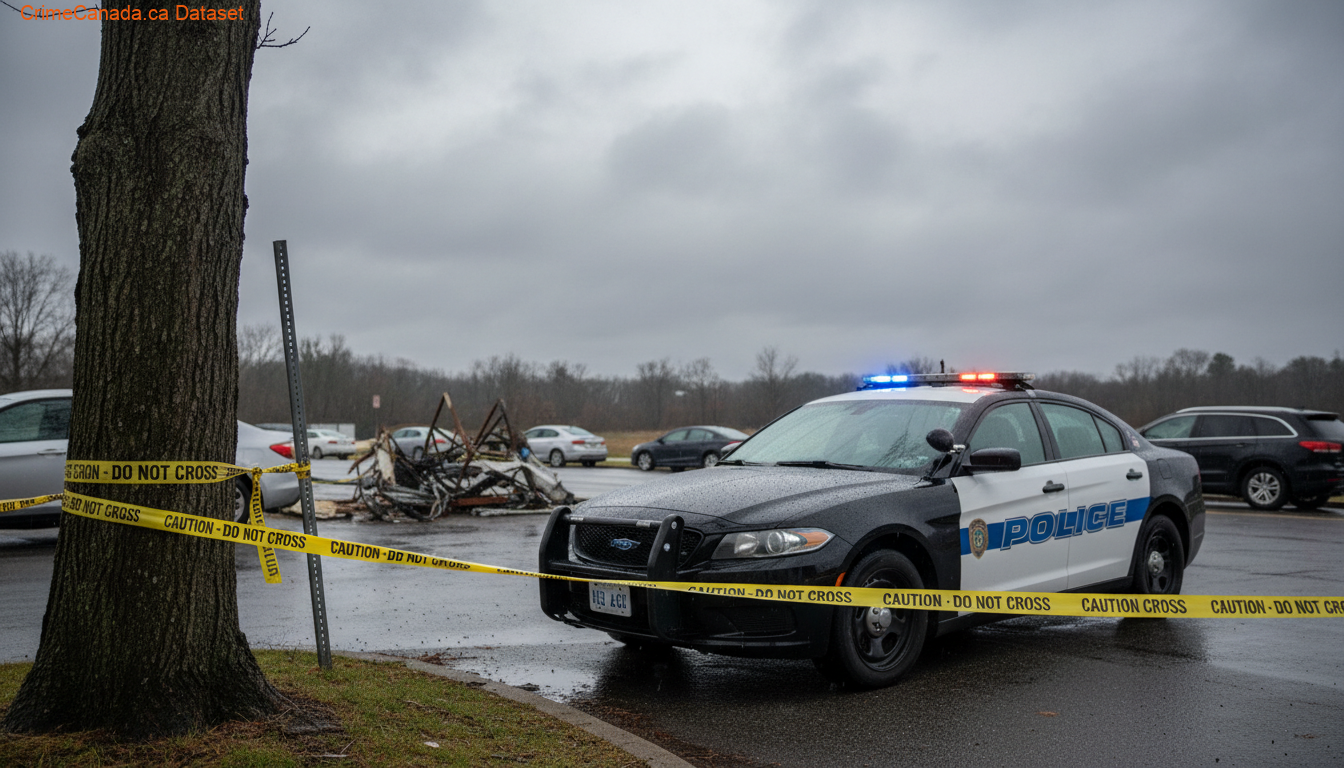
The incident occurred on the night of March 23, 2024, at approximately 11:11 p.m. Abbotsford Police patrol officers responded to reports of gunfire at the Whatcom Road Park & Ride, where a large homeless encampment has been established. Officers located an injured man at the scene; despite emergency medical care, he later died from his injuries. IHIT assumed conduct of the investigation shortly afterward. On June 13, 2024, investigators arrested Yake, and he has now been formally charged in relation to Versfelt’s death. IHIT has emphasized that investigators believe this was an isolated incident involving individuals known to each other, and they are not indicating an ongoing, specific threat to the broader public at this time.
2. Community Context & Social Sentiment
The Whatcom Road Park & Ride, near Highway 1 in eastern Abbotsford, has evolved from a commuter lot into a significant homeless encampment over the past several years. Local government documents and news coverage describe repeated concerns about disorder, fire hazards, weapons complaints, and overdose events linked to the site. The City of Abbotsford and provincial partners have periodically conducted housing outreach and enforcement activity there, but the location has remained a point of tension between nearby residents, commuters, and people seeking shelter.
Reactions on social media following news of the arrest reflect a community that is simultaneously fearful, frustrated, and divided on solutions. On neighbourhood forums and platforms such as Reddit and X, some residents expressed anger that the encampment was allowed to grow near a transit facility used by the public, with one commenter suggesting that it felt “inevitable” that a serious violent incident would occur after months of reported problems. Others focused on the vulnerability of people living in tents and makeshift shelters, arguing that placing large numbers of unhoused and high-needs individuals in parking-lot encampments without robust housing and support services creates conditions where disputes can escalate into serious violence.

This split in sentiment mirrors a broader debate across British Columbia: whether public safety around encampments is best addressed primarily through enforcement, or through rapid housing, mental health, and addictions interventions. In this Abbotsford case, official information to date does not suggest organized crime or random commuter victimization. Instead, it points to a fatal conflict between people who knew each other inside a high-stress, street-entrenched environment.
Residents seeking a broader view of local risk levels can review data on Abbotsford crime statistics and safety trends, as well as the wider Abbotsford–Mission crime and safety profile, to understand how incidents like this compare to other forms of reported violence in the region.
3. Statistical Overview & How This Case Fits Local Trends
In the context of regional crime data, the Abbotsford–Mission Census Metropolitan Area typically records a small number of homicides per year. According to Statistics Canada tables on homicide by metropolitan area, the annual count is usually in the low single digits. In a community of this size, each individual case—such as the killing of Wayne Versfelt—represents a substantial portion of the yearly homicide total, meaning that single events can noticeably influence the area’s calculated homicide rate.
Analyses comparing Canadian urban areas, including work summarized in independent studies such as those by the Fraser Institute, generally place Abbotsford–Mission in the mid-range nationally for violent crime. The region’s violent crime severity is typically lower than that of the largest metropolitan centres, but higher than that of some smaller cities. For residents trying to interpret the significance of this case, the data indicate that while serious violence does occur, Abbotsford–Mission is not among the country’s most violent CMAs on a per-capita basis.
Within British Columbia, large homeless encampments—such as those previously documented in Vancouver’s Downtown Eastside, Victoria’s Beacon Hill Park, and Surrey’s former 135A Street camp—have repeatedly been identified as hotspots for police calls for service. These calls often involve assaults, weapons complaints, disturbances, and medical emergencies related to overdoses or fires. Research and policing reports suggest that violence in these environments often arises from interpersonal disputes, mental health crises, and conflicts within street-involved networks, rather than from targeted attacks on random passersby.
The Whatcom Road Park & Ride encampment fits this broader pattern. Available information from authorities and media indicates that the fatal shooting that left Versfelt dead appears to have stemmed from a conflict between people who were acquainted, inside an already high-risk setting marked by instability, trauma, and limited access to services. While this does not diminish the seriousness of the event, it does shape the risk profile: for most commuters and nearby residents, the threat appears to be indirect and environmental (disorder, exposure to emergencies, and potential spillover incidents) rather than an elevated likelihood of targeted violence against strangers.
From a community-safety perspective, this case underlines two key realities for Abbotsford:
- Each homicide has a large statistical impact in a mid-sized region, magnifying public concern even when cases are isolated.
- Encampment-related violence is strongly linked to broader social challenges—including homelessness, addiction, and mental illness—suggesting that durable crime-prevention strategies will require a mix of policing, housing, and health-based responses.
About This Report
This safety alert was generated by aggregating data from local authorities, community reports, and open-source intelligence. Our mission at Crime Canada is to provide citizens with localized safety data and context. We are not the original creators of the underlying news reports.
Primary Source: Information in this report was initially covered by Raynee Novak for CityNews Vancouver.
Additional Research & Context
- Details on the arrest of James Jared “Jamie” Yake and the manslaughter with a firearm charge were drawn from an official IHIT / RCMP media release summarizing the March 23 encampment shooting and June 13 arrest.
- Background on the Whatcom Road Park & Ride encampment, including fire risk, safety complaints, and city responses, is based on City of Abbotsford council materials and local news coverage discussing enforcement and outreach efforts.
- Homicide-rate context for the Abbotsford–Mission region and comparative violent-crime rankings were informed by Statistics Canada homicide tables and cross-city crime analyses synthesized in independent research on Canadian CMAs.