
Table of Contents
Maple Ridge Boat Collision at Train Bridge Highlights Nighttime Navigation Risks on Fraser River
What Happened: Serious-Injury Boat Crash Under Investigation
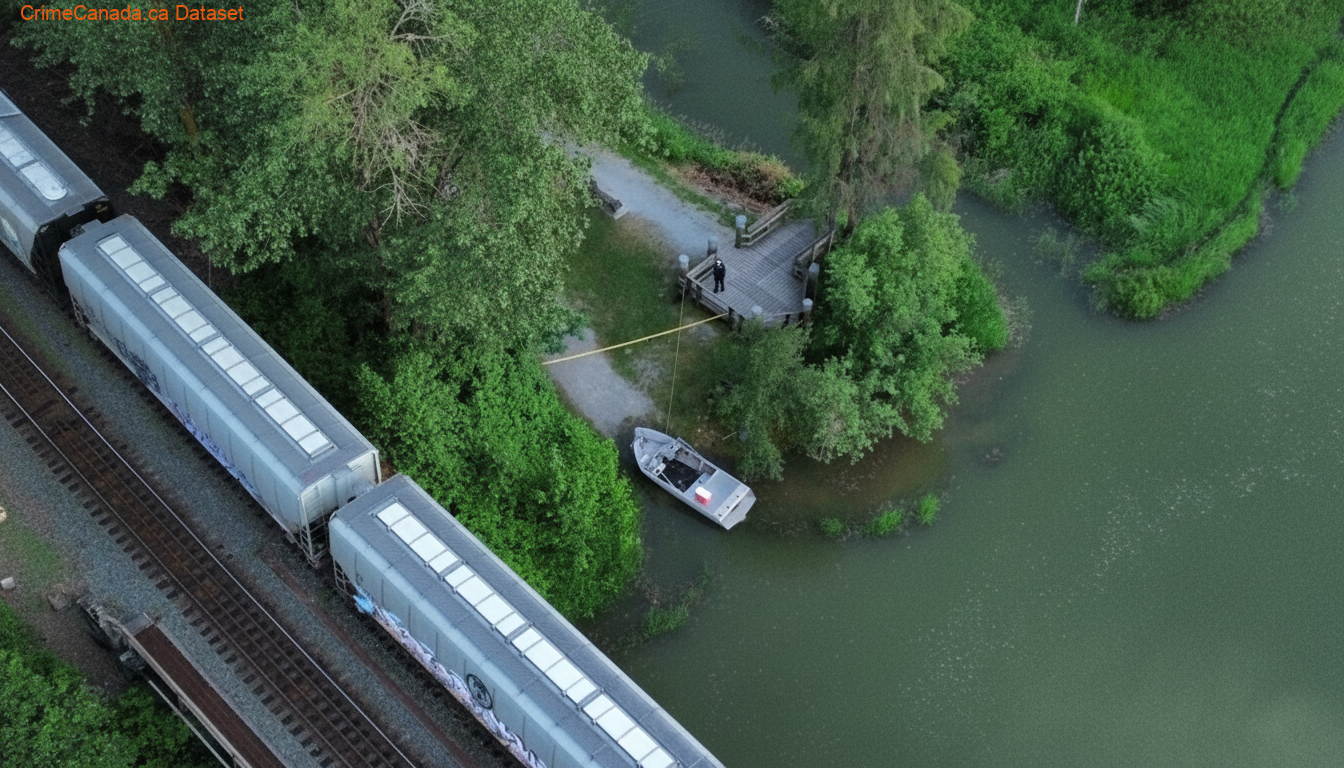
On Tuesday evening in Maple Ridge, British Columbia, a recreational boat with four men on board struck a support pillar of the CPKC train bridge near the mouth of Kanaka Creek along the Fraser River. The collision occurred shortly after 8 p.m. in the area of Kanaka Creek Regional Park, near River Road and Tamarack Lane.
According to Maple Ridge RCMP, three occupants were transported to hospital with non-life-threatening but serious injuries. BC Emergency Health Services described their condition as serious but stable. Police say officers secured the scene, interviewed the boat operator and multiple witnesses, and coordinated with CPKC and Transport Canada to assess safety concerns around the bridge and rail operations.
As of the latest available information, there have been no public updates naming the operator or the injured men, and no charges or confirmed findings about impairment, speed, or equipment failure. The Maple Ridge RCMP Serious Crime Unit is continuing to investigate and has stated that all possible contributing factors remain under review. There have been no public reports of significant structural damage to the bridge or major rail disruptions, suggesting any impact to rail safety was limited or quickly evaluated.
Community Context & Social Sentiment
The crash site sits at a busy and complex stretch of water where Kanaka Creek meets the tidal Fraser River. The area blends parkland, moored vessels, and heavy rail traffic. The train bridge’s piers, changing currents, and limited visibility after dark can create challenging navigation conditions for boaters who are unfamiliar with the river or who are operating at higher speeds.

Public reaction online has largely focused on boating safety rather than crime. On regional discussion forums, some boaters describe the Kanaka Creek section of the Fraser as difficult even in daylight, emphasizing that strong currents and bridge pilings can rapidly narrow safe routes. One commenter characterized the area as a place where operators “really need to be on [their] game” at night, while another pointed out that summertime often brings inexperienced or rental-boat operators onto the river after dark, potentially underestimating how quickly conditions can deteriorate.
These reactions align with the long-standing safety profile of the location. There is no pattern of repeated boat–bridge collisions at this specific structure, and local police data do not identify Kanaka Creek Regional Park or the train bridge as a hotspot for violent or property crime. Instead, the primary risks here are environmental and navigational: fast-moving water, variable tides, fixed structures, and limited lighting. RCMP and Metro Vancouver Parks have more commonly responded in the broader area to issues such as public intoxication in parks, thefts from vehicles at trailheads, and occasional assaults elsewhere in Maple Ridge.
Residents interested in understanding how this incident sits within the city’s broader safety picture can review Maple Ridge crime statistics and safety trends, which show that local policing efforts are more frequently directed toward property crime, street disorder, and targeted enforcement against prolific offenders than toward marine collisions.
Statistical Overview: Where This Incident Fits in the Bigger Picture
From a provincial perspective, this crash closely matches known seasonal patterns. Transport Canada and the Lifesaving Society of BC have repeatedly identified recreational boating as a leading context for preventable water-related injury and death. Common factors in serious incidents include alcohol, excessive speed, lack of operator experience, and inadequate knowledge of local waterways.
The Fraser River through the Lower Mainland is widely recognized as a challenging environment for small craft. It is a fast-moving tidal river with shifting channels, submerged hazards, and numerous fixed installations, including piers, log booms, and bridges such as the CPKC Kanaka Creek train bridge. These features are not inherently unsafe, but they significantly reduce the margin for error—especially after dark, in high water, or for operators unfamiliar with the river’s dynamics.
National and provincial data also show clear seasonal spikes in boating incidents in late spring and summer, particularly on evenings and weekends. The timing of this Maple Ridge collision—early June, after 8 p.m.—fits this pattern. Many serious but non-fatal events never become high-profile news stories, yet they form part of a consistent summer trend that authorities highlight in annual safety campaigns.
Locally, Ridge Meadows RCMP report that overall violent crime in Maple Ridge and Pitt Meadows is moderate and relatively stable compared with some other B.C. communities. Property crime, especially theft from vehicles and break-and-enter, accounts for a significant share of police files. While residents sometimes perceive that personal safety risks are rising, official data suggest that an incident like this boat–bridge collision is better understood as a marine safety and navigation event than as evidence of worsening violent crime in the city.
Other water-adjacent communities across Canada show similar patterns: infrastructure such as bridges and ferry terminals can be focal points for navigation hazards without being major centres of interpersonal crime. For example, comparative datasets for places like Bridge River 1 in British Columbia or Spences Bridge illustrate how transportation corridors and waterways may carry distinct safety concerns (collisions, weather, terrain) that differ from urban crime issues.
In response to the Maple Ridge crash, Insp. Martin Guay of Maple Ridge RCMP has emphasized the importance of preparation before going out on the water: understanding local waterways, respecting environmental conditions, and operating in a way that leaves room for unexpected changes. RCMP officers are expected to maintain visible patrols on local waterways during the summer to support safe boating behavior.
For community members, key practical takeaways include: checking weather and tide forecasts, planning routes to account for bridges and other fixed structures, operating at speeds appropriate to visibility and traffic, and ensuring compliance with equipment and lifejacket requirements. While this incident resulted in serious injuries, the absence of fatalities and the rapid coordinated response by police, paramedics, and other agencies demonstrate that early intervention can significantly reduce harm when things go wrong on the water.
About This Report
This safety alert was generated by aggregating data from local authorities, community reports, and open-source intelligence. Our mission at Crime Canada is to provide citizens with localized safety data and context. We are not the original creators of the underlying news reports.
Primary Source: Information in this report was initially covered by Charles Brockman for CityNews.
Additional Research & Context
- Ridge Meadows RCMP detachment news releases and crime statistics were consulted to understand broader public safety trends and confirm the absence of follow-up naming the individuals involved.
- Transport Canada marine occurrence summaries and recreational boating safety materials provided context on seasonal boating risks and typical contributing factors on tidal rivers like the Fraser.
- Metro Vancouver and Kanaka Creek Regional Park resources, along with CPKC network information, helped clarify the physical setting of the train bridge, surrounding parkland, and adjacent industrial and rail infrastructure.