
Table of Contents
Police Boost Mosque Patrols in Metro Vancouver After San Diego Hate-Motivated Attack
Section 1: Safety Overview After the San Diego Mosque Shooting
Police in the Lower Mainland are increasing their presence around mosques and Islamic centres following a deadly shooting at the Islamic Center of San Diego. In that incident, now formally identified as the 2026 Islamic Center of San Diego shooting, three worshippers were killed outside the mosque before two teenage suspects died of self-inflicted gunshot wounds a short distance away. San Diego authorities state the attack is being investigated as a hate-motivated crime with an apparent Islamophobic motive, supported by the discovery of anti-Islamic writings, a manifesto referencing the Christchurch mosque attacks, and racist markings on one of the firearms.
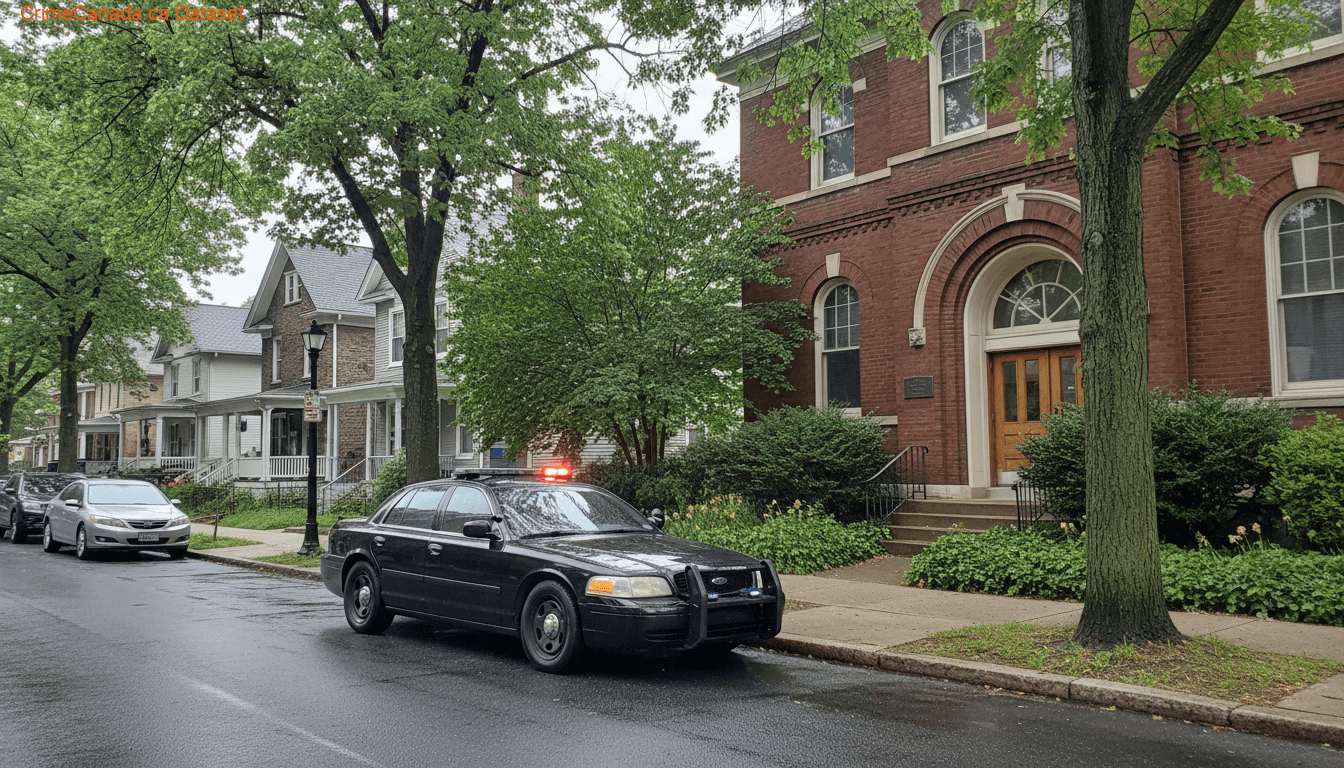
In response, the Vancouver Police Department (VPD) has begun visible patrols around local mosques and related institutions, including officers stationed outside the long-established Al Masjid Al Jamia Mosque on Main Street. VPD officials report they are in active contact with Muslim community leaders to understand security needs and are monitoring for any links or copycat threats tied to the San Diego case. South of the Fraser, the Surrey Police Service (SPS) is taking similar steps, adding high-visibility patrols around Surrey mosques. These enhanced measures are expected to continue into next week, overlapping with Eid al-Adha, a major religious observance when mosque attendance typically increases.
Section 2: Community Context & Social Sentiment
The San Diego attack has generated shock and anxiety well beyond California. Online discussions in both San Diego and Metro Vancouver highlight a deep sense of vulnerability among Muslim residents who see the incident as part of a broader pattern of violence against mosques. Commenters familiar with the Islamic Center of San Diego describe the scene of fatalities outside a familiar place of worship as “unreal” and reminiscent of previous mass attacks on Muslims abroad. In Vancouver-focused forums, Muslim users and their allies express gratitude for the increased patrols but also report that some elders and parents are now hesitant to attend Eid prayers due to fear of similar violence.
Within Vancouver, the Main Street and Mount Pleasant corridor where Al Masjid Al Jamia is located is typically characterized as a busy, mixed-use urban environment. Publicly available crime mapping and open reports describe issues more commonly associated with dense city life—such as property crime and some street disorder—rather than a documented pattern of targeted attacks on mosques. No major violent incidents at Al Masjid Al Jamia over the last year have been widely reported in mainstream or social media, though police and community leaders regularly stress that under-reporting of hate incidents remains a concern.

The move by VPD and SPS to adopt high-visibility patrols around mosques matches a wider Canadian policing practice following prominent attacks on religious institutions, including synagogues, churches, and gurdwaras. In British Columbia, communities from small municipalities such as Midway, British Columbia, where residents track local crime statistics and safety data closely, to larger urban centres share a common expectation: that law enforcement will visibly respond when international events heighten local risk perceptions. Metro Vancouver’s current posture reflects that expectation, even though police state there is no specific, credible threat identified against local mosques at this time.
San Diego’s investigation has further intensified concern. Authorities there have identified the suspects as teenagers, recovered a racist manifesto that referenced previous mosque massacres, and confirmed that no children at the Islamic Center’s school were physically harmed—largely due to actions by a security guard who worked to slow and distract the shooters. For Muslim families in Vancouver and Surrey preparing to send children to mosque-based schools or Eid activities, these details feed an understandable worry that online radicalization and copycat ideology can cross borders, even when individual attackers are acting locally.
Section 3: Statistical Overview & Broader Safety Trends
The San Diego mosque shooting fits into a documented trend of violent attacks on religious spaces, especially Muslim places of worship, in North America and internationally. Past incidents such as the Quebec City mosque shooting (2017) and the Christchurch mosque attacks (2019) have already prompted Canadian police services to develop rapid “reassurance patrol” protocols around mosques when similar events occur abroad. The current response by VPD, SPS, and BC RCMP—which emphasizes close communication with multi-faith leaders and ongoing threat assessment—is consistent with that pattern.
Nationally, Statistics Canada reports show that police-reported hate crimes have risen in recent years, with significant increases in offences linked to race, religion, and ethnicity. Within this category, Muslims are consistently among the groups most frequently targeted in religion-motivated hate crimes. While finalized 2025–2026 municipal statistics for Vancouver and Surrey are not yet fully public, available releases indicate that local hate-crime levels remain higher than pre-pandemic baselines, with noticeable spikes after high-profile events internationally or elsewhere in Canada.
In British Columbia more broadly, RCMP and municipal departments have repeatedly identified online extremism and ideologically motivated violent rhetoric as drivers of hate incidents, including vandalism and threats directed at mosques, synagogues, and other faith sites. Communities across the province—from urban neighbourhoods to smaller jurisdictions such as Matsqui Main 2, where residents also monitor crime indicators to gauge relative safety—are increasingly encouraged to report hate incidents early, even when they fall short of criminal thresholds, so that risk patterns can be detected sooner.
At the city level, the Lower Mainland’s approach to the current situation is focused on prevention and visibility rather than suggesting an immediate, localized spike in violence. Authorities have not disclosed any direct connection between the San Diego suspects and Metro Vancouver, but they emphasize that analysts are reviewing potential ideological or online ties as part of routine threat monitoring. This aligns with the broader national strategy that treats hate-motivated violence as part of a spectrum, from online propaganda and harassment through to physical attacks on people or property.
For residents, the key practical implication is that an elevated police presence around mosques and Islamic schools over the coming days is intended as a protective and confidence-building measure. Community members who observe suspicious behaviour near religious sites are urged to contact local police promptly. Individuals seeking to understand how their area compares to provincial norms may find it helpful to review localized crime profiles—similar to those compiled for communities like Sundayman’s Meadow 3 in British Columbia, where overall crime rates and trends are broken down by type of offence—to place visible enforcement activity in a broader statistical context.
About This Report
This safety alert was generated by aggregating data from local authorities, community reports, and open-source intelligence. Our mission at Crime Canada is to provide citizens with localized safety data and context. We are not the original creators of the underlying news reports.
Primary Source: Information in this report was initially covered by Charles Brockman for CityNews Vancouver.
Additional Research & Context
- Official updates on the San Diego investigation, including suspect identities, victim information, and hate-crime designation, are summarized on the City of San Diego’s dedicated “Islamic Center Shooting Information” page.
- Background details on the 2026 Islamic Center of San Diego shooting, including the manifesto and ideological references to Christchurch, are compiled in open-source encyclopedic entries and linked media coverage.
- Canadian and provincial hate-crime trends referenced in this brief draw on Statistics Canada releases and police statements discussing increases in offences targeting religious and racialized communities.