
Table of Contents
Abbotsford Double Homicide Trial Raises Questions About Home-Invasion Risks and Community Safety
Summary of the Case and Current Court Status
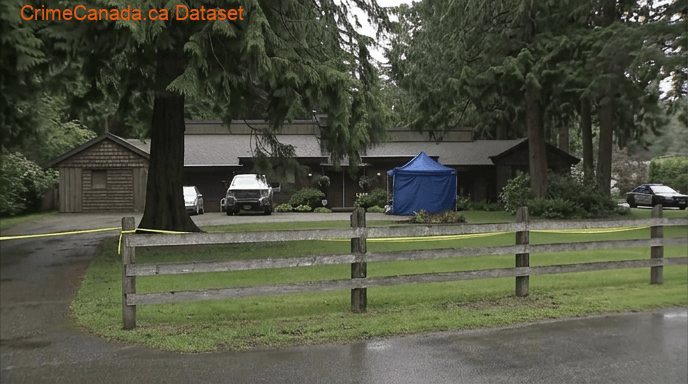
Closing arguments are underway in the murder trial of three men accused in the killing of senior couple Arnold and Joanne De Jong in Abbotsford, British Columbia. The couple was found dead in their home in May 2022 after what investigators describe as a planned home invasion and robbery. The accused — Abhijeet Singh, Khushveer Toor, and Gurkaran Singh — have pleaded not guilty to first-degree murder and related offences.
On Monday, March 10, 2026, defence lawyer Andrew Cochrane, representing Abhijeet Singh, argued that while evidence points to his client’s advance knowledge of the break-in and involvement with stolen property, there is no proof he was physically present at the scene when the killings occurred. Cell phone data presented at trial is said to place Singh roughly 57 kilometres away from the De Jong residence at the estimated time of death. The trial, heard before Justice Brenda Brown of the B.C. Supreme Court, remains ongoing, with defence submissions for co-accused Toor continuing, followed by the Crown’s reply and a reserved verdict at a later date.
Allegations, Evidence, and Legal Positions
Crown prosecutors allege the three accused jointly planned to rob and kill the De Jongs, a couple they had previously encountered through cleaning work connected to Singh’s business. The case centres on a robbery allegedly motivated by financial pressure and potential debt, with the assailants said to have tied the couple up and fatally assaulted them. Following the deaths, the offenders are alleged to have used stolen credit cards and cheques and to have taken items including a power washer, generating an estimated $10,000 through fraudulent transactions.
Evidence described in court includes purchases of rope, gloves, and a baseball bat before the homicides, as well as DNA findings on a rope and bat later recovered by police. The defence for Abhijeet Singh has argued that DNA traces can be explained by his handling of the items at retail stores such as Canadian Tire and Home Depot before they were later used by others. Cochrane has told the court that while Singh accepts a level of moral responsibility — including advance knowledge of the break-in and receiving stolen goods — the evidence, in his view, supports at most a verdict of manslaughter rather than first-degree murder.

Community Context and Emotional Impact
The killings of Arnold and Joanne De Jong have had a lasting emotional impact in Abbotsford. The couple, described in earlier reporting as central to a close-knit family, were found bound and beaten in their home shortly after hosting relatives for a Mother’s Day gathering. For many residents, the case has become a painful example of how targeted crime can reach even long-established households that appear stable and secure.
Family members have spoken publicly about the lasting harm caused by the deaths, emphasizing that, regardless of the eventual sentence, the family faces a permanent loss. Comments shared in news coverage and on social platforms highlight a widespread sense of shock that two seniors could be killed over a relatively small financial gain. Expressions such as the notion that the family has received a “life sentence” of grief, and disbelief that a modest robbery could escalate into lethal violence, reflect a community struggling to reconcile the brutality of the offence with the apparent motive.
Safety Profile of the Area
The De Jong home is located in a residential neighbourhood of Abbotsford, a city that is not routinely identified in regional reporting as a hotspot for violent home invasions. Available open-source material connected to this case does not reference a pattern of similar attacks on that specific street or immediate area in the months surrounding the killings. Instead, this incident appears to be a targeted event linked to prior access to the property through legitimate work.
From a safety-planning perspective, the case underscores a particular risk scenario: offenders who gain knowledge of a home, its layout, and its occupants through employment or service relationships. While these relationships are ordinarily lawful and routine, this trial shows how that familiarity can be misused in rare but serious cases. For residents, that context supports practical steps such as documenting who has access to the home, reviewing security measures (cameras, lighting, and locks), and maintaining regular communication with neighbours and family about unusual visits or activities around the property.
Social Sentiment and Public Discussion
Public discussion around the case, as reflected in news interviews and social media reactions, combines grief with concern about accountability. Many comments focus on two main themes: the vulnerability of seniors and the perceived disproportionality between the alleged financial motive and the fatal outcome. The idea that two lives were taken for roughly $10,000 in illicit financial gain has been described as “incomprehensible” and “horrific” by family members and community voices.
These reactions are not only emotional but also safety-oriented. Concerns raised include how seniors can better protect themselves, how quickly suspicious financial activity might be detected, and what safeguards are in place when workers enter private homes. While the courts are tasked with determining criminal liability based on evidence and legal standards, residents are using the case as a catalyst to discuss practical measures such as checking references for in-home services, monitoring financial accounts, and staying in close contact with older family members who may be targets for financially motivated crime.
Broader Trends and How This Case Fits In
Open-source reporting associated with this trial does not provide specific statistical data on home invasions in Abbotsford or detailed year-over-year crime trends for the city. However, the facts described in court place this incident within a broader category of targeted property crimes that escalate into violence. Features of that pattern include advance planning, selection of a known residence, purchase of tools or restraints ahead of time, and attempts to profit through banking or credit fraud after the offence.
Nationally and provincially, police and community safety agencies have previously highlighted the risks to older adults from financially motivated crimes, including fraud, identity theft, and in some cases robberies or home invasions. While the De Jong case is an extreme and relatively rare example, it aligns with larger concerns that offenders may target individuals perceived as having assets but limited physical ability to resist. The alleged use of stolen credit cards and cheques, coupled with online research into legal consequences and self-defence reportedly attributed to one of the accused, illustrates how traditional physical crimes can intersect with digital behaviour and financial exploitation.
Without local datasets directly tied to this neighbourhood, it is not possible within this brief to rank the De Jong case statistically against other incidents in Abbotsford. What is clear is that authorities are treating the matter as a serious, isolated but significant event, and that its circumstances are being closely examined in court for what they reveal about planning, intent, and group responsibility.
What Residents Can Take Away for Personal Safety
While every case is unique, several practical lessons emerge for households and especially for seniors and their families:
- Consider documenting all individuals and companies that have regular access to the home (cleaners, contractors, caregivers) and ensure that at least one trusted relative is aware of these arrangements.
- Review physical security features such as exterior lighting, deadbolts, and where appropriate, monitored alarm or camera systems, balancing safety with privacy and cost.
- Monitor bank and credit card statements for unusual activity and set up alerts where available, so that any misuse of financial instruments can be detected early.
- Encourage regular check-ins with older relatives, especially after visits from service providers or following any unsettling events near the home.
These actions cannot eliminate risk, and nothing in the current trial record suggests that the De Jongs failed to take reasonable precautions. Instead, the purpose of highlighting these steps is to help residents think systematically about safety in light of a rare but high-impact incident.
About This Report
This safety alert was generated by aggregating data from local authorities, community reports, and open-source intelligence. Our mission at Crime Canada is to provide citizens with localized safety data and context. We are not the original creators of the underlying news reports.
Primary Source: Information in this report was initially covered by News Staff for CityNews.
Additional Research & Context
- Further details on the closing arguments, including cell phone evidence and DNA explanations, are summarized in coverage by Global News at this link.
- Background on the Crown’s theory that all three accused are equally responsible for the killings, along with information about alleged planning and financial motives, can be found in reporting by the Maple Ridge News at this article.
- An overview of the defence position that there is no proof of one accused’s physical presence at the murder scene appears in national coverage hosted by Richmond News at this report.