LearnMayerthorpe, AB
Mayerthorpe RCMP killings: the case, the convictions and sentences
How the 2005 deaths of four RCMP constables near Mayerthorpe, Alberta, led to manslaughter convictions for two men who helped James Roszko return to his farm.
A plain-language guide to drug possession charges under CDSA s. 4 in Alberta: the court process, possible penalties, defences, a criminal record, and where to get help.
Crime Canada newsroomPublished
A drug possession charge in Alberta is laid under section 4(1) of the federal Controlled Drugs and Substances Act (CDSA). It is an offence to possess a substance listed in Schedule I, II or III of the Act unless you are legally authorized, for example by a valid prescription.
Cannabis is no longer covered by the CDSA. It falls under the federal Cannabis Act, which has its own rules and offences. The federal decriminalization exemption granted to British Columbia has never applied in Alberta, so possession of these drugs remains a criminal offence here.
Being charged does not mean you are guilty. You are presumed innocent. The Crown (the prosecutor acting for the state) must prove each of these points beyond a reasonable doubt:
Charged or under investigation? Get a free consultation →
Drug possession is a hybrid offence. This means the Crown can choose to proceed by summary conviction (the less serious route) or by indictment (the more serious route). For a broader overview of the law across the country, see our national guide to drug possession charges.
After an arrest, police may release you with an appearance notice or an undertaking, which is a written promise to go to court and follow certain conditions. If police hold you, a justice decides at a bail hearing whether to release you on a release order.
Conditions can include not possessing drugs without a prescription, living at a set address, reporting to someone, or avoiding certain people or places. Read your conditions carefully. Breaking one is a separate criminal offence, even if the original charge is later dropped.
In Alberta, police lay charges themselves. There is no requirement for a prosecutor to approve charges first. Because the CDSA is a federal law, drug charges in Alberta are generally prosecuted by federal Crown prosecutors with the Public Prosecution Service of Canada. If you also face Criminal Code charges from the same incident, those are usually handled by the Alberta Crown Prosecution Service.
Since 2022, the CDSA has directed police and prosecutors to consider alternatives for simple possession, such as a warning, a referral to a health or treatment program, or alternative measures (often called diversion). The law also says simple possession should be prosecuted only when those options are not appropriate. This does not guarantee any result, but a lawyer can raise it with the Crown.
Your first appearance will usually be in the Alberta Court of Justice (called the Provincial Court until 2022), whether you are in Calgary, Edmonton or a smaller centre. The first appearance is not a trial. Often the case is adjourned so you can get a lawyer and receive disclosure. In many cases a lawyer or agent can appear for you.
Disclosure is the Crown's evidence against you, which it must share. It can include police notes and reports, search details, any warrant, photos or video, and the lab certificate identifying the substance. A lawyer will review it closely before advising you.
The Crown decides whether to proceed summarily or by indictment. Simple possession cases often proceed summarily and stay in the Alberta Court of Justice. If the Crown proceeds by indictment, you may be able to choose to be tried in the Court of King's Bench, the court that hears more serious trials.
A case can end in several ways: the charge may be withdrawn or stayed, resolved through diversion, resolved with a peace bond (a court order to keep the peace and follow conditions, usually for up to a year, which is not a criminal conviction), resolved by a guilty plea, or go to trial. Which option is realistic depends on the evidence and your circumstances.
Simple possession cases may take a few months or longer, depending on the court and whether there is a trial. Under the Supreme Court of Canada's Jordan framework, a case should generally be finished within 18 months in the Alberta Court of Justice or 30 months in the Court of King's Bench, not counting delay caused by the defence. Unreasonable delay can lead to a stay of the charge.
The maximum penalty depends on the schedule of the drug and how the Crown proceeds. There is no mandatory minimum sentence for simple possession.
| Substance | Summary conviction | Indictment |
|---|---|---|
| Schedule I (e.g., cocaine, opioids, methamphetamine) | Fine up to $1,000 (first offence) or $2,000 (subsequent offence), a short jail term of no more than one year, or both | Up to 7 years in jail |
| Schedule II (synthetic cannabinoids) | Same as above | Up to 5 years less a day |
| Schedule III (e.g., LSD, psilocybin) | Same as above | Up to 3 years in jail |
Maximums are rarely imposed for simple possession. Common outcomes, where a case ends in a finding of guilt, can include:
Factors that often matter include the type and amount of drug, whether it was clearly for personal use, your criminal record, any steps you have taken to address substance use, your work and family situation, and, for Indigenous people, their background and circumstances under the Criminal Code's sentencing principles. The CDSA also recognizes that problematic substance use should be treated mainly as a health and social issue.
A conviction creates a criminal record. A discharge is not a conviction, and the record of an absolute discharge is generally removed from the national police database after one year, or after three years for a conditional discharge.
After a conviction, you can apply to the Parole Board of Canada for a record suspension (formerly a pardon) once your sentence is complete and a waiting period has passed: 5 years for a summary conviction and 10 years for an indictable conviction. Bill C-5 also added a rule that records of simple possession convictions are to be kept separate from other criminal records after a waiting period. How this applies to a specific record can be technical, so ask a lawyer.
Drug offences are taken very seriously at the US border. A drug conviction, and in some cases even admitting past drug use to a border officer, can make you inadmissible to the US. The US does not necessarily recognize a Canadian record suspension.
If you are not a Canadian citizen, a conviction can affect your immigration status, including permanent residence applications, work or study permits and, in some cases, removal. Speak to an immigration lawyer as well as a criminal lawyer before making any decision about your case.
A record can affect jobs that require a criminal record check, vulnerable sector check, security clearance or professional licence, as well as cross-border work.
Every case is different, but a lawyer will usually examine:
According to Statistics Canada police-reported data (table 35-10-0177, "Total, possession, other Controlled Drugs and Substances Act drugs"), Alberta police reported 2,485 incidents in 2025, a rate of 49.41 per 100,000 people, and 1,023 persons were charged. The Canada rate that year was 46.11 per 100,000.
| Year | Alberta rate per 100,000 | Incidents | Persons charged | Canada rate per 100,000 |
|---|---|---|---|---|
| 2025 | 49.41 | 2,485 | 1,023 | 46.11 |
| 2024 | 56.57 | 2,777 | 1,088 | 39.44 |
| 2023 | 57.96 | 2,715 | 1,027 | 34.5 |
| 2022 | 49.17 | 2,218 | 1,030 | 42.69 |
| 2021 | 68.06 | 3,016 | 1,492 | 55.32 |
| 2020 | 86.83 | 3,827 | 2,395 | 63.68 |
| 2019 | 96.09 | 4,185 | 3,069 | 62.85 |
| 2018 | 90.09 | 3,867 | 2,889 | 58.42 |
| 2017 | 77.43 | 3,281 | 2,496 | 54.23 |
| 2016 | 62 | 2,601 | 1,990 | 49.58 |
Alberta's rate rose from 2016 to a peak in 2019, fell sharply to 2022, and has stayed lower since. Alberta's rate has been above the national rate in every year shown. The number of people charged has dropped much more than the number of incidents, from 3,069 in 2019 to about 1,000 a year since 2022, which may reflect the greater use of warnings and diversion. For more data, see our Alberta crime statistics, and follow local cases on our Alberta crime news page.
Simple drug possession often has no direct victim. But you may be involved as the person who reported it, such as a family member, landlord or employer, or you may have been affected by someone's behaviour connected to drug use.
Speak with a criminal lawyer as early as possible: ideally before you give any statement to police, and before your first appearance. You have the right to remain silent. A lawyer can explain your release conditions, review disclosure, look for Charter issues, and ask the Crown to consider a warning, diversion or withdrawal where appropriate.
If you cannot afford a lawyer, contact Legal Aid Alberta to see whether you qualify. Duty counsel, a lawyer available at court, may also be able to give you brief help on your court date. If you are not a citizen, get immigration advice before making decisions.
If you have been charged, you can request a free, confidential first consultation through an independent criminal defence lawyer here, and if you are a victim or complainant, you can request one here.
This guide is general information, not legal advice. The law can change and every case depends on its own facts, so speak with a lawyer about your situation.
Yes. Possessing a substance listed in Schedule I, II or III of the Controlled Drugs and Substances Act without authorization, such as a prescription, is a criminal offence under section 4(1). The decriminalization exemption granted to British Columbia has never applied in Alberta. Cannabis is different: it is regulated under the federal Cannabis Act rather than the CDSA.
Jail is uncommon for a first simple possession charge, but it is possible. There is no mandatory minimum. Depending on the facts, outcomes may include a withdrawal, diversion, an absolute or conditional discharge, a fine or probation. The type and amount of drug, your record and your personal circumstances all matter. A lawyer can give you a realistic assessment.
It can be. Since 2022, the CDSA has directed police and prosecutors to consider warnings, referrals to treatment or alternative measures (diversion) for simple possession, and to prosecute only when those options are not appropriate. Charges may also be withdrawn if the evidence is weak or was obtained in breach of the Charter. Nothing is guaranteed, so get advice early.
Yes. US border authorities treat drug offences seriously. A conviction, and sometimes even admitting past drug use to a border officer, can make you inadmissible. The US does not necessarily recognize a Canadian record suspension. If you travel to the US for work or family, tell your lawyer early so this can be considered when your case is being resolved.
Many simple possession cases in the Alberta Court of Justice take a few months, but a case going to trial can take longer. Under the Jordan framework, cases should generally finish within 18 months in the Alberta Court of Justice or 30 months in the Court of King's Bench, excluding defence delay. Unreasonable delay can lead to the charge being stayed.
It is strongly recommended. A lawyer in Calgary, Edmonton or elsewhere in Alberta can review disclosure, spot unlawful searches or detentions, ask the Crown about diversion or withdrawal, and explain how a result could affect your record, travel or immigration status. If cost is a concern, check whether you qualify for Legal Aid Alberta, or ask about duty counsel at court.
The Good Samaritan Drug Overdose Act, found in section 4.1 of the CDSA, protects people who seek emergency help for an overdose, and others at the scene, from being charged with simple possession. It also protects against breach charges tied to simple possession conditions. It does not cover other offences such as trafficking. If you were charged in this situation, tell your lawyer.
LearnMayerthorpe, AB
How the 2005 deaths of four RCMP constables near Mayerthorpe, Alberta, led to manslaughter convictions for two men who helped James Roszko return to his farm.
AlertsStrathmore, ABWanted
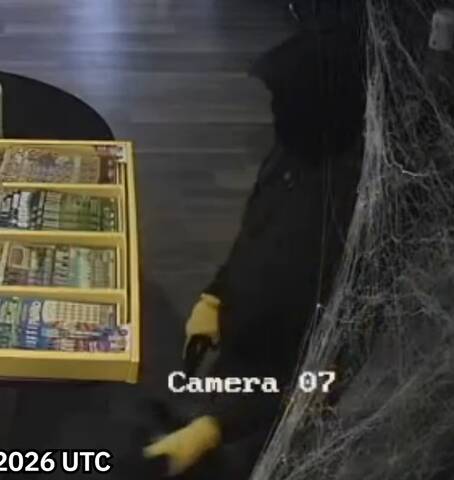
Strathmore RCMP are asking for help identifying two suspects after a man with a firearm demanded money at the Wheatland Hotel on Oct. 24, 2026.
NewsEdmonton, AB
A 44-year-old minivan driver died after his vehicle struck an Edmonton fire truck at 101 Street and Kingsway Avenue on Tuesday night, police said.
NewsCalgary, AB
Calgary police say five people face 30 charges after officers watched suspected drug sales to unhoused people downtown over two weeks in October.
A short digest every Monday and, if you want, an email as soon as someone is reported missing or wanted near you. Free, unsubscribe in one click.