

Data Licensing
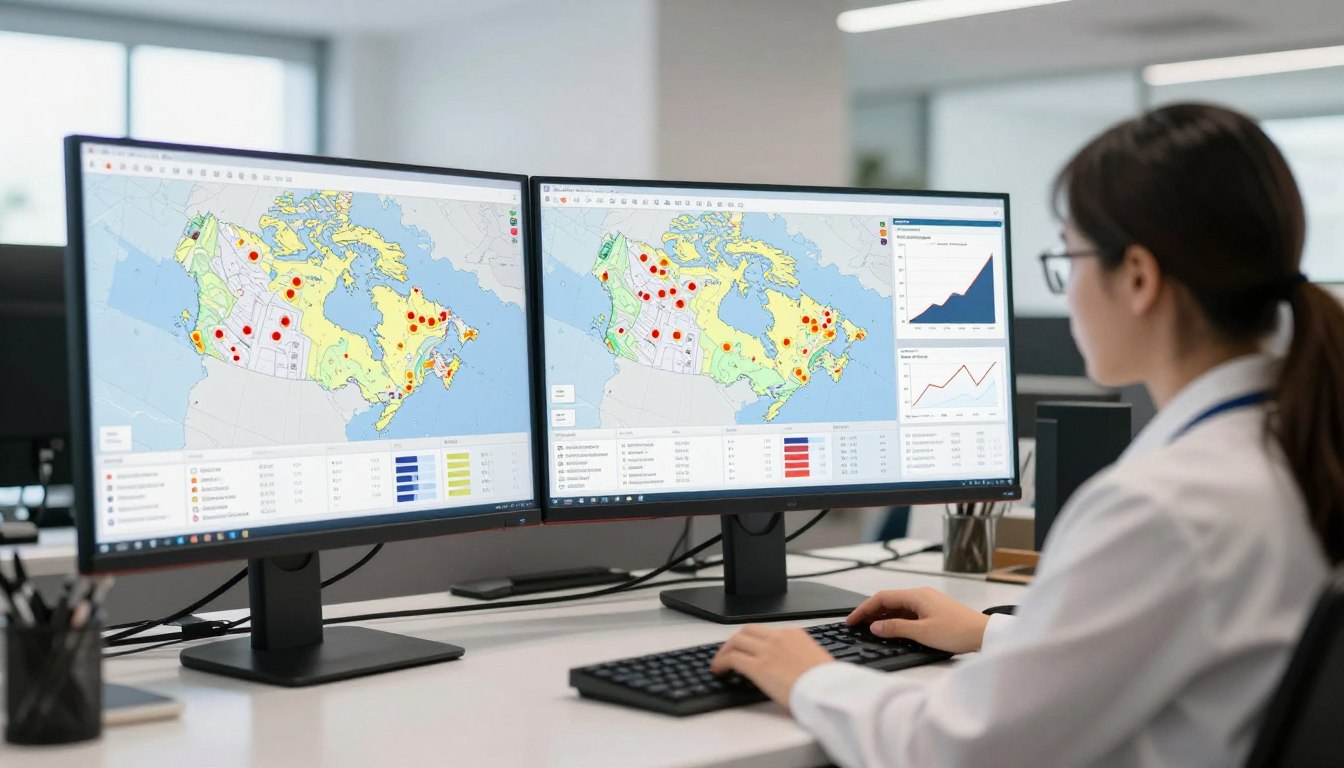
CrimeCanada.ca provides curated, Canada-focused crime and safety datasets for research, reporting, and analysis. This page explains what can be licensed, what the limits are, and how to request access.
What you can license
Our licensing program covers Crime Canada–curated datasets (compiled, cleaned, and standardized where possible), along with derived fields and documentation that help you use the data responsibly. Availability varies by source and jurisdiction.
National indicators
- Police-reported crime metrics published at the national/provincial level (where available)
- Time-series views aligned to official reporting periods
- High-level trend summaries suitable for dashboards and reporting
Local and regional datasets
- Municipal/police open data feeds where published
- Geographic breakdowns at the level provided by the source (e.g., city, division, patrol zone)
- Standardized offence categories and metadata fields when feasible
Mapping-ready exports
- Aggregated, map-friendly formats (e.g., CSV; GeoJSON when supported)
- Consistent geographic labels and documentation to avoid misinterpretation
- Data dictionaries and field definitions
What we do not provide
- Personally identifying information about victims, witnesses, or suspects
- Non-public investigative, intelligence, or police operational data
- Content that would enable identification of individuals in small populations

Data sources and attribution
CrimeCanada.ca aggregates information from publicly available, reputable sources. Common inputs include Statistics Canada products (including police-reported crime programs) and open datasets released by Canadian municipalities, police services, and governments.
Typical attribution requirements
- Credit the original publisher (e.g., “Source: Statistics Canada” or the relevant municipal/police open data portal).
- Do not imply endorsement by the source agency.
- Keep source notes with any derived charts, maps, or indicators.
External links (for reference): Statistics Canada Open Licence; Open Government Licence – Canada; Open Data (Government of Canada); and relevant municipal/police open data portals. Where a source has stricter terms than a general open licence, those stricter terms apply.
Accuracy, limitations, and responsible use
Crime data requires careful interpretation. Differences in reporting practices, classification rules, and publication schedules can produce apparent changes that are not true changes in underlying risk. We therefore require that licensed users follow basic responsible-use standards.
Key limitations to understand
- Police-reported data reflects incidents reported to, and recorded by, police (it is not a census of all crime).
- Comparability varies: changes in definitions, coding, and reporting practices affect trends.
- Geographic precision depends on the source; we do not provide pinpoint-level incident locations unless the official source publishes them in that form.
- Small numbers can be misleading; we may suppress or aggregate to reduce re-identification risk.
Responsible-use commitments (summary)
- No attempts to identify individuals or re-identify anonymized/aggregated records.
- No use that targets protected groups or promotes discrimination.
- Clear disclosure of limitations and reporting periods in public outputs.
- Where feasible, include methodological notes and definitions alongside maps and charts.
Common licence types
The right licence depends on how you plan to use the data. Below are common structures; final terms are confirmed in writing based on your request, sources, and intended use.
Research & education
- Academic research, thesis work, public-interest analysis
- Non-commercial use, attribution required
- Sharing limited to project team unless approved otherwise
Media & reporting
- Newsrooms, documentary teams, investigative reporting
- Publication permitted with attribution and limitations disclosed
- Restrictions on implying endorsement or official status
Commercial / internal analytics
- Business intelligence, risk analysis, internal dashboards
- Use limited to the licensed entity and approved users
- Additional restrictions for redistribution and re-sale
Product / redistribution
- Embedding datasets into a commercial product or API
- Redistribution only where the source terms allow it
- Typically requires a stronger compliance and audit schedule
How to request data
To request licensing information, email us with the details below. We will confirm availability, source constraints, and next steps (including any quote, agreement, and attribution language).
Include in your request
- Your organization name and primary contact
- Intended use (research, media, internal analytics, product, etc.)
- Geography (Canada-wide, province, city, police division, etc.)
- Time period (years/months/quarters as published by the source)
- Preferred format (CSV; other formats if needed)
- Whether you need mapping-ready outputs
- Whether the results will be published publicly
FAQs
Do you sell personal information or individual case files?
No. CrimeCanada.ca does not provide personally identifying information, individual-level case files, or non-public investigative data. Our licensing program focuses on aggregated statistics and public datasets.
How often is the data updated?
Update frequency depends on the original publisher. Some national datasets are released on an annual schedule, while certain municipal open datasets may update more frequently. Your Source & Attribution Schedule will list the publication cadence for the specific datasets you license.
Can I republish the data in a report, article, or dashboard?
Usually, yes—subject to the licence type and source terms. Republishing typically requires attribution, a “no endorsement” statement, and disclosure of limitations and reporting periods.
Can I use the data to build a commercial product?
Possibly. Product and redistribution uses are the most restrictive because they must comply with underlying source terms. We will confirm what is permitted and structure the licence accordingly.
Are you affiliated with police agencies or Statistics Canada?
No. CrimeCanada.ca is an independent informational platform and is not affiliated with Statistics Canada, the RCMP, or any police service. All trademarks and source names remain the property of their respective owners.
Last reviewed: January 26, 2026. This page is informational only and does not constitute legal advice. For formal terms, refer to the written licence agreement and the Source & Attribution Schedule for your request.