
Table of Contents
Man Found Unconscious Near Montreal Airport: Medical Emergency, Not Criminal Incident, Say Police
Safety Overview: What Happened Near Montreal-Trudeau Airport
On Saturday morning, a 27-year-old man was discovered unconscious near Montréal–Pierre Elliott Trudeau International Airport in Dorval, prompting an emergency response from paramedics and the Service de police de la Ville de Montréal (SPVM). The man was found on Montreal-Toronto Boulevard, close to the Dorval roundabout, with visible injuries to his upper body. First responders were alerted at approximately 6:50 a.m., and the victim was transported to hospital in critical condition.
According to information shared by police and medical authorities, the injuries that initially raised concern were later assessed as the result of pre-existing medical issues rather than a violent assault or other criminal act. At this stage, investigators have found no indication of foul play. The SPVM has stated that no arrests are anticipated in connection with this event, though an investigation remains technically open while authorities confirm all circumstances.
Community Context & Local Safety Perception
The area around Montreal-Toronto Boulevard and the Dorval roundabout is a busy transportation corridor serving airport traffic, local commuters, and nearby businesses. When individuals are found unconscious in such public spaces, it can understandably cause anxiety for residents, workers, and travelers who may initially fear a violent incident or targeted attack. In this case, early clarification from authorities that the event appears to be medically related, rather than criminal, is important for maintaining public confidence.
Open-source commentary available for this incident is limited, and there is no clear evidence of widespread social media debate or community panic at this time. In similar situations near major transit hubs, local online discussions often begin with speculation about possible assaults or robberies, then settle once police confirm the absence of criminal activity. This pattern appears consistent here: while the circumstances are serious for the individual involved, the broader public safety risk in the vicinity of the airport does not appear to have changed based on current information.

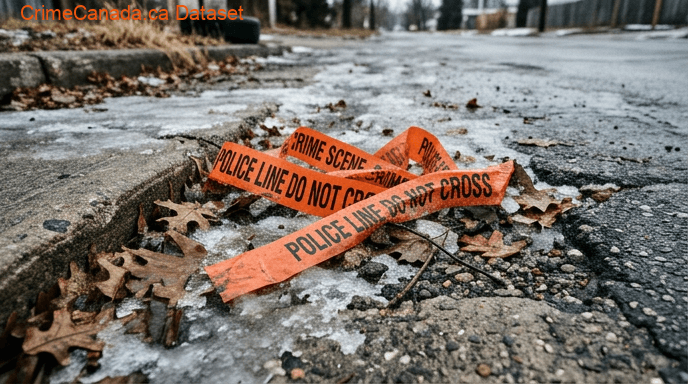
From a situational-awareness standpoint, this case serves as a reminder that medical emergencies in public places can look, at first glance, like crime scenes. Emergency tape, multiple patrol cars, and investigators examining an area near a major airport can easily give the impression of a violent event. Residents and commuters should be aware that not all visible police activity signals an increase in criminal risk; sometimes, it reflects a cautious approach while authorities rule out potential wrongdoing.
Location Safety Profile: Dorval and the Airport Corridor
The Dorval sector surrounding Montréal–Trudeau International Airport is characterized by a mix of commercial zones, hotels, airport-related services, and major roadways, including Highway 20 and the Dorval interchange. This corridor tends to see high volumes of vehicle traffic and travellers at most hours, with a somewhat lower concentration of residential properties compared to other parts of the island of Montreal.
Historically, public-safety concerns in airport-adjacent districts tend to revolve around property-related issues such as vehicle break-ins, theft from parked cars, and occasional disturbances linked to late-night activity. While violent crime is not absent from the broader Montreal region, police data generally show that airport perimeters and associated commercial strips often experience different patterns of incidents than dense nightlife or downtown entertainment zones.
In the context of this specific event, the indication that the man’s condition is tied to pre-existing health issues rather than an attack aligns more closely with medical and welfare calls that first responders regularly handle in high-traffic environments—such as transit stations, airports, and large commercial areas—than with targeted street crime.
Statistical Context: Medical Emergencies vs. Violent Crime
Across large Canadian cities, a significant share of emergency calls in public spaces are related to medical situations, wellness checks, or accidents rather than criminal offences. While precise, up-to-date SPVM figures are not provided in the available sources for this specific corner of Dorval, broader policing trends indicate that first responders are frequently dispatched to assist individuals in medical distress in parks, transit hubs, sidewalks, and parking areas.
When a person is found injured or unconscious outdoors, police typically proceed as though a potential crime may have occurred until evidence points clearly to another cause. This cautious approach ensures that possible assaults, hit-and-runs, or other offences are not overlooked in the early stages. In this case, consultation with medical professionals led authorities to conclude that the victim’s upper-body injuries are most consistent with underlying medical conditions, not with assaultive violence or a traffic-related impact.
From a community-safety analytics perspective, this event is better categorized as a serious medical emergency in a public place rather than as part of a trend in violent attacks near the airport. It does not, based on current information, suggest an increased risk of random violence for people travelling through or working in the Dorval airport corridor. However, it does highlight the importance of rapid bystander reporting—calling emergency services when someone is seen lying on the ground, appearing disoriented, or in clear distress can be life-saving regardless of whether the cause is criminal, accidental, or medical.
Practical Safety Takeaways for the Public
- If you see someone lying on the ground or visibly unwell near major roads, transit stops, or airport facilities, call emergency services immediately. Do not assume someone else has already reported it.
- Provide clear location details, such as nearby intersections or landmarks like the Dorval roundabout or specific boulevard names, to help responders reach the scene quickly.
- Recognize that heavy police and paramedic presence does not automatically mean a violent crime has occurred; many such responses involve medical or welfare calls.
As of the latest available information, the SPVM has not reported any criminal dimension to this event. The investigation remains open only to confirm the medical conclusions and to ensure that no overlooked evidence suggests otherwise.
About This Report
This safety alert was generated by aggregating data from local authorities, community reports, and open-source intelligence. Our mission at Crime Canada is to provide citizens with localized safety data and context. We are not the original creators of the underlying news reports.
Primary Source: Information in this report was initially covered by News Staff for CityNews.
Additional Research & Context
- Original incident coverage and updates from CityNews Montreal, including statements attributed to SPVM spokespersons.
- General information about public-safety responsibilities and statistics from the Service de police de la Ville de Montréal (SPVM), the municipal police service for Montreal.