
Table of Contents
Rail Safety Alert: Maskwacis RCMP Warn OHV Riders to Avoid Tracks
Section 1: The Alert
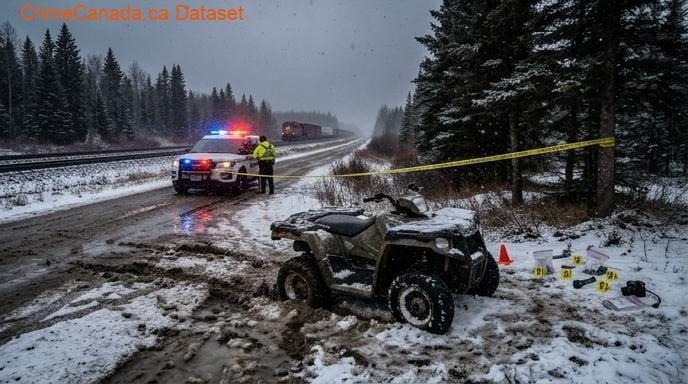
Maskwacis RCMP in Alberta are issuing a safety reminder to residents and off-highway vehicle (OHV) users to stay well clear of railway tracks and rail corridors, especially during spring thaw conditions. Warmer weather and melting snow are creating soft, muddy ground that can trap OHVs and other vehicles near active rail lines.
Police emphasize that operating quads, side-by-sides, dirt bikes, and other OHVs close to tracks in the Maskwacis area can quickly become a life-threatening situation if a vehicle becomes stuck or stalls near or on the rails. This advisory is part of broader rail safety messaging shared across Canada and complements other community safety alerts monitored by CrimeCanada.ca.
Section 2: Official Details from Maskwacis RCMP
According to the official information, Maskwacis RCMP are not reporting a specific collision or injury incident in this release, but are proactively warning the public about the risks of OHV use near railway infrastructure as spring conditions worsen ground stability.
Key safety points highlighted by police include:

- Railway tracks, rail beds, and adjacent property are not designed or intended for recreational vehicle use of any kind.
- Spring thaw leads to soft, muddy, and unstable ground that increases the chance of OHVs and other vehicles becoming stuck near the tracks.
- Trains require long distances and significant time to stop; they cannot brake quickly for unexpected vehicles or people on or near the rails.
- Any stalled or stuck vehicle close to the tracks becomes a serious hazard to both the public and rail operations.
The Maskwacis RCMP are urging all OHV riders to follow these specific safety practices:
- Avoid riding on, along, or immediately beside railway tracks and rail corridors.
- Continuously assess changing ground conditions, especially during spring melt, and steer clear of soft, rutted, or flooded areas near rail lines.
- Plan OHV routes only in safe, designated riding areas that are clearly away from railway infrastructure and other restricted zones.
- Never cross railway tracks except at official, marked railway crossings that are intended for vehicle or pedestrian use.
Police also stress that railway property is restricted. Entering, riding, or walking on rail rights-of-way without authorization is trespassing and may lead to enforcement measures. More importantly, staying off the tracks and away from the rail corridor protects individual riders, train crews, and critical transportation infrastructure that serves communities across Alberta and Canada.
The RCMP advise community members who want more information on rail safety to follow them on social media: Facebook at @RCMPinAlberta and X (formerly Twitter) at @RCMPAlberta, where they share additional safety messaging and updates similar to other incidents tracked in our national safety data, such as those reflected in community profiles like the Petawawa safety and crime statistics overview.
Section 3: CrimeCanada.ca Safety Perspective
From the perspective of CrimeCanada.ca, this Maskwacis rail safety reminder is highly relevant for the entire Alberta community, particularly in rural and Indigenous areas where OHV use is part of daily life and recreation. Near-miss incidents on railway tracks often go unreported, yet they carry the potential for catastrophic collisions involving high-speed trains and unprotected riders. Preventing even a single OHV from becoming stranded on or next to a track can avert serious injuries, fatalities, and community-wide disruption.
We encourage OHV owners to treat rail corridors as off-limits: plan routes in advance, teach youth riders about trespassing laws and rail dangers, ride sober and at appropriate speeds, and maintain situational awareness around all rail lines. Community members who observe unsafe riding near tracks should speak up within their families and social circles, or contact local authorities if an immediate danger is present. CrimeCanada.ca will continue to track and share national safety alerts like this one to support informed, cautious, and responsible use of OHVs across Canada.
Official Source & Community Safety
This safety alert is based on an official release from the Royal Canadian Mounted Police (RCMP). CrimeCanada.ca aggregates and analyzes this data to keep the alberta community informed, aware, and safe. We are an independent safety data aggregator and not the original creators of the underlying incident report.
Read the full official release here: RCMP Official Statement.