
Table of Contents
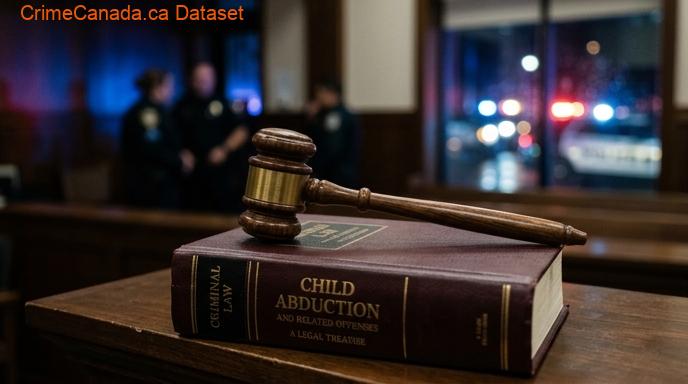
In Canada, abduction under the age of 16 is a serious child-protection and family-law related crime. It occurs when someone takes a child under 16 away from the parent, guardian, or other lawful caregiver without their permission. This offence, categorized under UCR Code 1540 and set out in section 280 of the Criminal Code, is a hybrid offence, meaning it can be prosecuted either as an indictable (more serious) crime or as a summary (less serious) offence. Under child abduction law in Canada, the focus is on protecting children and the rights of those with lawful custody or care, rather than on ransom or violence as in kidnapping.
The Legal Definition
“Every person who, without lawful authority, takes or causes to be taken a person under the age of 16 years out of the possession of and against the will of the parent or guardian of that person or of any other person who has the lawful care or charge of that person is guilty of
(a) an indictable offence and liable to imprisonment for a term of not more than five years; or
(b) an offence punishable on summary conviction.”
(Criminal Code, RSC 1985, c C-46, s. 280 – official text)
In plain English, this means that a person commits child abduction under section 280 when they take a child under 16 away from the person who is legally responsible for that child, without permission and against that person’s wishes. The “person who has the lawful care or charge” can be a parent, a guardian, or another adult who has legal custody or is lawfully responsible for looking after the child (for example, a foster parent or someone with a court order granting them care of the child).
The law does not require violence, threats, force, or crossing an international border. The core of the offence is the interference with the lawful custodian’s possession and control of the child. If someone “takes or causes to be taken” the child, that can include physically removing the child themselves or arranging for someone else to do it. The wording “without lawful authority” and “against the will” are central: if the parent, guardian, or lawful caregiver has agreed, or if there is a legal order permitting the removal, the offence will generally not be made out.
Penalties & Sentencing Framework
- Offence type (severity): Hybrid offence (can be prosecuted as indictable or summary).
- Mandatory minimum penalty: None.
- Maximum penalty (indictable): Up to 5 years imprisonment.
- Maximum penalty (summary conviction): Up to 2 years less a day imprisonment (often described in some contexts as up to 18 months, depending on the applicable summary conviction rules at the time).
Because section 280 is a hybrid offence, the Crown prosecutor decides whether to proceed by indictment or by summary conviction. That choice depends on factors such as the seriousness of the alleged conduct, the child’s vulnerability, whether there was planning or deception, prior criminal history, and the harm caused to the child and the custodial parent or guardian. Proceeding by indictment signals that the Crown views the case as more serious and allows for the higher maximum penalty of five years in prison.

There is no mandatory minimum sentence for abduction under 16. This means judges retain discretion to impose a wide range of sentences, from discharges (in rare and exceptional circumstances) through probation, conditional sentences (where legally available), or custodial sentences of varying lengths, up to the maximum allowed. Sentencing must follow the general principles in the Criminal Code: denunciation, deterrence, rehabilitation, protection of the public, proportionality to the gravity of the offence and the offender’s degree of responsibility, and consideration of any aggravating or mitigating factors.
Aggravating factors can include deliberate concealment of the child, taking the child across provincial or international borders, exposing the child to risk of physical or psychological harm, ignoring existing custody or access orders, or attempting to permanently deprive the lawful custodian of the child. Mitigating factors may include limited duration of the abduction, voluntary return of the child, genuine but mistaken belief in having legal rights, lack of a prior criminal record, and steps taken by the accused to minimize harm. Even where the accused is a parent or family member, courts recognize that such abductions can cause serious emotional and psychological harm to children and to the other parent or guardian, and sentencing often reflects this.
Common Defenses
-
Lawful authority or consent of the parent/guardian
One of the most important defenses under child abduction law in Canada is that the accused had lawful authority or the consent of the person with lawful care or charge. If the custodial parent, guardian, or other lawful caregiver gave permission—explicitly or in circumstances where consent can be reasonably inferred—the removal of the child may not be criminal. Section 284 of the Criminal Code sets out that in some circumstances, consent of the person who has lawful possession can be a complete answer to an abduction charge. For example, if a parent with sole custody agrees that the child can go on an extended trip with a relative, and the relative later faces an allegation of abduction, proof of that prior consent can defeat the charge. The key issues for the court are whether the person granting consent actually had lawful care or charge under the law or a court order, and whether consent was valid at the time the child was taken.
-
Lack of intent to deprive the lawful custodian of possession
Although section 280 is a “conduct” offence focused on the act of taking the child, courts look at the mental element: did the accused intend to interfere with the lawful custodian’s possession of the child, and do so against their will? If the Crown cannot prove that the accused intended to remove the child in a way that was contrary to the custodian’s wishes, the offence may not be made out. For instance, if a child leaves with an adult in an emergency situation and the adult reasonably believes the parent or guardian would approve (for example, rushing a child to a hospital while the custodian is momentarily unreachable), the evidence may show no criminal intent to deprive the custodian of possession. Similarly, miscommunications about pickup times or locations, where there is no purposeful breach of custody or access rights, may support a defense that there was no criminal intention to abduct, even if the situation created temporary confusion or distress.
-
Reasonable belief in lawful excuse or parental rights in absence of custody order
Another significant defense arises where the accused had a reasonable but mistaken belief in a lawful excuse or parental rights, particularly when there is no clear custody order in place. In many family situations, especially after separation, parents may not have formal court orders defining custody and access. One parent may take the child believing, in good faith, that they have equal rights to decide where the child lives or travels. If the accused can show that they genuinely and reasonably believed they had lawful authority—such as joint custody, or an informal but established caregiving arrangement—the Crown may fail to prove the necessary wrongful intent. This does not automatically excuse ignoring a clear court order or knowingly acting contrary to legal advice or prior agreements. However, where legal arrangements are ambiguous, and the accused’s belief in having parental or custodial rights is objectively reasonable in the circumstances, this belief can form the basis of a defense or at least significantly reduce moral blameworthiness and influence both liability and sentencing.
Real-World Example
Consider this scenario: A non-custodial parent, who has access rights but not primary custody, becomes worried that their parental rights are not being respected. Without the other parent’s consent and contrary to a court order setting out access schedules, they pick up their child from school and take the child on an unapproved trip to another city for several days. They do not inform the custodial parent of the child’s whereabouts, and the custodial parent contacts police to report the child missing. In this situation, police and the courts would likely view the conduct as potential abduction of a person under the age of 16 under section 280. The non-custodial parent has taken the child out of the possession of the lawful custodian (the parent with primary or sole custody), without lawful authority and against the will of that parent. Even though the accused is a parent and may say they acted out of fear that their relationship with the child was being undermined, the law focuses on the unlawful interference with the custodial parent’s rights and the risk and distress caused to the child. The accused might attempt to raise defenses such as belief in parental rights or misunderstanding of the order, but the existence of a clear custody order and deliberate non-compliance would weigh heavily in favour of conviction and a more serious sentence.
Record Suspensions (Pardons)
A conviction for abduction under the age of 16 will appear on a person’s criminal record and can significantly affect employment, travel, immigration status, and family-law proceedings. Under Canadian law, a person may apply for a record suspension (formerly known as a pardon) after a waiting period, provided they meet all eligibility criteria and have completed their sentence (including jail, probation, and payment of fines or surcharges). For this offence, the waiting period generally depends on whether the conviction was summary or indictable:
For a summary conviction under section 280, the waiting period is typically 5 years after the completion of the entire sentence. For an indictable conviction, the waiting period is typically 10 years after sentence completion. During this time, the person must remain crime-free and demonstrate good conduct. A record suspension, if granted by the Parole Board of Canada, does not erase what happened but sets the record apart from publicly visible criminal records in most contexts, helping the individual move forward. However, given the child-protection nature of the offence, decision-makers may scrutinize such applications closely, especially if there are any subsequent concerns involving children or family violence.
Related Violations
- Kidnapping
- Child Abandonment
- Unlawful Confinement
Together, these related offences and section 280 form part of the broader framework of child abduction law in Canada, aimed at protecting children’s safety and upholding lawful custody and care arrangements.