
Table of Contents
Burnaby Pokémon Card Shop Hit by Third Break‑In: Community Safety Brief
1. What Happened and Why It Matters
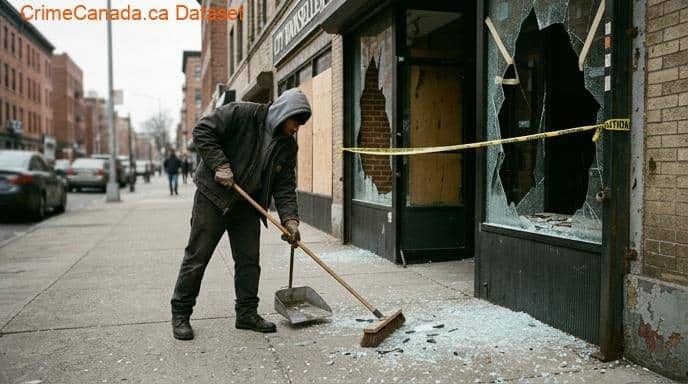
In the early hours of March 13, 2026, the specialty retailer Captured! Cards in Burnaby, British Columbia was targeted in a break-in for the third time in roughly three months. Owner Leon Chan says an alarm triggered at about 2:50 a.m., and he arrived at the store shortly after 3 a.m. to find that thieves had again forced their way inside.
According to Chan, an attempted entry in December 2025 failed, but a January 12, 2026 incident led to roughly $10,000 in stolen Pokémon products. In the most recent break‑in, suspects removed a glass display case that was largely emptied overnight as a preventive measure, but they still escaped with other merchandise and left the shop with an estimated $5,000 to $6,000 in damage and losses. Burnaby RCMP have confirmed they are investigating and note this is one of at least three Pokémon card shop break‑ins across the Lower Mainland in a single week, though they have not publicly linked the files to the same suspects.
Real‑time open‑source research indicates this Burnaby case is part of a broader pattern: in early March 2026, a store in Abbotsford reportedly lost about $30,000 in Pokémon cards during a fast, coordinated heist, and a New Westminster shop was also hit in January 2026. Similar incidents have been documented in Alberta and the United States, suggesting an ongoing trend of organized theft targeting high‑value trading cards.
2. Community Context & Social Sentiment
Local reaction among collectors, small business owners, and card‑shop staff across the Lower Mainland is a mix of anger, anxiety, and solidarity. Store owners describe the break‑ins not only as financial hits but also as emotionally draining events that disrupt family life and increase day‑to‑day stress. Chan has spoken about the strain on his household, noting that his family now lives with constant concern about overnight alarms and the possibility of further attacks.

Within the trading card community, recent thefts have sparked visible support campaigns. After the Abbotsford heist, for example, customers and collectors reportedly visited the affected shop with snacks, messages of encouragement, and hand‑drawn Pokémon artwork from children expressing sympathy. This type of response suggests that while fear of crime is real, there is also a strong community desire to keep local game and hobby stores open and safe.
At the same time, there is frustration with how rapidly thieves are able to get in and out, and how difficult it is for police to track stolen cards once they enter secondary markets. Burnaby RCMP media relations staff have stressed that Pokémon card thefts are not just a local curiosity, but part of a wider, international issue driven by high resale values. Officers have issued a direct appeal to potential buyers, emphasizing that anyone knowingly purchasing stolen cards is contributing to the problem and effectively incentivizing further break‑ins.
Burnaby’s broader safety profile provides additional context. Publicly available data on Burnaby crime statistics and safety trends show that, like most urban centres, the city contends with property crime, including break‑and‑enters affecting both homes and businesses. Specialized targets such as card shops represent a niche within this larger category, but the repeated targeting of a single store in a short period raises specific concerns for nearby merchants and residents.
Chan also reports that strata restrictions at his location prevent him from installing bars on his windows, limiting his options for hardening the storefront. This tension between security needs and building regulations is a recurring theme for urban retailers and may influence whether Captured! Cards remains at its current site or relocates to a different neighbourhood with more flexible security allowances.
3. Statistical Overview & Broader Trends
The Burnaby incident is one data point in a larger pattern of collectible‑theft cases emerging across western Canada. Open‑source reporting since mid‑2025 highlights several characteristics of this crime trend:
- Concentrated timelines: Captured! Cards has faced an attempted break‑in (December 2025) and two successful entries (January 12 and March 13, 2026) in roughly a quarter of a year. Within the same period, at least two other Lower Mainland shops—one in Abbotsford and one in New Westminster—reported major Pokémon‑related thefts.
- High dollar values: Individual incidents routinely involve losses in the tens of thousands of dollars. One Abbotsford shop reported an estimated $30,000 in stolen product, while an Alberta case in Fort McMurray involved about $20,000 in cards.
- Organized methods: Surveillance footage from other B.C. locations shows teams of masked suspects acting in a coordinated fashion, sometimes using chains, hooks, and vehicles to tear away security gates, then spending only a few minutes inside to grab pre‑selected, high‑value items.
These local incidents align with the global rise in trading card values. Rare Pokémon cards can sell for anything from a few cents to substantial five‑ or six‑figure prices, and one celebrity‑driven sale in early 2026 reportedly reached into the multi‑million‑dollar range. That speculative market environment makes sealed product and premium singles attractive targets because they are small, easy to transport, and can be resold anonymously online or at in‑person meetups.
Compared with more traditional forms of commercial property crime, these thefts appear narrowly focused on a specific, high‑value niche. They are not necessarily indicative of a sudden rise in violent offending, but they do highlight the vulnerability of specialty retailers that stock compact, valuable goods. For residents and visitors, this means that overall day‑to‑day personal safety in retail areas may remain stable, even as small businesses shoulder disproportionate risk of targeted property crime.
For a broader view of regional patterns beyond Burnaby, communities such as Burrard Inlet 3 and Boston Bar 1A in British Columbia also publish crime and safety data that can help residents compare trends in property crime, police response, and community safety initiatives across different jurisdictions.
Law enforcement agencies emphasize that tracking stolen trading cards is challenging: products are often non‑serialized, can be sold across borders, and are easily broken up and dispersed into multiple lots. This reality places additional importance on prevention—strengthening physical security where possible, building closer communication networks among card shops, and encouraging community members to avoid buying suspiciously discounted cards whose origin cannot be verified.
About This Report
This safety alert was generated by aggregating data from local authorities, community reports, and open-source intelligence. Our mission at Crime Canada is to provide citizens with localized safety data and context. We are not the original creators of the underlying news reports.
Primary Source: Information in this report was initially covered by Emma Crawford for CityNews.
Additional Research & Context
- Background on earlier Lower Mainland Pokémon card thefts, including major losses in Abbotsford and New Westminster, was drawn from coverage summarized in the open-source research brief referencing Global News reporting.
- Details on related incidents and arrest activity in Alberta, including Fort McMurray and Calgary investigations into trading card thefts, are based on compiled Canadian news and police statements cited in the investigative OSINT report.
- Information on global Pokémon card valuation trends and high‑profile sales comes from international business and entertainment news sources referenced within the March 20, 2026 research summary.