AlertsBattlefords, SKMissing
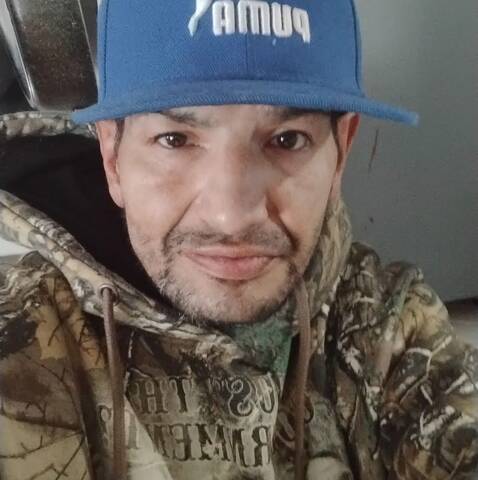
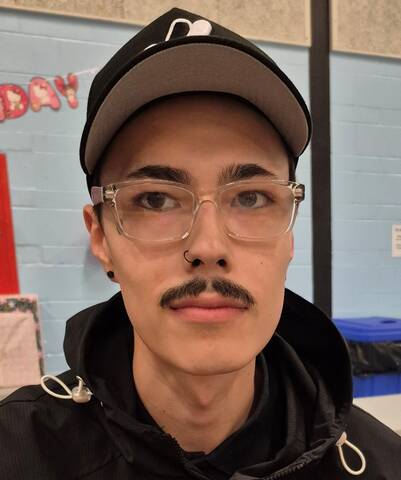
Missing in Battlefords: RCMP Seek Delaney Wolfe, 24, Last Heard From Oct. 26
Battlefords RCMP are asking for the public's help to find Delaney Wolfe, 24, who was reported missing on October 26, 2026.
 Crime Canada
Police appeals
Explore the data
Rankings and reports
A calm, plain-language guide to a simple assault charge in Saskatchewan: what it means, what happens in court, possible penalties, record consequences and where to get help.
Crime Canada newsroomPublished
If you or someone in your family has just been charged with assault in Saskatchewan, it is normal to feel shaken. This guide explains, step by step, what an assault charge means, what usually happens next in the Saskatchewan courts, and what you can do now. Remember that a charge is an accusation, not a finding. Everyone charged is presumed innocent unless the Crown proves the case beyond a reasonable doubt.
Assault is defined in section 265 of the Criminal Code, and the punishment is set out in section 266. When people talk about simple assault (police and Statistics Canada call it "assault level 1"), they mean an assault with no weapon and no bodily harm beyond something minor. More serious forms, such as assault with a weapon or assault causing bodily harm, are separate offences with higher penalties.
Under section 265, a person commits assault if they:
Charged or under investigation? Get a free consultation →
The force does not have to cause injury. A push, a slap or grabbing someone's arm can be enough. To get a conviction, the Crown (the prosecutor who acts for the public, not for the complainant) must prove each element beyond a reasonable doubt, usually including:
Assault is a hybrid offence. That means the Crown can choose to proceed either by summary conviction (the less serious route) or by indictment (the more serious route). Assaults involving a partner or family member are generally charged under the same section; the relationship mostly matters at bail and sentencing. For a national overview, see our guide to assault level 1 charges in Canada.
After an arrest, police may release you with an appearance notice or an undertaking, which is a written promise to attend court and follow certain conditions. If police keep you in custody, you must be brought before a justice, usually within 24 hours, for a bail hearing. If you are released there, it will be on a release order set by the court.
In assault cases, conditions often include:
Follow every condition exactly, even if the complainant contacts you or says they want to see you. Breaking a condition is a separate criminal offence and can lead to detention. If a condition is causing real hardship, for example because you share a home or children, a lawyer can ask the Crown or the court to change it.
In Saskatchewan, police generally lay the charge. Crown prosecutors with Saskatchewan Public Prosecutions then review the file and decide whether to continue, how to proceed and what position to take. Only the Crown or the court can end a charge once it is laid. The complainant cannot "drop" it, although their views are considered.
Most assault cases start in the Provincial Court of Saskatchewan, including in cities such as Regina and Saskatoon. The first appearance is not a trial and you will not be asked to tell your story. It is usually a short step where the case is adjourned so you can get a lawyer and receive the evidence. A lawyer can often appear on your behalf, but check your release documents carefully. Failing to attend court when required is an offence.
Disclosure is the Crown's obligation to give you the relevant evidence it has, such as police notes, witness statements, photos, video and 911 recordings. Your lawyer reviews it before you make any decision about the case.
Because assault is hybrid, the Crown elects (chooses) how to proceed. Simple assault cases are often prosecuted summarily, in which case the trial takes place in Provincial Court. If the Crown proceeds by indictment, you generally choose your court: a Provincial Court judge, a judge of the Court of King's Bench alone, or a King's Bench judge and jury.
Cases can end in different ways depending on the facts. The Crown may withdraw or stay the charge, offer a resolution such as a peace bond (a court order to keep the peace, explained below), or consider alternative measures under section 317 of the Code's sentencing part, more precisely section 717, sometimes called diversion. Other cases go to trial. What you decide is a personal choice to make with legal advice.
Simple cases may resolve within a few months; contested trials take longer. Under the Supreme Court of Canada's Jordan decision, a case should generally be completed within 18 months in provincial court and 30 months in superior court, not counting delay caused by the defence. Unreasonable delay can lead to a stay of the charge.
| Route | Maximum penalty | Mandatory minimum |
|---|---|---|
| Summary conviction | Up to 2 years less a day in jail and/or a fine of up to $5,000 | None |
| Indictment | Up to 5 years in prison | None |
Maximums are reserved for the most serious cases. Because there is no minimum penalty, a judge has a wide range of options, including:
Factors that matter include any criminal record, the level of force and any injury, whether the complainant was vulnerable, and remorse or steps taken such as counselling. The Criminal Code makes the abuse of an intimate partner or family member an aggravating factor. If you are Indigenous, the court must consider your circumstances under section 718.2(e), often called the Gladue principles. A judge may also impose a weapons prohibition in some cases.
A conviction creates a criminal record. A discharge is not a conviction: under the Criminal Records Act, it is generally removed from the national police database one year after an absolute discharge and three years after a conditional discharge. For a conviction, you can apply to the Parole Board of Canada for a record suspension (formerly called a pardon) 5 years after completing your sentence for a summary conviction, or 10 years for an indictable conviction.
US border officers decide admissibility under US law. Rules about assault are complex and depend on the details, and even an arrest or pending charge may be asked about. If you travel often, ask your lawyer before resolving the case.
For immigration purposes, a hybrid offence is treated as indictable. A foreign national, such as a student or temporary worker, may become inadmissible after a single assault conviction. Permanent residents face risks especially if the sentence is more than six months in jail. Get advice from an immigration lawyer before making decisions in the criminal case.
An assault charge or record can affect vulnerable sector checks, jobs in health care, education and security, and professional licences. In family disputes, release conditions can affect where you live and contact with children, so raise these issues with your lawyer early.
Every case turns on its own facts, but a lawyer will typically examine:
A lawyer will also look at your rights under the Canadian Charter of Rights and Freedoms:
If a right was breached, a court may exclude evidence or grant another remedy, but this is never automatic.
Simple assault is one of the most frequently reported violent offences in Saskatchewan. According to Statistics Canada police-reported data (table 35-10-0177), in 2025 Saskatchewan recorded a rate of 968.7 level 1 assaults per 100,000 people, with 12,273 incidents and 4,603 persons charged. The Canada-wide rate that year was 528.07, so Saskatchewan's rate was about 1.8 times the national rate.
| Year | SK rate per 100,000 | SK incidents | SK persons charged | Canada rate per 100,000 |
|---|---|---|---|---|
| 2025 | 968.7 | 12,273 | 4,603 | 528.07 |
| 2024 | 1,018.06 | 12,704 | 4,790 | 525.88 |
| 2023 | 1,013.89 | 12,261 | 4,628 | 523.65 |
| 2022 | 1,004.54 | 11,838 | 4,477 | 505.93 |
| 2021 | 942.27 | 11,003 | 4,309 | 484.31 |
| 2020 | 955.98 | 11,160 | 4,601 | 470.57 |
| 2019 | 967.43 | 11,263 | 4,539 | 500.25 |
| 2018 | 868.87 | 10,046 | 4,521 | 458.93 |
| 2017 | 932.35 | 10,697 | 5,038 | 446.79 |
| 2016 | 933.16 | 10,596 | 4,864 | 441.95 |
Over the decade, the rate dipped in 2018, climbed to a peak of 1,018.06 in 2024 and eased in 2025. The number of persons charged stayed fairly steady, between about 4,300 and 5,000 a year, well below the number of incidents. These figures describe police reports, not court outcomes. You can explore more on our Saskatchewan crime statistics page and follow Saskatchewan crime news.
If you have been assaulted, your safety comes first. In an emergency, call 911. You can report an assault to police at any time, even if some time has passed.
Once a charge is laid, the case is prosecuted by Saskatchewan Public Prosecutions on behalf of the public. The Crown is not your lawyer, but prosecutors should consider your safety and your views. You may be asked to testify, and you can prepare a victim impact statement to be considered at sentencing if there is a finding of guilt. Under the Canadian Victims Bill of Rights, you have rights to information, protection and participation.
You cannot withdraw the charge yourself, but you can tell the Crown your wishes. You are also entitled to get your own independent legal advice about your rights, safety and any family law issues.
The earlier, the better. Ideally, speak with a criminal lawyer before you give any statement to police and before your first appearance. You have the right to remain silent, and anything you say, including texts or social media posts about the incident, may be used as evidence. Do not discuss the case with the complainant or witnesses.
A lawyer can explain your release conditions, ask to have them varied, review disclosure, talk with the Crown about options and represent you at trial if needed. If you cannot afford a lawyer, contact Legal Aid Saskatchewan to ask whether you qualify. Duty counsel may also be available at court.
If you have been charged, you can request a free, confidential first consultation through an independent criminal defence lawyer here, and if you are a victim or complainant, you can request one here.
This guide is general information about Canadian and Saskatchewan law, not legal advice. Every case is different, so speak with a lawyer about your own situation.
No. Once police lay an assault charge, only the Crown, through Saskatchewan Public Prosecutions, or the court can end it. The complainant can tell the Crown what they want, and prosecutors take those views into account, but they also consider safety and the public interest. The Crown may continue a case even if the complainant no longer wishes to proceed, and it may still call them as a witness.
Not necessarily. Simple assault has no mandatory minimum, so a judge can choose from options such as an absolute or conditional discharge, a fine, probation or a conditional sentence served in the community. Jail is more likely with prior violence, injury, a vulnerable complainant, an intimate partner context or breaches of court orders. Outcomes depend on the facts, and many cases are also resolved without a finding of guilt.
Simple assault (assault level 1, sections 265 and 266) involves intentional force or threats without a weapon and without significant injury. Assault causing bodily harm, under section 267, applies when the assault causes an injury that is more than brief or trivial, and it carries a much higher maximum of 10 years on indictment. Police sometimes lay a higher charge that the Crown later reviews, so the evidence about injuries matters.
No. If your undertaking or release order says no contact, you must not contact the complainant directly or indirectly, including by text, social media or through friends, even if they reach out first or agree. Breaching a condition is a separate criminal offence and can lead to arrest and detention. If the condition creates serious problems, such as shared children or housing, a lawyer can ask to have it changed.
It varies. Some simple assault cases in the Provincial Court of Saskatchewan resolve within a few months, while contested trials can take longer. Under the Supreme Court's Jordan ruling, cases should generally finish within 18 months in provincial court and 30 months in superior court, excluding delay caused by the defence. Unreasonable delay can result in a stay of the charge.
It is strongly recommended. An assault charge can lead to a criminal record, travel and immigration problems, and strict release conditions. A criminal lawyer can review disclosure, spot defences such as self-defence or Charter issues, negotiate with the Crown and protect you at trial. If cost is a concern, contact Legal Aid Saskatchewan to see whether you qualify, or request a free first consultation through an independent criminal defence lawyer.
AlertsBattlefords, SKMissing
Battlefords RCMP are asking for the public's help to find Delaney Wolfe, 24, who was reported missing on October 26, 2026.
AlertsLeader, SKWanted
Leader RCMP are asking the public to report sightings of Mayowa Adekunle Babalola, 36, of Winnipeg, who is wanted on fraud-related charges.
AlertsCoronach, SKWarning in effect
Coronach RCMP are looking for a white or light-grey Ford F-150 crew cab that showed red and blue lights and tried to pull over a driver on Highway 36 on Oct. 23.
AlertsFort Qu'Appelle, SKMissing
Fort Qu'Appelle RCMP are asking for help finding Christopher Oochoo, 44, also known as 'Tealy,' last seen Oct. 21 on Central Avenue.
A short digest every Monday and, if you want, an email as soon as someone is reported missing or wanted near you. Free, unsubscribe in one click.