
Table of Contents
Downtown Oshawa Parking Lot Stabbing Renews Concerns Over Late‑Night Safety
What Happened: Key Facts & Current Status
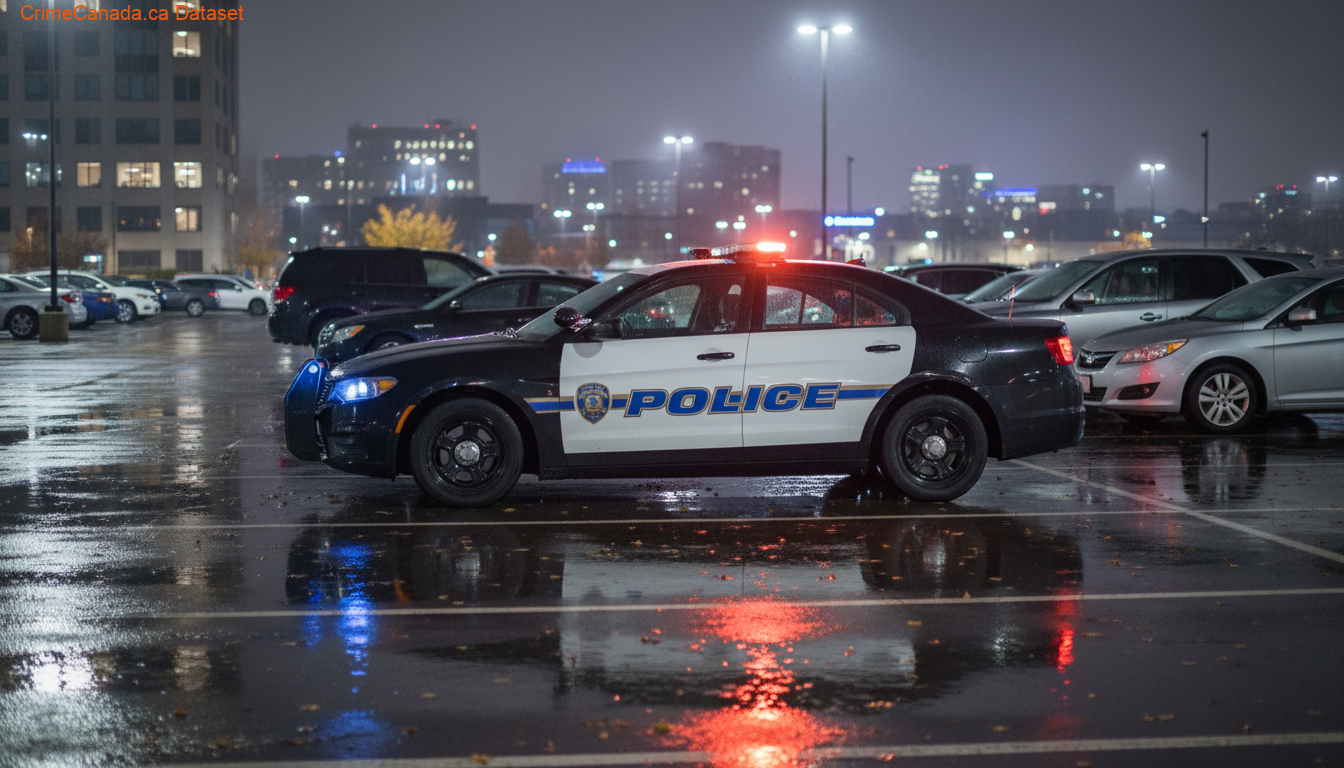
A man is recovering in hospital after being stabbed during a large fight in a parking lot in downtown Oshawa. The incident occurred around 10:30 p.m. on Sunday, June 14, near the intersection of Simcoe Street and John Street, an area with commercial properties and late‑night activity.
According to early information shared with local media, officers from the Durham Regional Police Service (DRPS) arrived to find a large group dispersing and two injured men. One man had multiple stab wounds and was transported to a Toronto‑area trauma centre in serious but not life‑threatening condition; his condition was later reported as stable. A second man with less severe injuries was taken to a local hospital. Police closed the parking lot and surrounding area for several hours to collect physical evidence and speak with witnesses.
Based on a review of recent DRPS news releases and social media posts, there have been no publicly reported arrests, charges, or suspect descriptions linked to this particular stabbing as of the latest open‑source check. Investigators have not confirmed how many people were directly involved in the fight. The case should be considered active and unresolved, with officers still seeking additional information from the public.
Community Context & Social Sentiment
The fight and stabbing took place in the core of downtown Oshawa, an area that already carries a reputation among residents for disorder, especially after dark. Open‑source review of DRPS releases and local coverage indicates that the broader downtown area has seen recurring disturbances, assaults, and weapons‑related calls over the past year, even if not always at this exact intersection.

On local Reddit forums and X (Twitter), public reaction to this incident and other recent downtown violence tends to be more resigned than surprised. Residents commonly describe the core as deteriorating at night, citing visible substance use, street disputes, and frequent sirens. One Reddit user, discussing downtown conditions more generally, characterized the area as having shifted from “sketchy” to “plainly dangerous” after dark, with fights and emergency responses becoming a weekend routine. Another social media comment, reacting to broader Simcoe Street incidents, expressed frustration that official messaging about crime being under control does not align with what nearby residents say they experience on the ground.
This perception gap is important context. While many residents feel that violence around Simcoe Street is escalating, regional crime data show a more complex picture. For example, aggregated data in the Oshawa Crime Statistics & Safety Report and broader Oshawa, Ontario — Crime Statistics & Safety Data indicate that, at the city level, Oshawa’s crime profile is closer to the Canadian urban average than to the highest‑risk centres in Western Canada. The tension between localized “hot spots” and city‑wide averages helps explain why incidents like a group stabbing in a downtown parking lot can feel both predictable to locals and statistically notable.
For people who live, work, or socialize near Simcoe Street and John Street, this event reinforces existing worries about late‑night conflict in open public spaces such as surface parking lots. Until more information is released about what led to the altercation and who was involved, the incident is likely to continue fueling online debates about policing, social services, and the overall direction of downtown Oshawa’s safety.
How This Fits Into Broader Crime Trends
To understand this stabbing in context, it helps to look beyond a single incident and consider wider patterns in the Greater Toronto Area (GTA) and in Oshawa specifically.
Surveys conducted in recent years show that many GTA residents believe violent crime is rising sharply. A late‑2025 public opinion survey cited by regional media found that roughly three‑quarters of Toronto respondents thought homicides had increased compared with the prior year. In reality, police data at that time indicated that overall reported crime and homicide counts had actually fallen, with Toronto seeing a substantial drop in killings and gun‑related deaths compared with 2024. This disconnect between perception and official numbers appears across multiple GTA communities, including Oshawa.
Toronto itself is regularly listed among the safest large cities in North America, with homicide rates typically between about 2 and 4 per 100,000 residents over the past decade—low for a major metropolitan area. Private and public analyses show that violent‑crime incidents per capita in the Toronto region are significant but remain far below levels found in many large U.S. cities. These comparative benchmarks matter, because Oshawa is part of the broader economic and social region anchored by Toronto, even though it is tracked separately in federal statistics.
For Oshawa, Statistics Canada classifies the city and its surrounding communities as a distinct Census Metropolitan Area (CMA) with its own homicide counts and rates. Across recent years, Oshawa’s absolute number of homicides has remained relatively low, even as the per‑capita rates can fluctuate in a small population. Independent policy research comparing Canadian and U.S. crime trends has found that Ontario urban areas like Oshawa and Toronto tend to show moderately elevated violent‑crime severity compared with the national Canadian average but still lower risk than high‑crime CMAs in Western Canada such as Winnipeg or Edmonton.
What this suggests is that a late‑night group violence incident in a downtown Oshawa parking lot is not entirely out of character for a mid‑sized Canadian city with a concentrated entertainment and services core. Police and community advocates often describe a pattern in which a limited number of downtown blocks account for a disproportionate share of visible disorder and serious incidents, while most residential neighbourhoods experience far fewer violent events.
At the same time, the absence of suspects or a public narrative about motive in this case can heighten anxiety. Until DRPS identifies those involved and clarifies whether this was a targeted clash between known parties, a spontaneous group fight, or something else, residents are left with incomplete information and rely largely on word‑of‑mouth and social media, where dramatic cases like a parking lot stabbing loom larger than the quieter reality reflected in annual statistics.
In short, the available data indicate that Oshawa is neither uniquely safe nor uniquely dangerous by Canadian urban standards, but this incident highlights how specific downtown spaces can feel chronically unsafe even when city‑wide crime indicators are stable or improving. Residents concerned about safety around Simcoe and John may benefit from monitoring DRPS updates, participating in local safety consultations, and comparing their personal experiences with longer‑term trends documented in regional crime statistics.
About This Report
This safety alert was generated by aggregating data from local authorities, community reports, and open-source intelligence. Our mission at Crime Canada is to provide citizens with localized safety data and context. We are not the original creators of the underlying news reports.
Primary Source: Information in this report was initially covered by Lucas Casaletto for CityNews Toronto.
Additional Research & Context
- City‑ and area‑level crime indicators for Oshawa are summarized in the Oshawa Crime Statistics & Safety Report, which provides recent data on violent and property offences.
- National comparisons of homicide counts and rates by Census Metropolitan Area, including Oshawa, can be reviewed in Statistics Canada Table 35-10-0071-01.
- Broader context on crime severity in Ontario urban regions relative to the rest of Canada and the United States is available in the Fraser Institute’s study, “Comparing Recent Crime Trends in Canada and the United States.”