
Table of Contents
Downtown Eastside Safety Brief: Arson Closure at Nester’s Market Deepens Food Access Concerns
Section 1: What Happened & Why It Matters for Safety
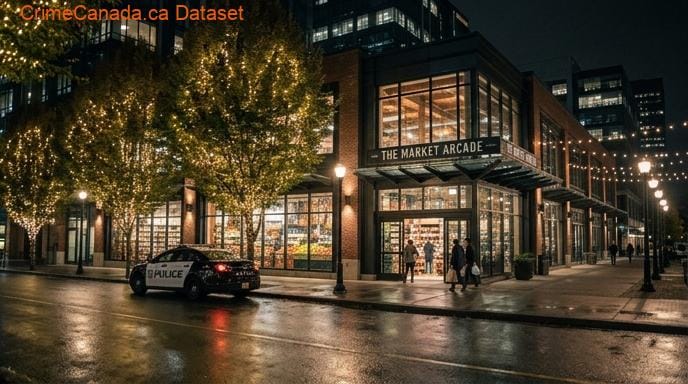
Residents of **Vancouver’s Downtown Eastside (DTES)** are facing another disruption after an alleged arson fire forced the closure of **Nester’s Market** in the **Woodward’s building complex**. The incident occurred in early April 2026 and has left the neighbourhood’s only full-service grocery store temporarily closed, with no clear date for reopening. Police have confirmed that one man is facing an arson charge connected to the fire.
This closure comes on the heels of the shutdown of the nearby **London Drugs** in the same complex, compounding the loss of essential retail services in an area already struggling with concentrated poverty, addiction, and housing instability. Local business representatives report that Nester’s management is committed to reopening, but the timeframe will depend on fire damage assessments, safety inspections, and repairs. In the meantime, the incident is intensifying concern about both day-to-day safety and access to basic necessities in the DTES.
Section 2: Community Context & Social Impacts
Community voices describe the Nester’s Market closure as more than a business interruption; for many DTES residents, it removes a critical lifeline. As the last major one-stop grocery store within easy walking distance, Nester’s provided not only food but also a safer, more predictable environment compared with informal street markets or distant big-box retailers.
Local business advocates, including representatives from the **Hastings Crossing Business Improvement Association (BIA)**, note that any disruption to essential services in the DTES has immediate consequences. Residents with mobility challenges, chronic health conditions, or limited income are disproportionately affected when they must travel farther or pay more for food and household items. While alternative outlets such as **T&T Supermarket** or **Sunrise Market** exist farther away, they largely serve as specialty or limited-range retailers rather than comprehensive, one-stop shopping options.

Community commentary around the incident emphasizes that the underlying conditions in the DTES are long-standing and complex. Theft and property crime in local shops have often been described as “survival strategies” rather than conventional profit-driven crime, linked to extreme poverty, untreated mental illness, and substance dependence. Advocates warn that the latest arson case should not be viewed in isolation, but as part of a broader environment where vulnerable residents may be exploited by dealers, informal power brokers, and organized crime.
Local stakeholders argue that this is primarily a social and health crisis rather than a simple policing issue. Calls for more addiction treatment capacity, low-barrier mental health supports, and stable housing are framed as core safety measures. Without these, they caution that residents may remain caught between survival crime, victimization by gangs or dealers, and repeated interaction with the justice system.
Across **British Columbia**, smaller communities such as Marktosis 15, Nesikep 6, and Nekliptum 1 also face the challenge of balancing crime prevention with social supports, though often on a different scale. The DTES stands out for the intensity and visibility of overlapping health, housing, and safety pressures concentrated in a relatively small urban area.
Section 3: Statistical Overview & Wider Crime Trends
While the Nester’s Market fire is a single incident, it fits into a broader pattern of concern around property crime, arson, and safety in urban commercial corridors. Open-source crime data for major Canadian cities show that:
- Property crime (including theft under, shoplifting, and mischief) typically makes up the majority of reported offences in dense urban neighbourhoods, particularly where economic hardship and homelessness are concentrated.
- Arson incidents, though far less common than theft or assaults, can have outsized impacts because they threaten life safety, disrupt housing and services, and often cause extensive economic damage.
- Neighbourhoods with higher proportions of residents facing poverty, mental illness, and addiction routinely experience overlapping issues: elevated victimization, higher calls for service, and frequent interactions with emergency services.
In this context, the alleged arson at Nester’s Market is not only a criminal event but also a disruption to a key stabilizing institution in the DTES. When essential businesses close—whether temporarily or permanently—research across Canadian cities indicates several common downstream effects:
- Reduced access to necessities, particularly for people without vehicles or transit fare, can worsen food insecurity and health outcomes.
- Increased strain on remaining businesses, which may face more shoplifting, higher security costs, or pressure to shoulder a larger share of community support functions.
- Perceived decline in neighbourhood safety, even when objective crime numbers do not dramatically change, leading to decreased foot traffic and further economic stress.
Community advocates in the DTES frequently argue that effective safety strategies must integrate crime prevention with housing, treatment, and income supports. From a data perspective, jurisdictions that have invested in wraparound services and low-barrier health interventions often see more sustainable reductions in both victimization and visible disorder than those relying solely on enforcement-led approaches.
For residents of the DTES, the key questions going forward are how quickly Nester’s Market can reopen, what interim measures can help maintain food access, and whether authorities will pair the criminal investigation of this arson with increased resourcing for mental health and addiction supports in the neighbourhood.
About This Report
This safety alert was generated by aggregating data from local authorities, community reports, and open-source intelligence. Our mission at Crime Canada is to provide citizens with localized safety data and context. We are not the original creators of the underlying news reports.
Primary Source: Information in this report was initially covered by Raynee Novak for CityNews Vancouver.
Additional Research & Context
- Background reporting on the earlier closure of London Drugs in Vancouver’s Downtown Eastside, providing additional context on retail withdrawals and community impact.
- Open-source analyses of crime and safety trends in British Columbia communities, including data-driven profiles of smaller jurisdictions such as Marktosis 15 and Nesikep 6.
- Public-health and academic research examining the links between poverty, addiction, mental illness, and survival crime in Canadian urban cores.

