
Table of Contents
Hopedale GSAR Rescues Stranded Snowmobiler Near Hunt’s River
Community Safety Alert – Hopedale, Newfoundland and Labrador
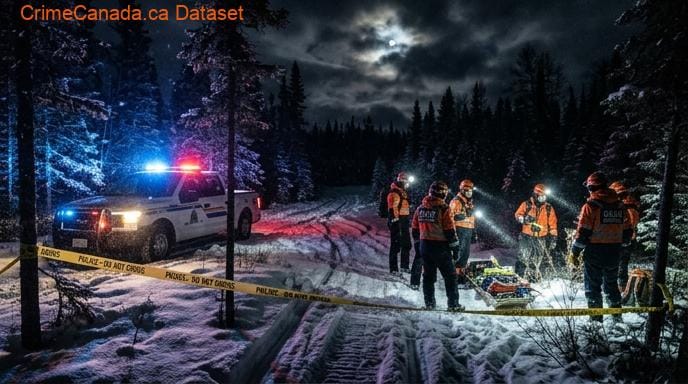
On the evening of April 29, 2026, a stranded snowmobiler in the Hunt’s River area near Hopedale, Newfoundland and Labrador was safely brought back to his community after a coordinated response by Hopedale RCMP and local Ground Search and Rescue (GSAR) volunteers.
Police received a report of an overdue rider just after 6:00 p.m. A family member had received a distress message from the man through a satellite GPS device, indicating he was stuck and unable to return on his own. Thanks to the rapid activation of GSAR volunteers and the GPS coordinates provided, the man was found and did not need medical treatment.
Official RCMP Incident Details
According to RCMP Newfoundland and Labrador, the incident unfolded as follows:
- On April 29, 2026, at approximately 6:15 p.m., Hopedale RCMP received a report of an overdue snowmobiler who had not returned as expected from the Hunt’s River area.
- A family member reported receiving a message from the snowmobiler via a satellite GPS communication device, stating that he was stranded and unable to get back safely.
- RCMP officers contacted Hopedale Ground Search and Rescue (GSAR) and requested assistance.
- GSAR volunteers were deployed to the area, using the GPS information and coordinates transmitted by the rider’s device to help pinpoint his location.
- The snowmobiler was successfully located by GSAR volunteers and escorted back without injury; no medical treatment was required.
RCMP highlight that GSAR teams across Newfoundland and Labrador consistently respond to emergencies in challenging conditions, providing vital support to people in distress in remote and backcountry areas.

Safety Lessons from This Incident
This rescue underlines the importance of reliable communication when travelling in areas where cellular coverage is weak or unavailable. RCMP Newfoundland and Labrador recommend that anyone operating snowmobiles or other off-road vehicles in remote regions take the following precautions:
- Carry a reliable communication device designed for off-grid use, such as a satellite GPS messenger or SPOT device, especially in rural, remote, or backcountry terrain.
- Before leaving, clearly inform a trusted contact of your planned route, destination, and expected time of arrival or return.
- Travel with emergency supplies, including extra warm clothing, food, water, navigation tools, and basic repair gear for your machine.
- Be mindful of seasonal transitions in spring, when changing snow and ice conditions can affect trails, rivers, and travel safety.
For more context on local safety trends in the region, residents can explore Hopedale crime statistics and safety data assembled by CrimeCanada.ca, alongside other recent community safety alerts from across the country.
CrimeCanada.ca Safety Perspective
From the perspective of CrimeCanada.ca, this incident in Hopedale, Newfoundland and Labrador is a reminder that serious emergencies are not limited to criminal activity. In northern and coastal communities, exposure, mechanical breakdowns, and communication failures can quickly become life-threatening, particularly in winter and shoulder seasons. The successful outcome here is directly tied to two critical factors: the rider’s ability to send his GPS coordinates and the readiness of trained Ground Search and Rescue volunteers to respond.
Our mission is to support safer communities by highlighting both risks and effective safety practices. When travelling by snowmobile or other off-road vehicles in Newfoundland and Labrador, treat trip planning as seriously as you would emergency preparedness: let someone know where you’re going, carry redundant communication tools, monitor weather and trail conditions, and ensure your machine is well maintained. Early communication with family, police, or local search and rescue can make the difference between a close call and a tragedy.
Official Source & Community Safety
This safety alert is based on an official release from the Royal Canadian Mounted Police (RCMP). CrimeCanada.ca aggregates and analyzes this data to keep the newfoundland-and-labrador community informed, aware, and safe. We are an independent safety data aggregator and not the original creators of the underlying incident report.
Read the full official release here: RCMP Official Statement.