
Table of Contents
Kitchener High School Swatting Call Prompts Lockdown and Renews Safety Concerns
School Lockdown Triggered by False Weapons Report
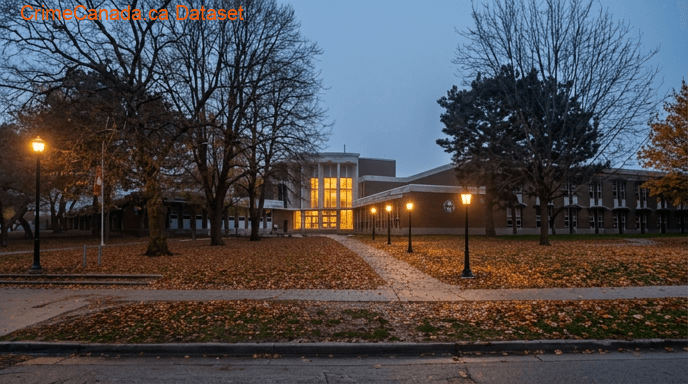
On the morning of March 9, 2026, a false report of a person with a gun inside Grand River Collegiate Institute (GRCI) in Kitchener led to a significant police response and a full school lockdown. Waterloo Regional Police Service (WRPS) say officers were dispatched around 9:20 a.m. to the area of Indian Road and Heritage Drive after receiving a weapons-related 911 call naming the high school.
As a precaution, GRCI was placed into lockdown and several nearby schools, including Crestview Public School, Chicopee Hills Public School and Stanley Park Public School, were put under hold-and-secure protocols. Those measures were lifted later in the day after officers searched the school and surrounding area and found no evidence of a weapon or active threat. WRPS later confirmed the event was a suspected swatting incident—a deliberate false report designed to trigger an emergency response. The investigation, handled under occurrence number WA26034040, remains open and no suspect has been publicly identified or arrested as of the latest update.
Community Context and Social Sentiment
The immediate impact of the call was disruption and anxiety across the school community. Lockdown and hold-and-secure procedures are intentionally strict: doors are locked, movement is heavily restricted, and students and staff follow active threat protocols until police give the all-clear. While no physical injuries were reported, the psychological effect on students, educators, and families is significant, especially when the threat turns out to be fabricated.
Online reaction within the Kitchener-Waterloo area reflects a mix of concern and fatigue. Parents and residents have expressed relief that there was no real gun threat, but also frustration that false calls can so easily disrupt education and strain emergency services. According to WRPS spokesperson Constable Brad Hickey, the service is increasingly worried about how these incidents are evolving. He has emphasized publicly that officers treat each report as potentially real and that they are “very serious” about responding to and investigating these false emergencies, noting that they cause major community disruption and pull critical resources away from other calls.

The safety profile of the GRCI area, near Indian Road and Heritage Drive, has not been characterized by repeated violent incidents at the school itself over the past year. Instead, what stands out is the emerging pattern of swatting calls across Kitchener. The latest event extends that trend into the school system, where lockdown responses are especially visible and emotionally charged. For families with children at GRCI and nearby schools, the incident serves as a sharp reminder that even hoaxes can carry real emotional and operational consequences.
Swatting Trend in Kitchener: Statistical and Regional Overview
This incident is not isolated. In the weeks leading up to the GRCI lockdown, Waterloo Regional Police reported at least two other swatting investigations in Kitchener linked to residential addresses:
- A February 13, 2026 call reporting a shooting at a home near Westmount Road West, which was investigated and determined to be false.
- A March 6, 2026 call about a shooting at a residence in the Chopin Drive area, which was also confirmed as a fabricated report.
In all three confirmed cases—the two residential calls and the March 9 GRCI report—police ultimately determined that the alleged violent incidents did not occur. WRPS has indicated that these calls appear to be targeted in nature, suggesting that specific addresses or institutions are being chosen rather than random dialing. While police have not publicly detailed any technical tracing results, they note that swatting files are complex to investigate and may involve suspects outside the region, or even outside Canada, leveraging technology to conceal their location.
Within roughly one month, Kitchener has seen at least three significant swatting incidents, each requiring a large frontline response and, in the case of GRCI, coordination with multiple schools and school boards. In practical terms, that means patrol officers, specialized units, and supervisory staff are diverted at once to what appears to be an emergency involving weapons or active violence. Those deployments can delay police response to other calls for service and add overtime and investigative costs to the local system.
Although swatting still represents a small fraction of overall calls for service in Waterloo Region, the pattern is important from a community safety perspective. Swatting combines several risk factors:
- Operational risk: Large, urgent responses, often with armed officers, to what is later found to be a hoax.
- Emotional and psychological harm: Students, staff, residents, and families experience real fear and uncertainty during lockdowns and high-visibility police actions.
- Resource strain: Tying up multiple units for extended periods can reduce capacity to respond promptly to genuine emergencies elsewhere.
WRPS has publicly stated that detectives are actively pursuing leads across these swatting files and that they are looking at possible connections between incidents. They have also underscored that swatting is a criminal offence and that, upon identification, those responsible may face charges related to public mischief, mischief to property, and potentially other offences linked to the nature of the false report. The service continues to encourage residents and students to call 911 immediately when they believe there is a real threat, while cautioning that knowingly making a false emergency report is both dangerous and illegal.
What Residents Should Know Going Forward
For families in the GRCI catchment and residents across Kitchener, the key takeaway from this incident is that local schools and police have emergency plans in place and will treat any credible report of a weapon or active threat with maximum caution. Lockdowns and hold-and-secure orders—though disruptive—are intended to keep people safe until officers can verify what is happening. In recent cases, rapid police response and clear communication with school administrators have meant that measures were lifted once the scene was deemed secure.
Given the recent swatting trend, residents may see more visible police activity around schools or residential areas when serious calls come in. This visibility should not automatically be interpreted as confirmation of an active threat, but rather as an indication that protocols are being followed. Community members can support safety efforts by staying informed through official WRPS channels, following instructions from school and police officials during an incident, and reporting any information that could help identify those responsible for swatting calls.
About This Report
This safety alert was generated by aggregating data from local authorities, community reports, and open-source intelligence. Our mission at Crime Canada is to provide citizens with localized safety data and context. We are not the original creators of the underlying news reports.
Primary Source: Information in this report was initially covered by Luke Schulz for CityNews.
Additional Research & Context
- Official WRPS update on the GRCI swatting investigation, including confirmation that the weapons report was false and details on ongoing investigative work: WRPS: Police Continue to Investigate Swatting Incident at Kitchener High School.
- Background on earlier swatting calls in Kitchener neighborhoods, outlining how multiple false shooting reports have recently targeted local residences: WRPS: Investigating Swatting Incidents in Kitchener.
- Further context and commentary from WRPS on the impact of swatting on community safety and police resources: CityNews: WRPS Addresses Recent Swatting Calls.