
Table of Contents
Port Moody E‑Dirt Bike Arrest Highlights Youth Traffic Risks and Vehicle Rules
What Happened on Ioco Road
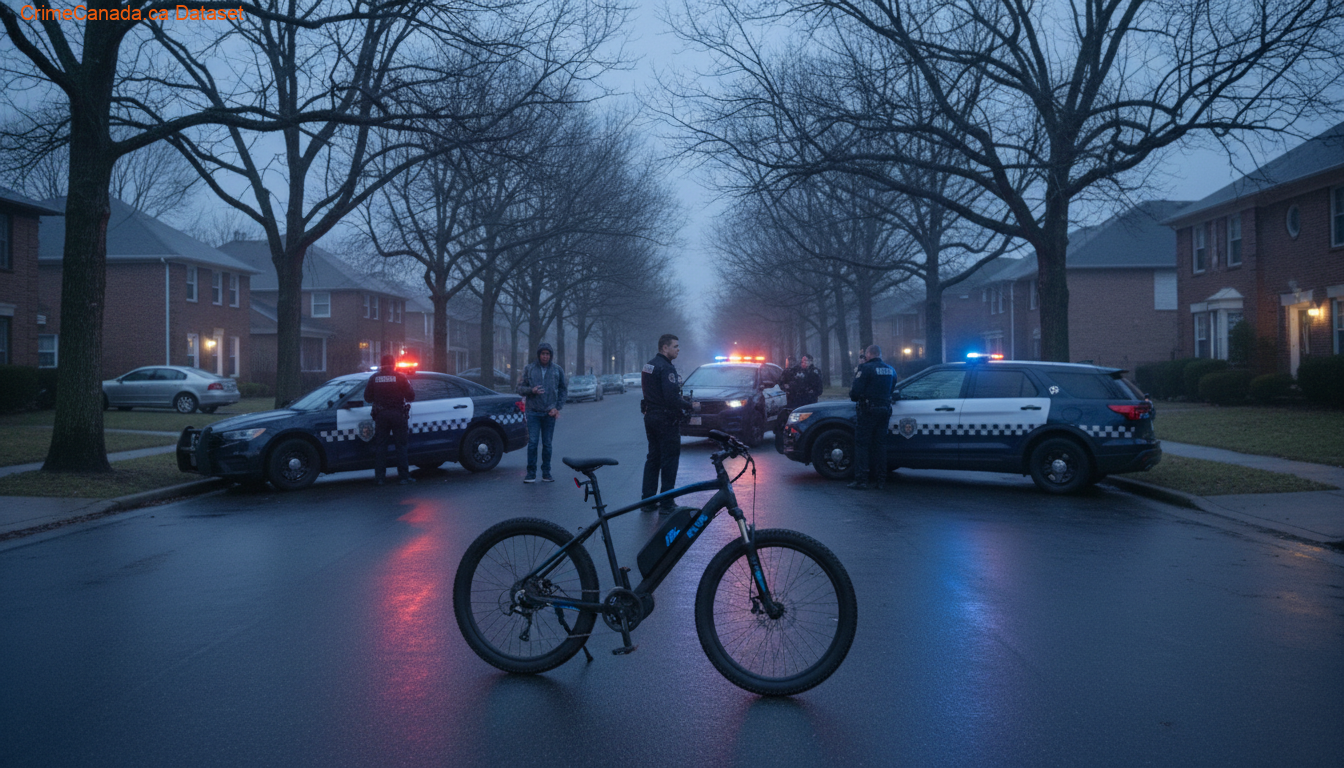
On a recent Thursday afternoon in Port Moody, British Columbia, police arrested a 14-year-old boy after officers observed an electric dirt bike being driven dangerously along Ioco Road between Murray Street and Newport Drive. According to the Port Moody Police Department (PMPD), the incident occurred around 2 p.m., during a period of moderate traffic.
Plainclothes officers reported that the youth was repeatedly travelling in the oncoming lane and performing wheelies and other stunts while surrounded by regular traffic. When the rider eventually came to a stop, officers moved in and arrested him. Police say the youth initially resisted but was safely taken into custody. No collisions or injuries have been reported at this time, and the e‑dirt bike has been seized.
PMPD has publicly indicated, including in a safety advisory posted on X (formerly Twitter), that they will be recommending a combination of Criminal Code and Motor Vehicle Act charges. Potential allegations include dangerous operation of a conveyance, operating a motor vehicle without insurance, and driving without a valid licence. As of the latest open-source review, no formal charges have yet appeared in public court records, and the youth’s name has not been released, which is consistent with protections for young persons under the Youth Criminal Justice Act.
Investigators also believe this same rider may be linked to previous e‑dirt bike incidents around Port Moody, including a report from roughly two weeks earlier in which a similar bike was allegedly driven through a restaurant. However, no separate charging documents for that earlier event were located in publicly available sources.

Community Context and Local Reaction
The location of the incident—Ioco Road between Murray Street and Newport Drive—is a busy connector route. It serves residential neighbourhoods, commercial areas, and access to waterfront and park spaces. While detailed crime data is usually reported at the city or neighbourhood level rather than by specific road segment, this corridor is better known for traffic flow and commuter use than for violent crime. For broader context on local crime patterns, residents can review the Port Moody crime statistics and safety data, which provide a citywide picture of reported offences and trends.
Open-source scans of local discussion spaces, including the public Facebook group often used by residents to talk about safety issues, show ongoing concern about unlicensed dirt bikes and e‑dirt bikes on Port Moody streets and nearby trails. Residents commonly describe near‑misses with pedestrians, noise disturbances, and risky behaviour in traffic, suggesting this is viewed as a recurring nuisance and safety problem rather than a one‑off event.
Many online commenters are focused on accountability for both youth and parents. In one widely echoed opinion, a resident argued that if a minor is operating an illegal dirt bike in traffic, parents should face significant fines to discourage similar behaviour. Others emphasize confusion around what legally counts as an e‑bike versus a motor vehicle, noting that many families only discover the difference after an encounter with police.
The PMPD and other agencies in Metro Vancouver have repeatedly clarified that e‑dirt bikes and electric motorcycles are not treated as e‑bikes under B.C. law. These machines are capable of high speeds—police in this case noted the seized bike could exceed 100 km/h—and, when used on public roads, they are classified as motor vehicles. That means they require a licensed driver, valid insurance, and safety equipment such as turn signals to be road‑legal. The bike involved in this incident reportedly lacked the necessary equipment and cannot be insured for street use in British Columbia.
Police stress that these bikes are intended for off‑road use only. PMPD has suggested that riders confine e‑dirt bike activity to appropriate off‑road Crown land areas near Port Moody, Coquitlam, and Eagle Mountain, where insurance is not required and there is no mixed traffic with regular vehicles.
How This Fits Into Broader Safety Trends
While detailed, incident‑level data on e‑dirt bike enforcement in Port Moody are not published separately, open-source materials point to a pattern of youth-related cases in the region. A 2025 educational post by North Vancouver RCMP highlighted a prior Port Moody case involving a 13-year-old on an e‑dirt bike, referencing local media coverage and warning that parents often underestimate the legal and safety implications of these machines.
This latest arrest aligns with a wider North American trend: police agencies have reported an increase in underage and unlicensed riders operating powerful electric dirt bikes and modified e‑bikes in urban traffic. Documented incidents in other jurisdictions include riders ignoring traffic signals, weaving through pedestrian areas, and, in some cases, colliding with or intentionally confronting police vehicles. Although these external events did not occur in Port Moody, they illustrate why local authorities are treating e‑dirt bike enforcement as a significant traffic‑safety issue rather than a minor bylaw concern.
At the national level, the Criminal Code of Canada offence of dangerous operation of a conveyance is designed to address behaviour that creates a substantial risk to the public, regardless of whether the vehicle is gasoline-powered or electric. When such conduct occurs on busy connectors like Ioco Road, the primary risk is to unsuspecting motorists, cyclists, and pedestrians who may have little time to react to a stunt‑riding youth entering their lane.
Within Port Moody, overall reported crime rates remain moderate compared with some larger urban centres in British Columbia, and many safety issues are linked to property crime, traffic enforcement, and nuisance behaviour rather than serious violent offences. Incidents like this one fit into that profile: they are non‑injury but high‑risk events that demand attention because of what could have happened if a collision had occurred. Tracking these events alongside broader Port Moody safety statistics can help residents understand how traffic enforcement, youth behaviour, and emerging vehicle types intersect in their community.
From a prevention standpoint, law enforcement messaging now frequently targets parents as much as young riders. Agencies in Metro Vancouver have advised families to verify whether a bike marketed as an “e‑bike” is, in legal terms, a motor vehicle. Key indicators include throttle‑based operation without pedaling, high maximum speeds, and the absence of required road‑safety equipment. When in doubt, police recommend assuming that such a machine cannot be ridden legally on city streets by an unlicensed youth.
About This Report
This safety alert was generated by aggregating data from local authorities, community reports, and open-source intelligence. Our mission at Crime Canada is to provide citizens with localized safety data and context. We are not the original creators of the underlying news reports.
Primary Source: Information in this report was initially covered by Raynee Novak for CityNews Vancouver.
Additional Research & Context
- Port Moody Police Department provided supplementary details and legal clarification about e‑dirt bikes as motor vehicles in a public advisory on X (Twitter), emphasizing licensing and insurance requirements for on-road use.
- A North Vancouver RCMP educational post on electric motorcycles and e‑dirt bikes, citing a prior Port Moody youth incident, offers broader context on how B.C. police classify these machines and the common confusion among parents and riders.
- Public discussions in Port Moody community social media groups reference repeated complaints about illegal dirt bikes on streets and trails, illustrating resident concerns about near‑misses, noise, and enforcement.