
Table of Contents
Prince George RCMP Youth Academy Showcases Father-Son Duos
Community Safety Program Overview
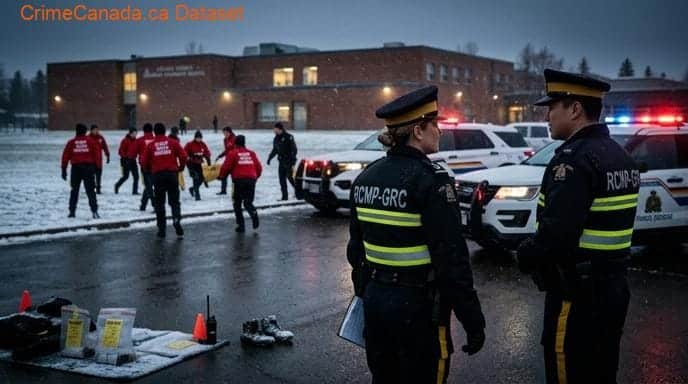
For the 2026 session of the Prince George RCMP Youth Academy, organizers highlighted a unique milestone: two father-and-son pairs took part together, with the parents serving as facilitators and the teens as participants. The week-long, police‑style training program ran from March 15 to 21, 2026, at College Heights Senior Secondary School in Prince George, British Columbia.
Staff Sergeant Sascha Baldinger, who leads Support Operations for Prince George RCMP, and Corporal Scott Sieffert from the Training Unit each watched their sons, Lukas and Gabe, step into a structured environment designed to mirror aspects of RCMP training. Through early‑morning starts, classroom work, drills, and realistic scenarios, the academy gave students a firsthand look at what it can be like to prepare for a law enforcement career.
Official Program Details
The RCMP describes the 2026 Youth Academy as an intensive, hands‑on learning experience that exposes students to the expectations, discipline, and teamwork required in policing. Based on the official release, key elements of this year’s academy included:
- Dates and Location: March 15–21, 2026, at College Heights Senior Secondary School in Prince George, B.C.
- Participants: High school students, including Lukas (son of Staff Sergeant Baldinger) and Gabe (son of Corporal Sieffert).
- Facilitators: RCMP members from Prince George RCMP, including Staff Sergeant Baldinger and Corporal Sieffert, among others.
- Training Style: A regimented schedule with early mornings, late evenings, and movement as a coordinated troop, mirroring aspects of RCMP Depot training.
- Instructional Approach: A mix of classroom learning, scenario‑based exercises, physical training, and group problem‑solving to build discipline, resilience, and teamwork.
- Drill and Marching: Formal drill practice and marching as a troop, culminating in a graduation ceremony where students demonstrated what they had learned.
- Specialized Units:
- Street Crew: Demonstrated frontline investigative work and showed examples of weapons and other items seized during police operations.
- Emergency Response Team (ERT): Showcased specialized tools and technology, including a battering ram and a training door that students were allowed to breach under supervision.
- Forensic Services: Led by Sergeant Keen, who explained forensic techniques, including the use of luminol to make blood evidence (demonstrated with pig’s blood) fluoresce during investigations.
- Regimental Traditions: A formal regimental dinner that introduced students to RCMP tradition and ceremony.
- Graduation: A closing ceremony featuring drill demonstrations and presentation of certificates to the students by an RCMP Inspector.
Through interviews, Lukas and Gabe described the academy as challenging but highly enjoyable, stressing the value of hands‑on learning and the sense of unity within their troop. Both indicated or confirmed a strong interest in pursuing a future career with the Royal Canadian Mounted Police, noting that the experience helped solidify their career goals.

The RCMP also emphasized the pride felt by Staff Sergeant Baldinger and Corporal Sieffert as they watched their sons tackle the demanding schedule, form up with their troop, and participate fully in the academy’s drills, classes, and ceremonial events. Both members reflected on their own training experiences and recognized similar discipline, determination, and potential in their sons.
Students interested in similar programming are encouraged to watch for information about the 2027 Youth Academy at their schools in September. Those seeking broader safety education opportunities can also explore structured training resources such as the CrimeCanada Safety Academy learning hub, which focuses on practical safety skills for communities across Canada.
CrimeCanada.ca Safety Perspective
From the perspective of CrimeCanada.ca, programs like the Prince George RCMP Youth Academy play a crucial role in long‑term community safety across British Columbia. By introducing youth to the realities of police work—early mornings, strict schedules, teamwork, and exposure to specialized units such as ERT and forensics—the academy helps build informed, engaged citizens and potential future officers who understand both the responsibilities and the risks associated with public safety roles.
For parents, educators, and young people in B.C., this kind of structured training demonstrates how early education about policing, evidence handling, and emergency response can strengthen trust between law enforcement and the community. Whether you live in a major city or a smaller community like Twoyqhalsht 16 in British Columbia, giving youth access to realistic, supervised safety training prepares them to recognize emergencies, cooperate with police, and consider careers that directly support safer neighbourhoods. CrimeCanada.ca supports these initiatives as part of a broader strategy to reduce crime risk through awareness, education, and strong partnerships between residents and law enforcement.
Official Source & Community Safety
This safety alert is based on an official release from the Royal Canadian Mounted Police (RCMP). CrimeCanada.ca aggregates and analyzes this data to keep the british-columbia community informed, aware, and safe. We are an independent safety data aggregator and not the original creators of the underlying incident report.
Read the full official release here: RCMP Official Statement.

