
Table of Contents
Scarborough Double Shooting Raises Daytime Safety Concerns Near Victoria Park
SECTION 1: THE HOOK – WHAT HAPPENED
On the afternoon of July 6, 2026, a double shooting in Scarborough led to the death of a 32-year-old man and left another man seriously injured. According to information released by the Toronto Police Service (TPS), officers were first called around 3:15 p.m. to the area of Victoria Park Avenue and Highway 401, near Terraview Boulevard, where a man was found with gunshot wounds and was pronounced dead at the scene.
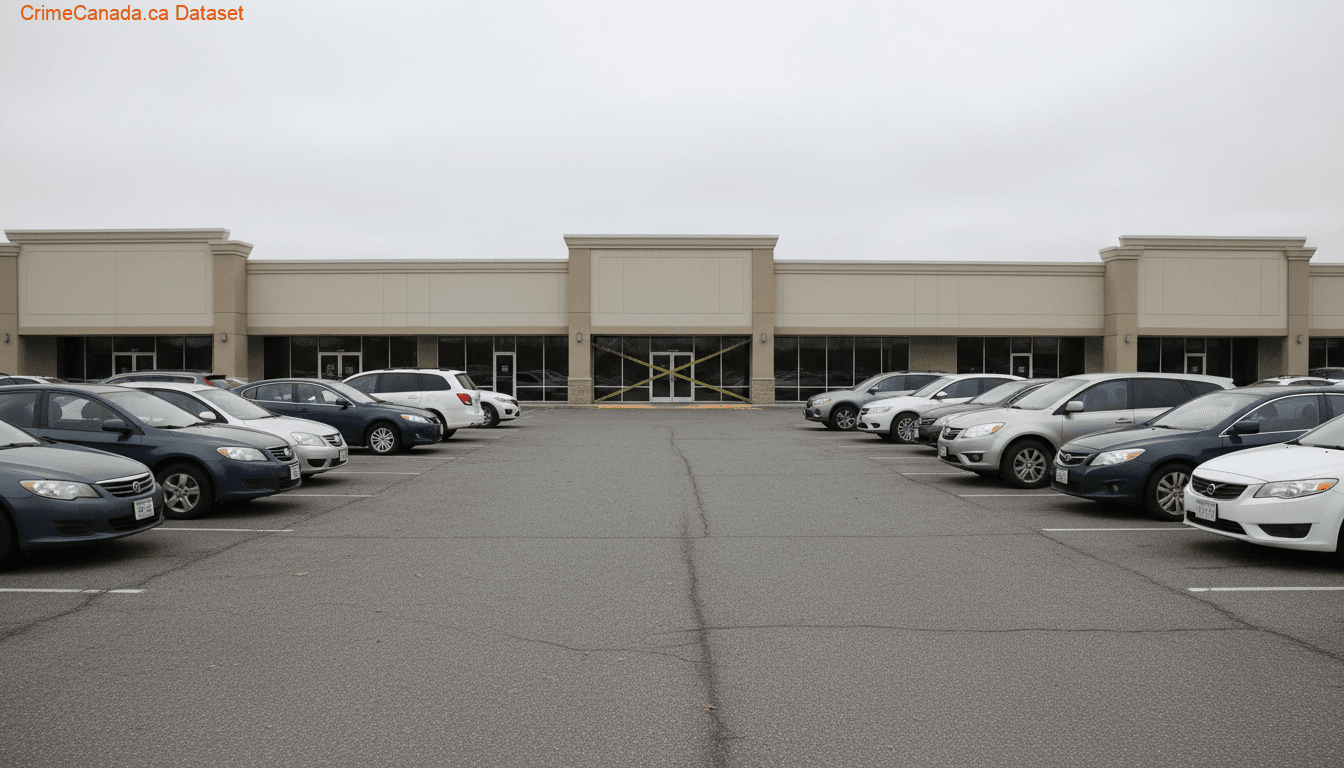
Roughly 15 minutes later, investigators located a second man suffering from gunshot wounds outside a vehicle in a plaza on Victoria Park Avenue south of Sheppard Avenue, several blocks north of the first scene. He was transported to hospital with life-threatening injuries, and police later reported that his condition had stabilized. A firearm was recovered inside the vehicle at the plaza location.
Police have identified the deceased as 32-year-old Levon Byers of Toronto. The injured man, 28-year-old Hakim El Mozazi of Toronto, has been arrested and charged with second-degree murder along with four firearms-related offences. TPS has publicly stated that the two men shot each other and that there are no outstanding suspects. As of the most recent open-source updates, there are no reported changes to the charges, and there is no indication of additional accused persons being sought.
SECTION 2: COMMUNITY CONTEXT & SOCIAL SENTIMENT
The shootings unfolded in broad daylight at two high-traffic locations that many residents use for daily commuting and errands. The area around Victoria Park and Highway 401 is largely residential, with apartment buildings and local streets feeding into the highway corridor. The secondary scene near Victoria Park and Sheppard Avenue is a commercial plaza setting, including bank branches and retail outlets, where pedestrians, drivers, and transit users regularly converge.

While these specific corners of Scarborough have not been repeatedly highlighted in recent years as persistent gun-violence hotspots, they sit within a wider urban area that has seen a series of high-profile shootings. Similar concerns about gun violence and public safety appear across Canada in both large cities and smaller communities; for example, residents in places like Lac Seul 28, Ontario, review crime statistics to understand local risk, just as urban neighbourhoods in Toronto look to official data and police releases for context.
Online reaction to this incident reflects a mix of anxiety, frustration, and fatigue. On Toronto-focused discussion boards, some users voiced concern about the growing number of shootings near major intersections and busy corridors. One Reddit commenter, paraphrased, observed that daytime gunfire in Scarborough is beginning to feel almost routine, expressing worry that residents are becoming desensitized.
Another common theme in social media commentary is skepticism about official statements that there is “no threat to public safety” when suspects are believed to be known to one another. In this case, police framed the shooting as contained, indicating there was no third-party assailant at large. Yet some residents point out that when two people armed with firearms confront each other near busy streets and commercial plazas, the risk to bystanders—drivers, shoppers, and children in the area—still feels very real, even if the violence is targeted rather than random.
These reactions echo sentiments seen in other Canadian communities that track their own safety data, such as Chief’s Point No. 28 in Ontario, where residents may similarly weigh official crime figures against their day-to-day perceptions of risk. In Scarborough, the visual of marked police cars, taped-off streets, and evidence markers near familiar apartment buildings and commercial plazas reinforces concerns about how quickly interpersonal conflicts can spill into public space.
SECTION 3: STATISTICAL OVERVIEW & BROADER TRENDS
CTV’s early coverage of this incident noted that the killing of Levon Byers was being counted as Toronto’s 17th homicide of 2026 at the time of reporting. While full-year statistics for 2026 will depend on the remainder of the year, this mid-year tally places the city on a trajectory that requires careful monitoring by both police and policymakers.
This case is notable not only because it occurred during the day in busy public locations, but also because investigators say the two men shot each other, rather than a single individual attacking multiple victims. Incidents involving mutual gunfire can indicate interpersonal disputes, criminal conflicts, or other targeted confrontations. From a risk-management standpoint, police often describe such events as “targeted” to distinguish them from random attacks, and to reassure the broader public that there is no ongoing manhunt.
However, even when shootings are believed to involve known parties, they still contribute to a climate of unease—particularly when they occur near major roads, shopping areas, and transit routes. In a separate Scarborough incident, for example, local media previously reported on a teenager shot after an altercation near Warden and Lawrence, underscoring that youth and busy intersections are also affected by gun-related violence. This pattern—targeted but public—is a recurring feature in Toronto’s recent crime narrative.
Toronto’s official crime dashboards and annual reports (which are separate from this analysis) typically break down violent crime by division, type of weapon, and relationship between parties involved. While the precise statistical ranking of this Scarborough incident among all 2026 gun crimes awaits those formal releases, it clearly aligns with a broader national discussion about access to firearms, the role of interpersonal disputes, and supports needed to reduce retaliatory or escalating conflicts.
Communities across the country, from large urban centres to smaller First Nations and rural areas like Membertou 28B in Nova Scotia, often turn to local crime statistics and safety dashboards to interpret events like this and to advocate for appropriate preventative measures. In Scarborough, residents and stakeholders may look for responses that blend enforcement—such as gun investigations and bail supervision—with prevention, including community programs, mental health supports, and conflict-resolution initiatives aimed at interrupting cycles of violence before firearms are drawn.
For now, the Scarborough double shooting near Victoria Park stands as a case study in how quickly personal conflicts can evolve into lethal encounters in public spaces, and how those encounters shape community perceptions of safety even when authorities stress that the immediate threat has passed.
About This Report
This safety alert was generated by aggregating data from local authorities, community reports, and open-source intelligence. Our mission at Crime Canada is to provide citizens with localized safety data and context. We are not the original creators of the underlying news reports.
Primary Source: Information in this report was initially covered by John Marchesan for CityNews.
Additional Research & Context
- CTV News provided early-stage coverage outlining the initial response to the shootings and noting that the case was being treated as Toronto’s 17th homicide of 2026, including details on the two linked scenes at Victoria Park and Highway 401 and Victoria Park and Sheppard.
- Global News reported on the double shooting with further context about police presence at Terraview Boulevard and the commercial plaza, confirming that one victim was pronounced dead and the other taken to hospital in critical condition.
- Additional visual and situational context came from CityNews and CTV video reports showing the apartment complex area near Terraview Boulevard and the taped-off plaza by a TD Bank branch on Victoria Park, illustrating the proximity of the shootings to residential and commercial spaces.

