
Table of Contents
High-Risk Dock Towing Stop Near Head of Bay d’Espoir
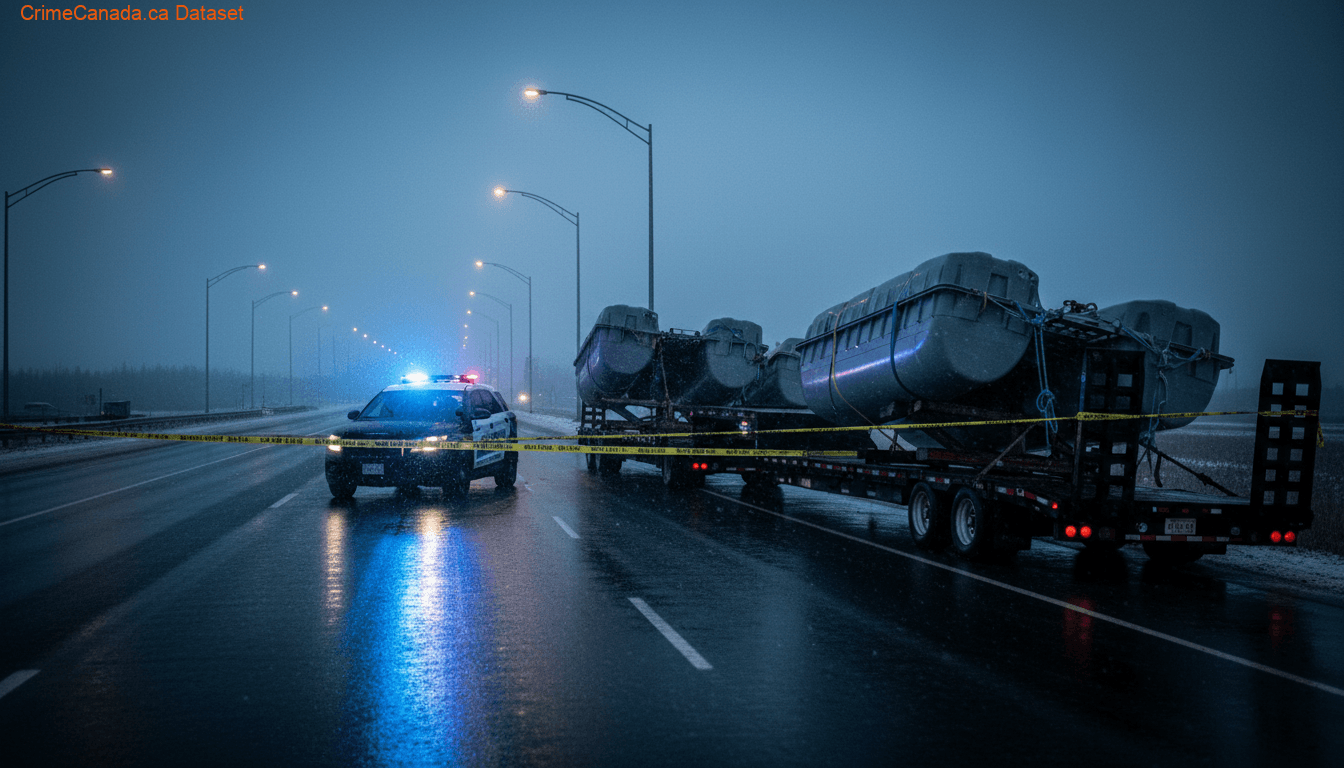
On May 23, 2026, officers from Bay d’Espoir RCMP conducted a roadside stop on Main Road (Route 361) in Head of Bay d’Espoir, Newfoundland and Labrador, after observing an extremely unsafe towing situation involving a floating dock. The vehicle, trailers, and load were all assessed and determined to be unfit for use on public roads.
At approximately 3:30 p.m., police intercepted a truck towing a floating wharf positioned across two tandem trailers. The truck showed significant visible damage and was moving slowly, drawing the officer’s attention. Following inspection, a 55-year-old male driver was issued multiple tickets under the Highway Traffic Act for cargo, licensing, and equipment violations.
Official Incident Details
According to the official report, the RCMP officer on patrol observed several safety concerns before initiating the stop, including the appearance of the vehicle and the way the floating dock was being transported. The investigation concluded that neither the towing vehicle nor the trailers met the legal safety standard for operation on public roads.
The following key details were reported:

- Time of incident: approximately 3:30 p.m. on May 23, 2026.
- Location: Main Road (Route 361) in Head of Bay d’Espoir, Newfoundland and Labrador.
- Vehicle observed: a truck with no front bumper and a heavily damaged body, travelling at a low rate of speed.
- Load being transported: a floating dock / floating wharf placed on top of two tandem trailers.
- Roadworthiness assessment: the truck and both trailers were deemed not fit for public road use.
The operator, a 55-year-old man, was ticketed under Newfoundland and Labrador’s Highway Traffic Act for:
- Operating a vehicle with cargo that was not properly secured.
- Violations related to driver licensing requirements.
- Violations related to vehicle and equipment regulations.
The RCMP emphasized that drivers must carry valid documentation at all times, including a current driver’s licence, vehicle registration, and proof of insurance, and that all vehicles and trailers must be maintained in a safe, roadworthy condition. Failing to meet these standards can result in fines, vehicle impoundment, and other legal consequences across Newfoundland and Labrador.
For those living in nearby communities such as Milltown–Head of Bay d’Espoir, you can review broader trends in road safety and enforcement by consulting local crime and safety statistics for Milltown–Head of Bay d’Espoir. Understanding these patterns helps residents gauge how traffic safety issues fit within the overall risk profile of their area.
CrimeCanada.ca Safety Perspective
From the perspective of CrimeCanada.ca, this incident is a clear reminder that unsafe towing and poorly maintained vehicles can create sudden, serious hazards on rural highways in Newfoundland and Labrador. A large, inadequately secured load—like a floating dock spread across multiple trailers—can shift, detach, or obstruct traffic, putting other drivers, pedestrians, and first responders at risk.
To support safer roads in your community, we encourage drivers to:
- Inspect vehicles and trailers before travel, especially when towing heavy or awkward loads such as docks, boats, or construction materials.
- Ensure all cargo is properly secured using appropriate equipment (tie-downs, chains, straps, and rated hitches) and complies with provincial load regulations.
- Keep all required documents—licence, registration, and insurance—current and readily available.
- Remove unsafe vehicles and trailers from service until mechanical and structural issues are fully repaired.
- Report clearly dangerous driving or towing behaviour to police when it presents an immediate risk to others on the road.
Our mission at CrimeCanada.ca is to highlight incidents like this so residents can better understand how day-to-day driving decisions impact public safety, not only in major centres but in smaller communities across the province.
Official Source & Community Safety
This safety alert is based on an official release from the Royal Canadian Mounted Police (RCMP). CrimeCanada.ca aggregates and analyzes this data to keep the newfoundland-and-labrador community informed, aware, and safe. We are an independent safety data aggregator and not the original creators of the underlying incident report.
Read the full official release here: RCMP Official Statement.

