
Table of Contents
West End Vancouver Vehicle-Ramming Now Treated as Murder: What Residents Need to Know
Section 1: What Happened & Current Status
Police in Vancouver have upgraded charges in a serious vehicle-ramming incident in the city’s West End, where a Jeep allegedly mounted the sidewalk and struck pedestrians and a responding police vehicle near Comox Street and Broughton Street.
According to information released by the Vancouver Police Department (VPD) and summarized in local court reporting, 34-year-old Tadd (Tad) Bali is now charged with one count of second-degree murder, one count of attempted murder, and two counts of dangerous operation of a motor vehicle causing bodily harm. The upgraded charges follow the death of 75-year-old Johnny “John” Sudds, a wheelchair user and long-time West End resident, who died in hospital on May 24, 2026 after being struck. Two VPD officers in a marked police vehicle were also injured when their car was hit; both were treated and released from hospital the same day.
VPD statements characterize the incident as an intentional act, alleging the driver deliberately drove onto the sidewalk toward pedestrians and a police car. Investigators have not publicly confirmed a motive, and there is no credible reporting linking the case to terrorism, gangs, or a broader conspiracy. Open court listings and media reports indicate that Bali remains in custody (remanded) while the case moves through the justice system, with no public record yet of a conviction or trial outcome.
Initially, Bali faced four counts of dangerous operation of a motor vehicle causing bodily harm. The addition of a second-degree murder charge reflects the victim’s death and the allegation that the act was deliberate but not planned in advance, which is how second-degree murder is generally distinguished from first-degree under Canadian law.

Section 2: Community Context & Social Sentiment
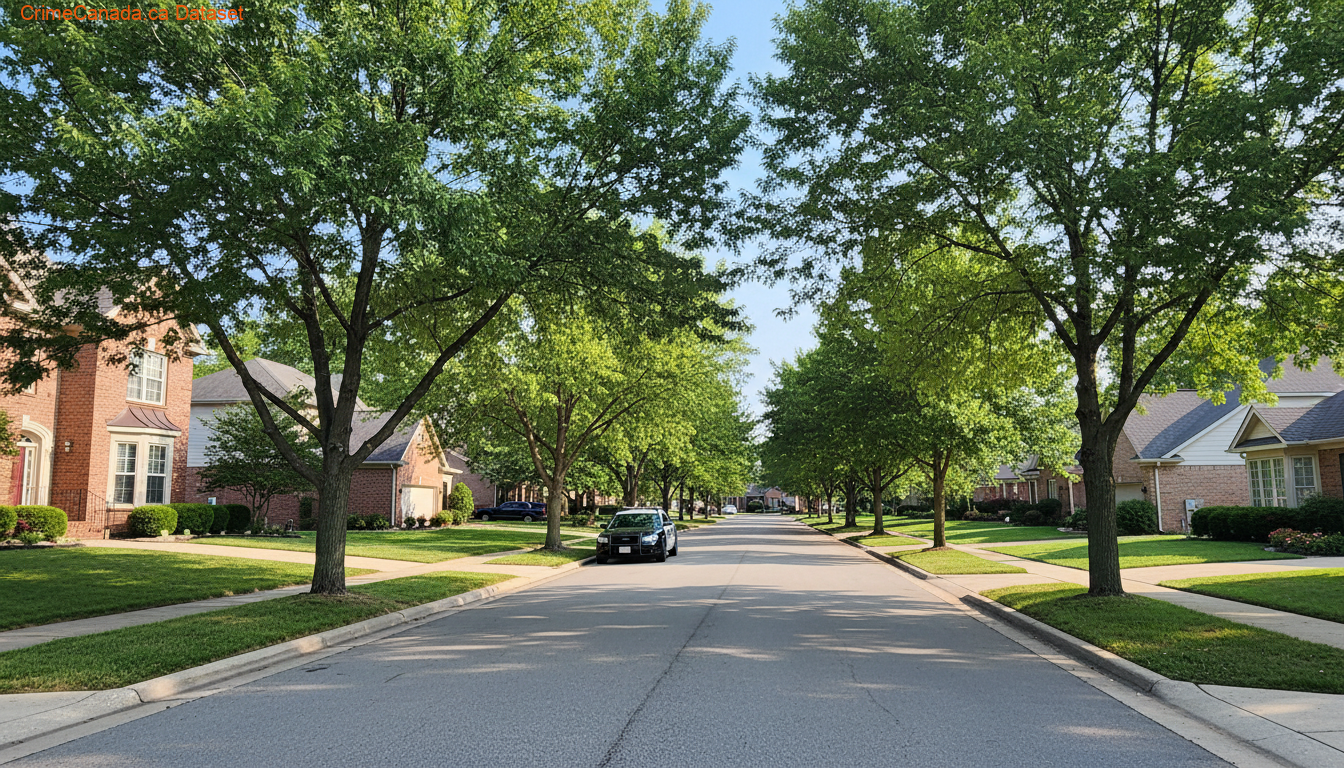
The crash site at Comox & Broughton sits in a dense, largely residential part of the West End, close to parks, apartment towers, and small neighborhood businesses. The area typically has heavy foot traffic, including seniors, people using mobility devices, and families walking to nearby amenities. Residents often regard the West End as one of the more walkable and comparatively safe sections of downtown Vancouver, despite ongoing issues with property crime.
In the days following the collision and the later announcement of upgraded charges, online discussion in local forums and on social media has been dominated by shock, anger, and worry about pedestrian safety. One Reddit user, commenting in a Vancouver-focused community, described walking their dog past that corner daily and expressed fear that a driver would intentionally take to the sidewalk. The post captured a wider feeling that a trusted, familiar space had suddenly become associated with extreme violence.
On X (formerly Twitter), some users broadened the conversation, voicing frustration about what they view as a pattern of serious incidents in public spaces and questioning accountability in the justice system. Comments have included references to “random attacks” and “dangerous drivers,” along with criticism of perceived “catch and release” bail practices, echoing recurring debates in British Columbia about public safety and court outcomes.
At the same time, a number of posts and local reports emphasize that this appears to be a single, isolated event involving one accused driver, rather than an ongoing series of similar attacks in the West End. Residents and advocates warn against overgeneralizing the incident to the entire neighborhood, while still calling for practical steps to protect vulnerable road users—such as better physical barriers at busy corners, speed management on residential streets, and continued traffic enforcement.
To put the West End’s experience into a broader national frame, Canadian crime data show that urban neighborhoods often struggle with a similar mix of relatively low rates of serious violent crime but high public concern after rare, high-impact incidents. For example, communities tracked in our national database—ranging from dense urban cores to smaller cities like New Westminster, British Columbia crime statistics—frequently report more anxiety than raw violent-crime numbers alone would predict, particularly when an event involves a senior, a person with disabilities, or a crowded public space.
Comparisons across different Canadian communities, such as the residential area of Westmount, Quebec crime and safety data, show that even where overall violent crime is statistically modest, a single highly publicized incident can trigger calls for enhanced pedestrian protections, traffic calming, and more visible policing in walkable neighborhoods.
Section 3: Statistical Overview & How This Fits into Larger Trends
Available VPD crime maps for the West End and Stanley Park community policing area show that the blocks around Comox & Broughton typically record moderate levels of property crime (such as theft from vehicles and break-and-enters) but relatively low rates of serious violent crime involving vehicles. Intentional vehicle-ramming incidents onto sidewalks are rare in this specific part of Vancouver over the past year, based on both police geocoded data and local media coverage.
Citywide, traffic data from VPD and provincial insurers indicate that while collisions and road injuries overall have been stable or slowly declining in recent years, pedestrian fatalities remain a persistent concern, especially in dense downtown neighborhoods. Most fatal pedestrian crashes involve factors like speed, distraction, impairment, and visibility—not deliberate use of a vehicle as a weapon. That makes the alleged actions in this case statistically unusual but psychologically impactful.
Broader Vancouver crime statistics show no dramatic surge in violent crime overall. However, public concern has grown around specific issues such as stranger assaults, social disorder, and incidents affecting vulnerable people in streets and parks. Surveys in Vancouver and other Canadian cities have repeatedly identified a gap between measured crime rates and how unsafe residents report feeling, particularly in central urban areas.
Nationally, Statistics Canada data suggest that Canada’s homicide rate, while fluctuating year to year, remains well below levels recorded in the 1990s. Vancouver’s homicide rate typically sits in the middle range compared with other large Canadian cities. Within that context, an alleged second-degree murder involving a vehicle and a senior in a wheelchair stands out not because it reflects a new normal, but because it cuts against expectations of relative safety for pedestrians in a residential, non-arterial environment.
Experts note that high-profile events like this West End vehicle-ramming can have an outsized influence on how communities think about risk. Residents often respond by changing routines—avoiding certain corners, walking at different times of day, or calling for more visible police patrols—even if objective risk remains low. For city planners and police agencies, the challenge is to address legitimate fears through targeted measures (such as intersection redesigns, enforcement of dangerous driving offences, and support for victims) while also communicating that such deliberate attacks are exceptional, not routine.
In practical terms, residents in the West End and across Vancouver can continue to monitor official safety information from VPD, participate in community policing and neighborhood-watch initiatives, and advocate for infrastructure improvements that protect pedestrians and wheelchair users. This case underscores how a single, deliberate act of violence can reshape the safety conversation in a community, even when broader crime trends do not show a sustained spike in similar behaviour.
About This Report
This safety alert was generated by aggregating data from local authorities, community reports, and open-source intelligence. Our mission at Crime Canada is to provide citizens with localized safety data and context. We are not the original creators of the underlying news reports.
Primary Source: Information in this report was initially covered by Raynee Novak for CityNews Vancouver.
Additional Research & Context
- Further details on the incident, victim identification, and charge upgrades are available through Vancouver Police Department media releases and crime statistics dashboards.
- Background reporting on the crash, community memorials for Johnny Sudds, and subsequent court developments can be found via CityNews Vancouver’s local coverage.
- For broader context on homicide and violent crime trends, consult Statistics Canada’s national crime and homicide data tables, which compare Vancouver to other Canadian cities.