
Table of Contents
Highway 5 and Brock Road Crash Highlights Red-Light Safety Risks for Heavy Trucks
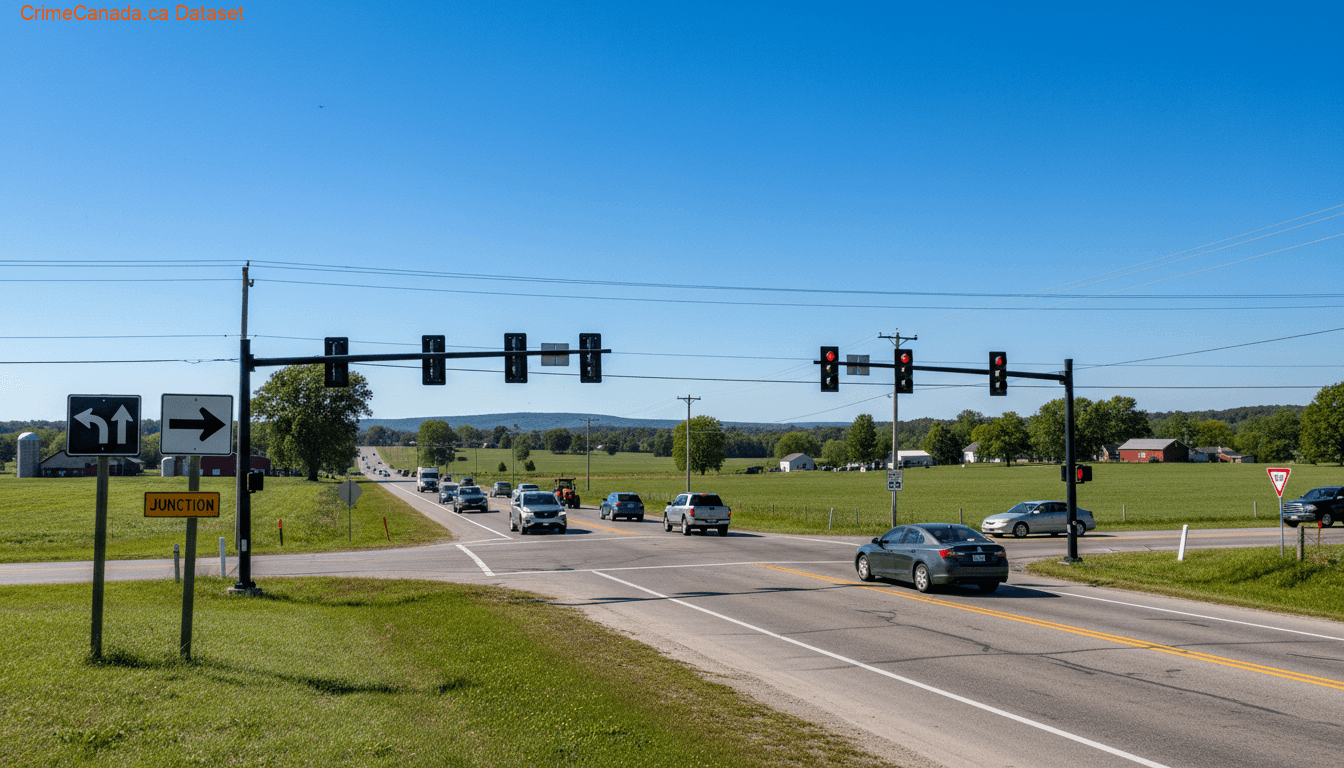
A 55-year-old Cambridge man has been charged under the Highway Traffic Act after a collision involving a dump truck and a pickup truck towing a trailer at Highway 5 and Brock Road in the Flamborough area of Hamilton. The Ontario Provincial Police were called at about 8:15 a.m. Monday. Based on information released by police, the dump truck entered the intersection against a red signal and struck the trailer.
The trailer caught fire, bringing firefighters to the scene. The 36-year-old pickup driver was taken to hospital as a precaution, while the dump-truck driver was not reported injured. Police said there were no serious injuries and issued a charge alleging failure to stop for a red light. Available public reporting has not identified either driver by name, and there have been no announced additional charges, updated injury reports, or public findings from a reconstruction investigation.
Community Context and Social Sentiment
Public discussion following the collision has largely combined relief with concern. Comments reviewed in local traffic-focused social-media spaces emphasized how quickly a trailer fire and a right-angle impact can become life-threatening, particularly at an intersection used by commuters and commercial vehicles. Some commenters also questioned whether a provincial traffic charge adequately reflects the potential consequences of a signal violation involving a heavy truck. Those comments are community views, not findings of fault beyond the allegation already disclosed by police.
“That trailer is a fireball and the guy just gets a ticket?” one response to an OPP social-media post said, reflecting concern about the potential severity of the incident.
Highway 5 (Dundas Street) and Brock Road is a signalized rural-suburban crossroads that carries passenger traffic alongside construction- and aggregate-related commercial traffic. This combination can increase the consequences of a missed signal: large vehicles generally need more distance to stop, and side-impact collisions can expose occupants to severe force. Open-source reviews cited in the background research did not identify a recent cluster of publicly reported fatal or major-injury crashes specifically at this intersection. It is therefore not appropriate to label it a confirmed collision hot spot based on this event alone.

However, the location reflects a broader road-safety challenge on high-speed arterial routes. Drivers approaching a changing light should anticipate that trucks, vehicles towing trailers, and other large vehicles may require additional stopping space. Maintaining a safe following distance, scanning intersections before proceeding on a green light, and avoiding distractions are practical precautions for all road users.
Statistical Overview: Traffic Safety Is Distinct From Crime Data
This incident is a road-safety matter rather than a reported violent-crime event. A Highway Traffic Act charge is an allegation to be addressed through the provincial offences process; it is not a Criminal Code conviction, and police have not announced a criminal dangerous-driving investigation. For residents seeking broader local public-safety information, Crime Canada’s Cambridge crime statistics and safety data provide separate context on reported crime indicators in the driver’s home community. Those data should not be used to infer anything about this individual or the cause of this collision.
Provincial examples show why red-light compliance remains a significant safety issue for commercial and private drivers alike. Similar Ontario crashes involving dump trucks or other heavy vehicles have resulted in serious injuries and, in some cases, fatalities. The legal response varies with the available evidence: some cases result in Highway Traffic Act allegations, while Criminal Code charges generally require evidence of conduct meeting a higher legal threshold, such as dangerous operation or other aggravating circumstances.
There are no publicly available, intersection-specific collision totals in the supplied research that would support a numerical risk estimate for Highway 5 and Brock Road. Still, this collision illustrates the risk pattern associated with signalized arterial intersections: one failure to stop can create a high-energy impact, secondary hazards such as fire, and disruption for emergency responders and other motorists. The absence of serious injury in this case should not obscure that broader prevention message.
Police have urged motorists to remain focused behind the wheel. For commercial operators, that includes adjusting speed for traffic and signal conditions, allowing for stopping distance, and ensuring fatigue, distraction, or schedule pressure does not compromise decision-making. For the public, the event is a reminder that a green signal grants the right of way but does not eliminate the need to check for vehicles that may not stop.
About This Report
This safety alert was generated by aggregating data from local authorities, community reports, and open-source intelligence. Our mission at Crime Canada is to provide citizens with localized safety data and context. We are not the original creators of the underlying news reports.
Primary Source: Information in this report was initially covered by Natasha O’Neill for CityNews Kitchener.
Additional Research & Context
- Ontario Provincial Police Highway Safety Division post referenced by the primary report, outlining the initial collision response and charge.
- CBC Toronto reporting on a separate Markham dump-truck red-light case, included only as broader Ontario road-safety context.
- Ontario’s Highway Traffic Act, which sets out provincial traffic-law requirements and offences.

