
Table of Contents
Targeted Stabbing Near Yonge and Gerrard Raises Fresh Concerns About Downtown Toronto Safety
Section 1: What Happened & Immediate Safety Overview
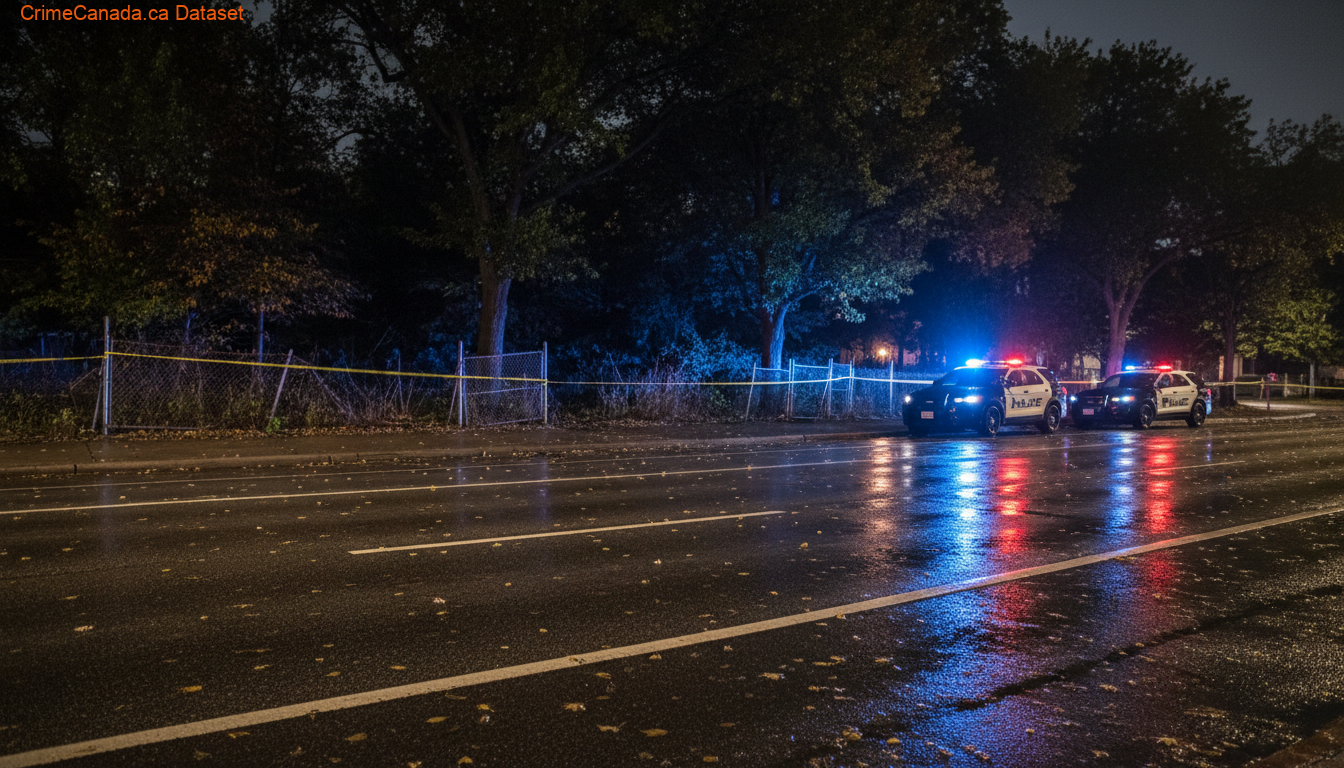
On a recent Friday night, emergency responders were called to the area of Gerrard Street East and Yonge Street in downtown Toronto following reports of a stabbing shortly after 10:15 p.m. Responding officers with the Toronto Police Service (TPS) located a victim suffering from stab wounds. The victim was transported to hospital with injuries described as non-life-threatening.
Police arrested a woman at the scene. She has been charged with possession of a weapon, assault with a weapon, aggravated assault, and three counts of failing to comply with a release order. Investigators have stated that the stabbing appears to have been a targeted incident, and that the suspect and victim were known to one another. No names or identifying details about either party have been publicly released. As of the latest open-source checks, there are no publicly available updates on court outcomes, bail decisions, or changes to the victim’s medical status; this should be understood as “no public update found,” not confirmation that no developments have occurred.
Section 2: Community Context & Social Sentiment
The intersection of Yonge Street and Gerrard Street East sits in one of Toronto’s busiest downtown corridors, characterized by dense residential towers, commercial spaces, and heavy pedestrian and transit use. This density, combined with nightlife and service hubs, has long been associated with a higher volume of calls for disturbances, assaults, and weapons-related incidents when compared with lower-density neighbourhoods. Publicly available data on the Toronto-area crime and safety profile supports the view that violent crime is concentrated more heavily in the downtown core than in many outlying communities.
While this specific stabbing has not triggered widespread social media coverage under a single hashtag, it is being discussed in the context of a broader pattern of downtown violence. In recent months, residents and commuters have used Reddit and X/Twitter to express a sense of fatigue and concern about recurring stabbings in central Toronto. Commentary commonly reflects a feeling that violent incidents along Yonge and nearby streets are becoming routine, with some users describing a shift from shock to resignation. Many posts also direct frustration at the criminal justice system, particularly when charges for failing to comply with release orders are mentioned, arguing that people who breach court-ordered conditions should face stricter consequences.

These reactions sit against the backdrop of other high-profile stabbing cases in the downtown and midtown areas, including unprovoked attacks on strangers and disputes between people who know each other. For nearby residents, workers, and students, the combination of targeted and random incidents contributes to a general perception that knife-related violence is a persistent safety issue in the core, even though most trips and daily activities still occur without incident.
Section 3: Statistical Overview & How This Fits Toronto’s Crime Picture
From a citywide perspective, the stabbing near Yonge and Gerrard is not an isolated anomaly but part of a recognizable pattern of violent incidents involving knives in and around downtown Toronto. Recent reporting from multiple local outlets has highlighted:
- A series of three unprovoked stabbings in the downtown core over a short period, where a single suspect was charged with aggravated assault, attempted murder, and assault with a weapon.
- Another targeted stabbing in the wider downtown area around St. James Town, in which the victim initially suffered life-threatening injuries.
- Cases in high-rise buildings where a stabbing incident escalated into further emergencies, including one situation where a suspect died after fleeing from a balcony, now under Special Investigations Unit review.
- Multi-victim stabbings in other parts of Toronto, such as the Yonge and Sheppard area in North York, underscoring that serious knife violence is not limited to the immediate core.
Cumulatively, these episodes underline that assaults with weapons, particularly knives, remain a visible component of the city’s violent crime profile. Publicly accessible data, such as the Toronto Crime Statistics & Safety Report, consistently show that reported violent offences are more concentrated in central districts and along major transit and commercial corridors. While annual fluctuations occur, the downtown area has for years recorded higher rates of assaults and robberies than many suburban neighbourhoods.
Police and media often distinguish between “targeted” incidents and “unprovoked” attacks. The Yonge and Gerrard case is considered targeted because the suspect and victim knew each other, and investigators have not indicated danger to the general public from an unknown attacker. From a risk perspective, this means the likelihood of random victimization for passersby in this particular case is considered lower than in unprovoked stranger assaults. However, for residents and policymakers, targeted incidents still raise serious questions about offender management, given the three counts of failing to comply with a release order. These types of charges feed into ongoing debates over bail reform, supervision of released individuals, and the availability of mental health and addiction supports that can intersect with repeat criminal behaviour.
In practical terms, individuals who live, work, or travel through the Yonge-Gerrard corridor may wish to consider common-sense safety practices late at night—such as staying in well-lit, populated areas and being attentive to escalating disputes—while recognizing that the overall probability of being victimized in a targeted incident between known parties is relatively low. At the same time, these recurring knife-related cases reinforce the importance of broader systemic responses, including data-driven policing, community support services, and informed public discussion about how violent offenders are supervised while on release.
About This Report
This safety alert was generated by aggregating data from local authorities, community reports, and open-source intelligence. Our mission at Crime Canada is to provide citizens with localized safety data and context. We are not the original creators of the underlying news reports.
Primary Source: Information in this report was initially covered by Denio Lourenco for CityNews Toronto.
Additional Research & Context
- Coverage of multiple unprovoked downtown stabbings and related charges can be found in CBC Toronto reporting on a series of incidents involving a single suspect and several victims.
- CityNews Toronto has separately reported on a targeted stabbing in the St. James Town area, providing comparative context for how police classify incidents where parties are known to each other.
- CTV News and Global News have documented additional Toronto stabbing cases, including multi-victim incidents and a high-rise case under SIU review, illustrating broader trends in knife-related violence across the city.

