
Table of Contents
Toronto Police Probe Three Overnight Shootings: Community Safety Brief
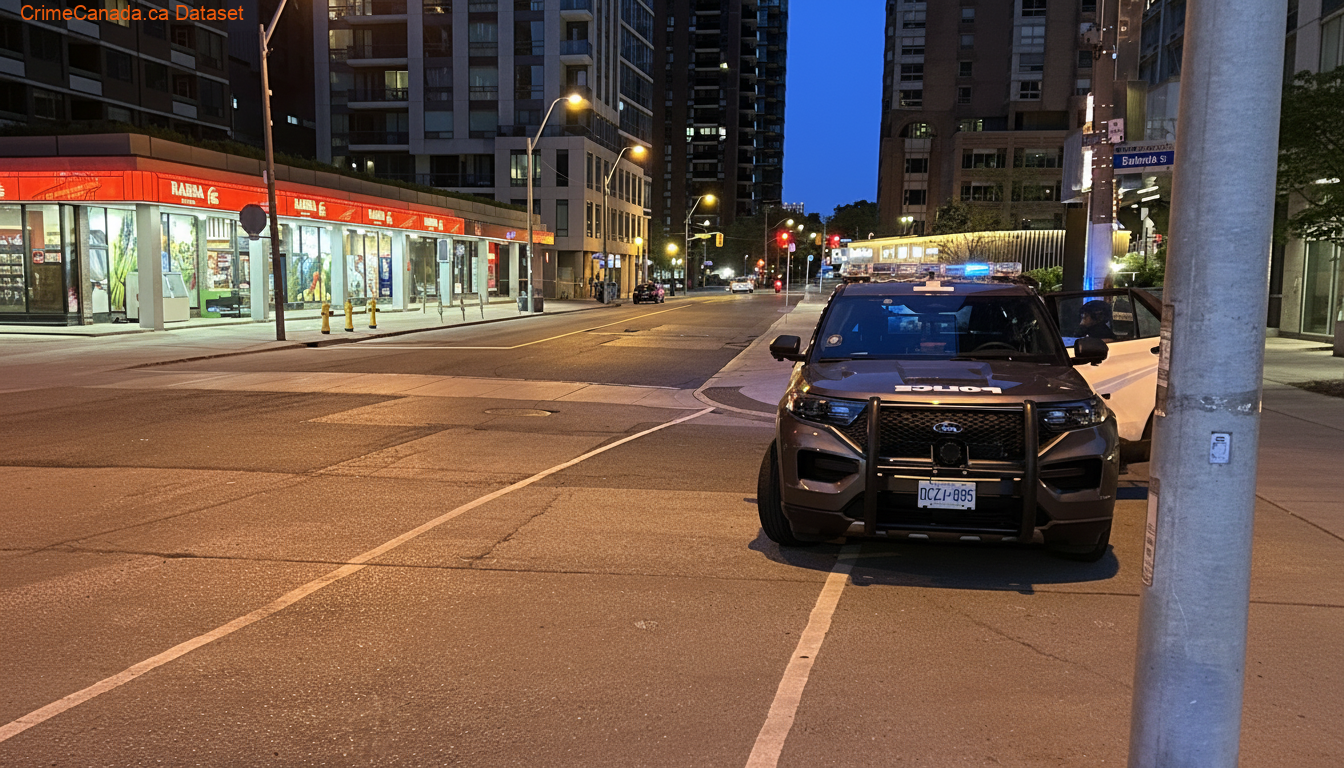
Three separate overnight shootings across Toronto left property damage but, fortunately, no reported injuries. In the early hours of Wednesday, officers responded to gunfire calls at a townhouse complex near Sheppard Avenue West and Jane Street, a residential area around Islington and Bering in Etobicoke, and a busy downtown intersection near Bay Street and Charles Street. In each case, police documented evidence of shots fired and related damage, either to a home or a vehicle.
According to the latest open-source information, Toronto Police Service have not announced any arrests, suspect descriptions, or confirmed motive in connection with these incidents. Investigators are examining whether the three shootings are connected, but as of the most recent data, no official link has been publicly confirmed. Road closures, including a temporary shutdown of Charles Street between Yonge and Bay, were implemented to secure scenes and collect evidence before being lifted later in the morning.
Community Context & Social Sentiment
Because these events unfolded overnight, public reaction is still forming, and the available open-source material does not provide verifiable social media quotes or detailed neighborhood commentary. However, a cluster of three shootings in a matter of hours, even with no injuries, is likely to elevate concern among residents in North York, Etobicoke, and the downtown core who rely on these corridors for commuting, late-night work, and daily life.
The affected areas represent a cross-section of the city’s urban fabric. The Sheppard and Jane townhouse complex is a densely populated residential pocket. The Islington and Bering area of Etobicoke blends low-rise homes and nearby arterial roads. The vicinity of Bay and Charles sits within a high-density downtown zone near offices, condos, and major transit routes. While these three corners are not uniquely identified in the available data as the city’s highest-crime locations, Toronto’s downtown and some inner-suburban neighborhoods have been subject to ongoing concern about gun-related incidents.

For residents seeking a broader, data-driven picture of local safety, the Toronto Crime Statistics & Safety Report and the companion overview for the Toronto, Ontario — Crime Statistics & Safety Data region provide yearly breakdowns of violent crime, property crime, and weapon-related offences. These tools can help contextualize isolated overnight events against long-term patterns and allow community members to understand how their neighborhood compares to the citywide average.
Authorities are appealing for witnesses, dashcam video, and private security footage from around the three scenes to help reconstruct vehicle movements, identify potential suspects, and determine whether a common offender or vehicle was present at more than one location. Anonymous tips can typically be provided through Crime Stoppers, which often plays a role in advancing investigations where no suspects are yet publicly named.
How These Shootings Fit Toronto’s Larger Crime Picture
While three shootings in one night draw attention, the wider statistical record indicates that overall major crime in Toronto has been trending downward. Recent analyses show notable reductions across several serious offence categories: one source reports robberies down by about 18.7 percent, auto thefts down roughly 25.5 percent, and break-and-enter offences reduced by approximately 13.6 percent compared with the prior year. Homicides have also fallen sharply, with some year-end tallies indicating fewer than 40 homicides in 2025 compared to more than 80 in 2024.
In other words, the city appears to be experiencing fewer killings and certain high-impact crimes overall. Yet firearm violence remains a central public safety concern. A municipal background review cited in open sources placed Toronto among the higher-ranked large Canadian cities for firearm-related homicide rates, with about 0.32 firearm homicide victims per 100,000 population in the examined period. At the national level, Statistics Canada recorded 788 homicide victims across Canada in 2024, following 796 in 2023, suggesting that the national homicide count has remained relatively stable, even as some major cities, including Toronto, have recently seen local declines.
These three incidents therefore sit at the intersection of two realities: a multi-year trend of improved homicide numbers and reduced major crimes, alongside persistent anxiety about any gunfire in residential or downtown areas. The fact that all three shootings caused only property damage—and did not result in reported injuries—does not lessen the seriousness with which they are treated by police or by many community members. Shots fired into homes or near vehicles at night can have lasting emotional and psychological impacts on residents, even if nobody is physically harmed.
The broader pattern of weapon-related activity in the city is being monitored closely by law enforcement and policymakers. Assault remains the most common major violent offence in Toronto, but the presence of firearms in any confrontation, however limited, increases the risk of escalation. By consulting city and provincial dashboards, such as the Crime Statistics in Ontario overview, residents can compare Toronto’s situation with other jurisdictions in the province and track whether efforts to curb gun violence are making measurable progress over time.
From a safety-planning perspective, events like these overnight shootings highlight the value of community vigilance combined with evidence-based policing. Rapid reporting of gunshots, installation of quality lighting and cameras around multi-residential buildings, and coordination between neighborhood groups and local officers all support a quicker investigative response and can help deter repeat incidents. While police continue to investigate the Sheppard–Jane, Islington–Bering, and Bay–Charles scenes, residents are encouraged to report suspicious behavior promptly and to share any relevant footage or observations that might assist investigators.
About This Report
This safety alert was generated by aggregating data from local authorities, community reports, and open-source intelligence. Our mission at Crime Canada is to provide citizens with localized safety data and context. We are not the original creators of the underlying news reports.
Primary Source: Information in this report was initially covered by Lucas Casaletto for CityNews.
Additional Research & Context
- Citywide crime levels and trend data referenced in this brief are informed by publicly available statistics similar to those summarized in the Toronto Crime Statistics & Safety Report.
- Comparative homicide and firearm-violence context draws on open-source summaries of Toronto municipal background reports and Statistics Canada national homicide tables for 2023–2024.
- General Ontario-wide crime comparisons rely on provincial aggregates consistent with those presented in the Crime Statistics in Ontario data overview.